.png)


.png)
.png)

A child walks into a store with ten dollars and a hundred dollars’ worth of wants.
Suddenly, money gets interesting.
The toy they wanted yesterday competes with the candy in front of them today. Something has to wait. Something has to stay on the shelf. And for perhaps the first time, “Can I have it?” becomes “Is this how I want to use my money?”
That is a financial education moment. You do not need a classroom to create it.
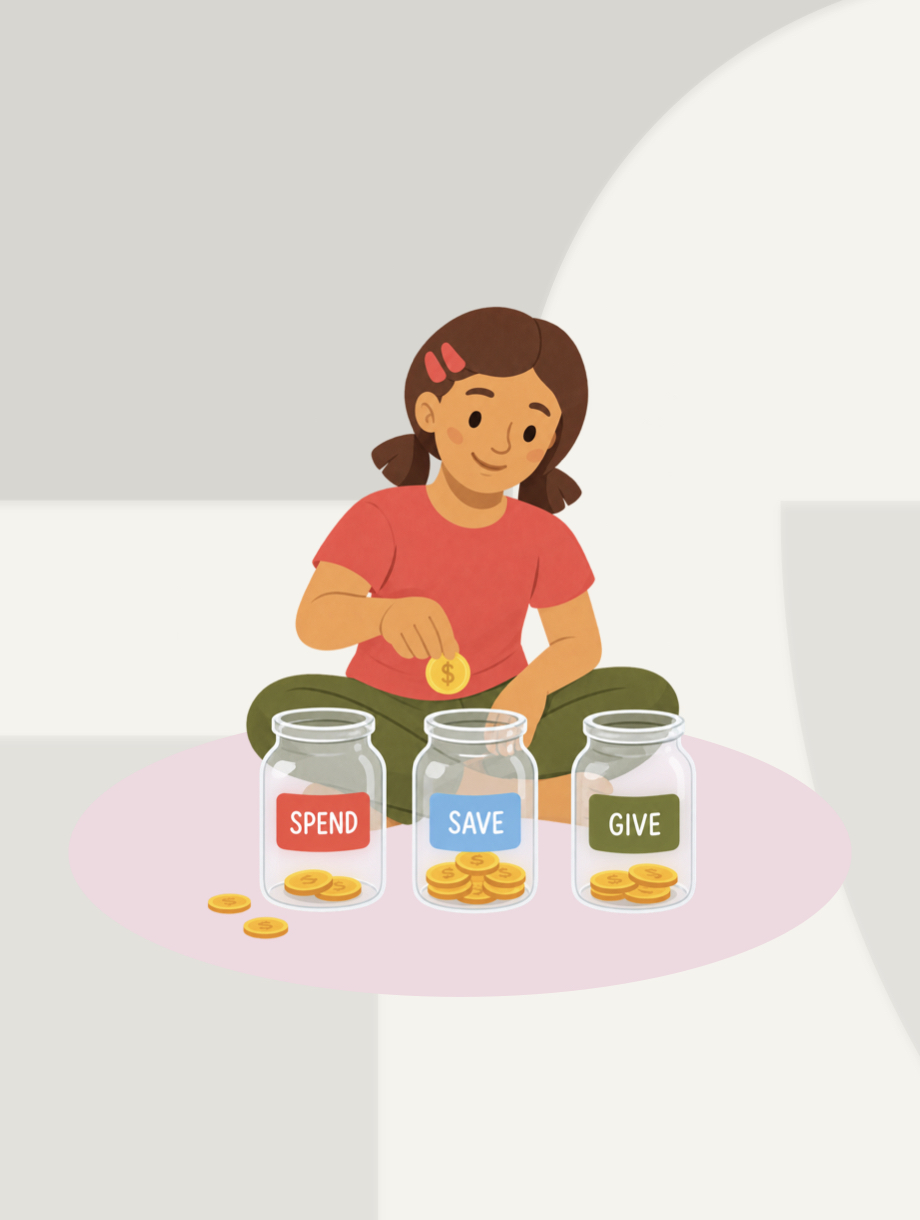
At TheMoneyBooks, we believe understanding how money works should begin long before the first paycheck. One place to start is with three simple containers labeled Spend, Save, and Give.
Give Every Dollar a Job
There is nothing wrong with a piggy bank. Putting money aside is a useful habit. But dropping coins through a slot does not automatically teach a child how to make decisions with them.
Three jars bring those decisions into view.
Some money is for enjoying now. Some is for something worth waiting for. Some is for helping someone else.
When children receive an allowance, birthday money, or earnings from an agreed extra task, help them divide it among those purposes. Choose a split that fits your family. Ten dollars might become five for spending, four for saving, and one for giving.
The amounts can be smaller. The conversation still matters.
Let your child count the money and make the deposits. Ask what each portion will do. Give them enough ownership to feel that their decisions matter, because they do.
The Spend Jar: Learning to Choose
Parents spend years saying, “We’re not buying that.” The spend jar gives children a chance to understand why every purchase cannot be a yes.
Imagine your child spends their available money on a toy that loses its appeal by dinner. Two days later, they discover something they want more.
Your instinct may be to cover the difference. Instead, when it is a nonessential purchase, let the limit stand.
Be kind. There is no need for “I told you so.” Ask, “How do you feel about what you bought? What might you do differently next time?”
A disappointing purchase can become useful experience when the stakes are small.
Keep necessities separate. Children should not have to worry that a spending mistake means going without lunch or school supplies.
The lesson is that choosing one thing sometimes means passing on another. That understanding will matter when the choices get bigger.
The Save Jar: Making Waiting Visible
“Save your money” is an instruction. “Let’s work toward that bike” gives the instruction a purpose.
Help your child pick a realistic goal, find its price, and figure out how much they can set aside regularly. A sixty dollar goal funded with five dollars a week takes twelve weeks, assuming no additional contributions or price changes.
For a child, that can feel like forever.
Make progress visible. Put a picture of the goal beside the jar. Draw a chart they can color as their savings grow. Count together and celebrate milestones without buying rewards that overshadow the goal.
When another temptation appears, help them compare it with what they are working toward. They may decide the new purchase matters more. That is a conversation, too.
Eventually, reaching the goal connects repeated effort with a result they can touch. The purchase carries a story: “I worked toward this. I made it happen.”
The Give Jar: Practicing Generosity
Money lessons can become a constant conversation about what we want. The give jar makes room for someone else.
Ask your child what they care about. Animals? Families who need groceries? A community project? Help them explore an appropriate way to contribute.
Then involve them in the choice and, when possible, the action. Buying supplies for a shelter can make giving more understandable than watching an adult click a donation button.
Talk about dignity. People receiving help deserve respect and privacy. Generosity does not need an audience, and a small gift does not need an apology.
For families with little money to spare, time and effort belong in this conversation as well. Children can help, share, and serve without being taught that kindness depends on how much cash they have.
Let Them See Your Decisions
The jars become more meaningful when children hear how adults make similar choices.
At the grocery store, explain why you are comparing prices. Before an outing, talk about what you have set aside for it. When saving for something, share an age appropriate version of the goal.
Try saying, “We could buy that, but we’re choosing to use that money for something else.”
You do not have to share account balances or adult financial worries. You can show that money decisions involve thought, priorities, and tradeoffs.
You also do not have to pretend you have always gotten it right. “I wish I had learned this sooner” can open an honest conversation. Learning together is a better starting point than waiting until you feel like an expert.
Start Small. Keep Going.
Set aside a few minutes each week to check the jars together. What came in? What went out? Is the savings goal still meaningful? Where could the giving money help?
Keep it curious, not critical. As children grow, the containers can become account categories, and the conversations can expand to earning, banking, borrowing, and investing.
Three jars are a beginning, not a complete financial education. Their value comes from the repeated practice of making choices and discussing what happens next.
That is the opportunity behind TheMoneyBooks: helping families turn financial education into everyday conversations they can actually use.
Start now. Find three containers. Let your child label them. Put a little money on the table and ask what it could do.
You are helping your child practice for the day when the decisions are entirely theirs.