.png)


.png)
.png)

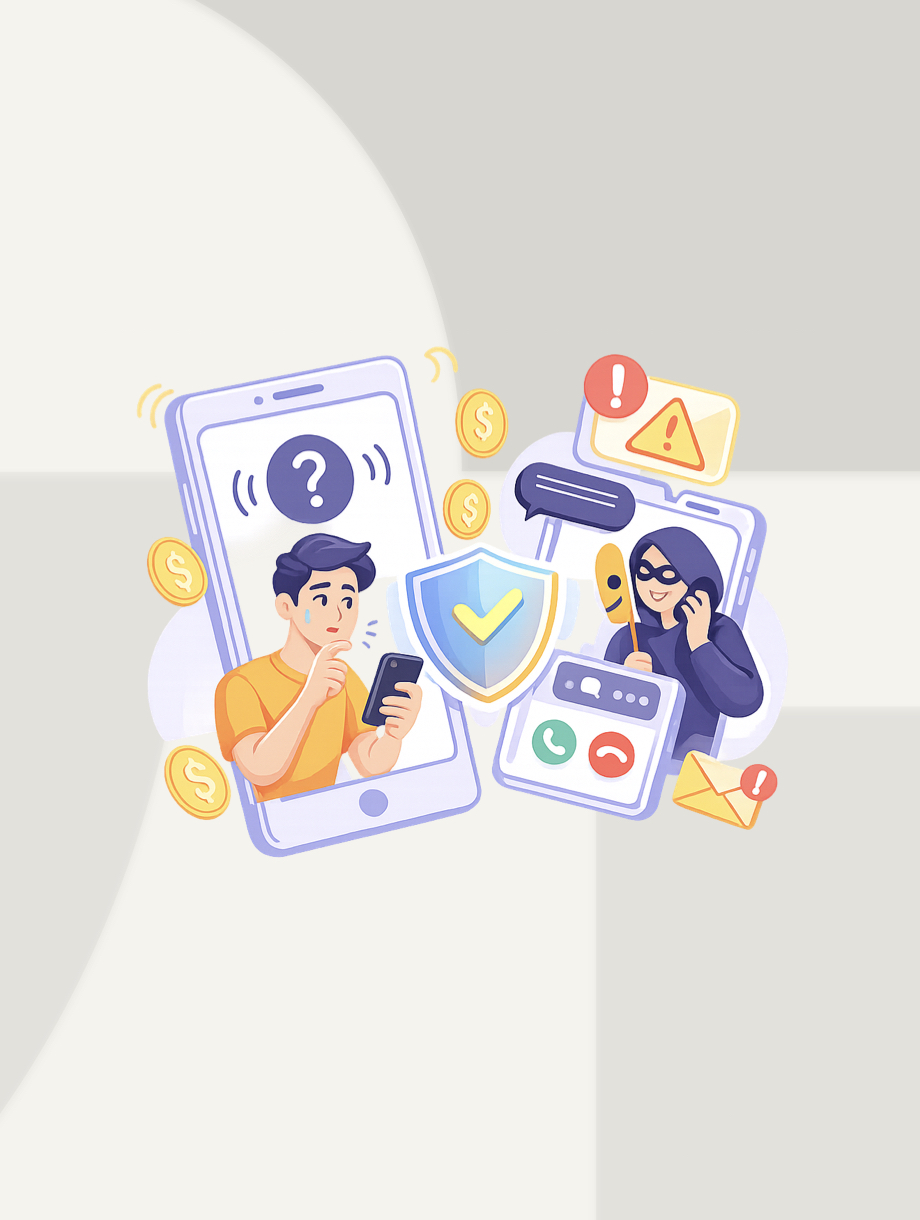
How one phone call can change your financial future, and what every family should know
Your phone rings.
You glance at the screen. The number is not familiar.
Maybe it is a new client. Maybe it is your doctor’s office, a delivery driver, your child’s school, or a family member calling from someone else’s phone. Important calls do not always come from numbers we recognize, so you answer.
Then you hear a recorded voice:
“Congratulations! You’ve been pre-approved…”
Or:
“This is your second notice regarding your $1,400 Social Security stimulus.”
Or perhaps the familiar instruction:
“Press 9 now to be removed from our calling list.”
Most people have heard some version of these messages. They are so common that many of us hang up, block the number, and move on without giving them much thought.
But these calls are more than an inconvenience. They can affect our privacy, our peace of mind, and, in some cases, our financial future.
At TheMoneyBooks, we believe financial education is about more than learning how to earn, save, invest, and protect money. It is also about recognizing situations that can quietly put everything you have worked for at risk.
A Changing World
There was a time when a ringing telephone usually meant that a real person wanted to speak with you.
Today, technology has changed that.
Automated systems can place enormous numbers of calls in a short period of time. Caller ID can be manipulated to display a local area code or a number that appears to belong to a trusted business. Artificial intelligence can even imitate human voices, making fraudulent calls sound more personal and believable.
That is what makes modern scams so effective. They are designed to look familiar, sound urgent, and create just enough uncertainty to make you respond.
Sometimes the goal is obvious. The caller wants your credit card number, bank information, Social Security number, password, or payment. Other times, the caller may only be trying to confirm that your phone number belongs to a real person.
When you answer, speak, press a button, or follow the caller’s instructions, you may be signaling that the number is active. That can make it more valuable to marketers and scammers, leading to even more unwanted calls.
Why We Still Answer
It is easy to say, “Just do not answer unknown numbers.”
In real life, it is not always that simple.
A parent may be waiting for a call from a child’s school. A business owner may receive calls from new customers. Someone applying for a job may be expecting a recruiter. A family may be coordinating medical care for an older relative.
Scammers understand this uncertainty. They know we do not want to miss something important, and they use that hesitation to create an opening.
The problem is not that people are careless. Scams are often built around normal human behavior. We want to be helpful. We respond to urgency. We respect authority. We worry about consequences.
A well-designed scam can take advantage of all those instincts.
The Cost Is Not Only Financial
When people think about scams, they usually think about money lost. That is one of the greatest risks, but it is not the only one.
Unwanted calls interrupt family dinners, work meetings, quiet moments, and important conversations. They create anxiety every time an unfamiliar number appears. They make people suspicious of legitimate calls and may eventually cause them to stop answering altogether.
There is also an emotional cost. People targeted by scams may feel embarrassed or ashamed, even when the scam was carefully designed to deceive them. A scam may take only a few minutes to begin, but the consequences can last much longer.
Why Digital Safety Is Part of Financial Education
Financial literacy is not only about building wealth. It is also about protecting what you have already built.
A family may spend decades working, saving, paying down debt, purchasing a home, and preparing for retirement. One fraudulent transaction, stolen identity, or compromised account can undo years of progress.
That is why digital safety belongs in every financial education conversation.
Identity theft, phishing, fraudulent investment offers, fake charities, bogus loan approvals, government impersonation scams, and account-takeover attempts all have one thing in common: they try to separate you from your information, your money, or both.
The good news is that small habits can make a meaningful difference.
Six Habits That Can Reduce Your Risk
1. Do not press numbers to be removed from a call list
A robocall may tell you to press a number to speak with someone or stop future calls. Do not do it. Do not press a key, say “yes,” or continue the conversation. Simply hang up.
Engaging may confirm that your number is active.
2. Let unknown callers go to voicemail
Legitimate callers will usually leave a message. A doctor’s office, school, customer, business, or family member can explain why they called and provide a way to respond.
Voicemail gives you time to listen, think, and verify before taking action.
3. Use the spam-protection tools on your phone
Most smartphones and wireless carriers offer features that help identify or filter suspicious calls.
Apple users can enable Silence Unknown Callers. Major carriers also offer tools such as AT&T ActiveArmor, Verizon Call Filter, and T-Mobile Scam Shield.
These tools may not stop every call, but they can provide another layer of protection between your family and a potential scammer.
4. Register with the National Do Not Call Registry
The registry will not stop criminals who ignore the law, but it can reduce legitimate telemarketing calls.
Reducing the overall number of unwanted calls may also make truly suspicious calls easier to recognize.
5. Never trust Caller ID by itself
A familiar name or local number does not prove that a call is legitimate.
When someone claims to represent a bank, government agency, utility company, or other organization, hang up and call back using a verified number.
Use the number on the organization’s official website, your account statement, the back of your card, or another trusted source.
Do not call a number provided by the suspicious caller.
6. Remember that urgency is often a tool
Scammers want you to act before you think.
They may say your account will be closed, your benefits will be suspended, your power will be disconnected, your family member is in danger, or an opportunity will disappear.
Pause. Verify. Then act.
A legitimate organization will allow you to confirm what is happening instead of pressuring you into an immediate financial decision.
The Same Rules Apply to Text Messages
Scam texts have become just as common as scam calls.
A message may claim that you have won a prize, missed a package delivery, qualified for a government payment, received a job offer, or need to solve an urgent account problem. It may include a link and tell you to act immediately.
If you were not expecting the message, do not click.
A link can lead to a fake website designed to collect your password, account information, or payment details.
Report the message as spam and delete it when possible. When it claims to be from a company you use, open the company’s official app or website separately instead of clicking the link.
The same principle applies to suspicious emails. Do not allow an alarming subject line, urgent warning, or unexpected offer to make the decision for you.
Slow down and verify the message independently.
Protecting Your Greatest Financial Asset
Many people would say their greatest financial asset is their home, retirement account, business, or investment portfolio.
Those things are important. But your identity may be even more valuable.
Your identity connects you to your bank accounts, credit history, tax records, insurance, benefits, email, phone number, and online accounts. Once someone gains access to enough personal information, the damage can spread quickly.
Protecting your identity does not mean living in fear. It means building habits that allow you to use technology without becoming an easy target.
That includes slowing down when a message feels urgent, verifying before sharing information, protecting access to your phone and email, and talking openly with family members about common scams.
These conversations matter across generations. Everyone can benefit from the same basic rule:
Stop, verify, and protect your information.
Financial education should be shared throughout the family. Talk about suspicious messages before someone receives one. Discuss what a bank, government agency, or legitimate business would and would not ask for over the phone.
Make it normal for family members to ask for help before sending money, sharing information, or clicking a link.
A few minutes of conversation today could prevent a costly mistake tomorrow.
A Better Response to the Next Call
The next time your phone rings from an unfamiliar number, you do not have to panic.
You also do not have to answer immediately.
Let the call go to voicemail.
Listen carefully.
Verify the caller independently.
Do not allow fear, curiosity, or urgency to make the decision for you.
Financial independence is not achieved only by making good investment decisions. It is also preserved by avoiding costly mistakes.
Every unwanted call you ignore, every suspicious text you delete, and every fraudulent message you report is another step toward protecting the future you have worked so hard to build.
Knowledge remains one of the most valuable investments you will ever make.
At TheMoneyBooks, our goal is to help individuals and families understand how money works, make informed decisions, and protect what matters most.
Because financial education is not only about creating a better future.
It is also about keeping that future secure.