 Request a copy of our book(s)
Unmasking Financial Abuse—Red Flags You Need to Know

While financial abuse often remains hidden,
recognizing the signs is crucial in breaking free from an abusive relationship. Financial abuse is a powerful tool used by abusers to control and manipulate, leaving victims feeling trapped and powerless.
What does financial abuse look like?
1. Financial Control
- Restricted Access: Your partner denies you access to bank accounts, credit cards, or financial information.
- Allowance Limitations: You are given a strict allowance and must account for every penny spent.
- Withholding Necessities: Threatening to withhold money for essential needs like food, medication, or housing.
- Excessive Oversight: Demanding detailed accounts of your spending and criticizing your financial decisions.
- Financial Shaming: Making you feel guilty or incompetent regarding financial matters.
- Isolation: Cutting off access to friends, family, or support networks who might offer financial assistance.
2. Employment and Education Sabotage
- Interference with Work: Your partner forces you to miss work, harasses you at your workplace, or prevents you from seeking employment.
- Preventing Employment: Not allowing you to work or sabotaging job opportunities.
- Education Obstruction: Discouraging or preventing you from pursuing educational opportunities
3. Economic Exploitation
- Unauthorized Credit: Opening credit accounts or taking loans in your name without your knowledge.
- Nonconsensual Withdrawals: Draining your bank accounts without your knowledge or consent.
- Damaging Your Credit Score: Racking up debt under your name, leading to a ruined credit history.
Why is recognizing these red flags important?
Understanding these signs empowers you to take action. Financial abuse is not just about money—it's about power and control. Recognizing the abuse is the first step toward breaking free and reclaiming your independence.
Sarah's Story
Sarah, a successful real estate agent, experienced financial abuse firsthand. What started as her partner "taking care of the finances" gradually escalated into complete financial control. She was denied access to accounts, her spending was scrutinized, and her financial decisions were constantly criticized. It wasn't until she recognized these red flags that she could begin to formulate a plan to escape.
What can you do?
- Stay Informed: Keep track of all financial accounts and transactions. Ensure you have access to financial information.
- Build a Support Network: Reach out to trusted friends, family members, or professionals who can offer guidance and assistance.
- Document Everything: Keep records of abusive incidents and financial transactions. This documentation can be crucial if legal action becomes necessary.
- Seek Professional Help: Organizations and professionals specialize in helping victims of financial abuse. Don't hesitate to reach out.
- Stay Strong and Don’t Be Embarrassed: You are not alone. It’s not your fault. Asking for help is an act of bravery. You are not a victim. You are a survivor!
In our next post, we'll provide practical steps on creating a financial escape plan to help you break free from abuse.
National Disability Employment Awareness Month

Empowerment Through Financial Education
October is National Disability Employment Awareness Month (NDEAM), a time to celebrate the contributions of workers with disabilities and to advocate for a more inclusive workforce. This year’s theme, “Access to Good Jobs for All,” emphasizes the importance of providing quality job opportunities to everyone, including individuals with disabilities. Beyond employment opportunities, access to financial education is essential for people to make the most of these opportunities, ensuring they are equipped with the knowledge needed to achieve stability and independence.
The Role of Financial Education in Employment Access
Financial literacy is critical for anyone entering or advancing in the workforce. For individuals with disabilities, it serves as a foundational tool that can open doors to better job opportunities and provide a pathway to personal and professional success. Here’s how financial education helps support meaningful employment:
1. Understanding Employment Benefits
With the right financial knowledge, individuals can navigate complex employment benefits packages, understand how income might affect government assistance, and maximize healthcare and retirement benefits. Financial education enables individuals to fully understand these packages, make informed choices, and maintain the benefits that support their quality of life.
2. Making Informed Career Decisions
Choosing the right job goes beyond salary—it’s about total compensation, including health insurance, paid leave, and retirement options. By building a strong financial foundation, individuals are better equipped to assess job offers holistically, ensuring that they choose positions that align with both their immediate needs and long-term goals.
3. Building Financial Resilience
Managing income effectively is essential to financial resilience. Budgeting skills help individuals plan for the future, including saving for emergencies, managing debt, and preparing for unexpected expenses. This resilience reduces financial stress and enables employees to focus on building their careers without being overwhelmed by financial instability.
4. Planning for Long-Term Security
Financial education empowers individuals to take control of their financial future. By learning about savings and investment options, people can plan for retirement or long-term care. Knowledge of these options encourages self-sufficiency and ensures that individuals can maintain their quality of life, even after they transition out of the workforce.
5. Entrepreneurship Opportunities
Financial literacy also creates pathways to entrepreneurship for those interested in pursuing self-employment. Understanding budgeting, taxes, and funding options can make it easier to start a small business or freelance career. For many individuals with disabilities, entrepreneurship can offer the flexibility they need, and financial education is key to making it sustainable.
How Financial Education Complements Access to Good Jobs
Good jobs provide the foundation for independence, but financial education provides the roadmap to long-term success. Together, they form a powerful combination that supports individuals in reaching their fullest potential. Here’s how financial literacy aligns with the 2024 theme of “Access to Good Jobs for All”:
- Encourages Financial Freedom: Financially literate employees are more likely to manage their resources effectively, avoid debt, and build wealth, which ultimately contributes to greater freedom and choice in their lives.
- Fosters Confidence in Financial Decisions: Financial literacy gives people the tools to make informed decisions, boosting confidence both in and out of the workplace.
- Empowers Career Growth: When individuals understand how to manage their finances, they can focus on skill development and career advancement, knowing they have a plan for financial security.
Advocating for Accessible Financial Education
Financial education is crucial for everyone, but it’s particularly important for individuals with disabilities who may encounter additional financial challenges. Advocates, organizations, and employers can play a vital role by supporting accessible financial education programs, ensuring these programs accommodate diverse needs and abilities.
A Call to Action
As we celebrate National Disability Employment Awareness Month, let’s commit to making financial literacy as accessible as employment opportunities. This October, let’s advocate for initiatives that combine “Access to Good Jobs for All” with the essential tool of financial education. Together, we can create a more inclusive and empowered society where everyone has the opportunity to thrive professionally and financially.
Breaking the Chains of Financial Abuse—Why This Issue Demands Our Attention

October is Domestic Violence Awareness Month,
a time to shine a light on an often hidden and insidious form of abuse: financial abuse. While physical abuse tends to grab headlines, financial abuse lurks in the shadows, silently trapping victims in dangerous relationships.
Financial abuse is a deliberate tactic used by abusers to gain control and power over their victims. It's estimated that 99% of domestic violence cases also involve financial abuse.1 This abuse takes many forms—restricting access to bank accounts, sabotaging employment or education opportunities, accumulating debt in the victim's name, and ruining credit scores. It's a calculated strategy to keep victims financially dependent and unable to escape.
Why is this so important?
- A Public Health Crisis: Domestic violence is our nation's number one public health issue, according to the CDC.2 It's a pervasive problem that affects millions of women across the country.
- Staggering Statistics: One in four women will experience domestic violence in her lifetime.3 This isn't just a statistic—it's our mothers, sisters, daughters, friends, and colleagues.
- Financial Barriers to Escape: Many women stay in abusive relationships because they lack the financial means to leave. 74% of survivors report staying longer due to economic concerns.4 The fear of homelessness, hunger, or losing custody of their children is a powerful deterrent exploited by abusers.
The consequences of financial abuse are profound and long-lasting. Victims may suffer from increased stress, anxiety, and depression as they grapple with the loss of financial independence. The lack of access to resources hinders their ability to secure safe housing, find employment, or pursue education—trapping them in a cycle of abuse.
Children are deeply affected too. Growing up in households where financial abuse is present can lead to psychological trauma and perpetuate a cycle of poverty and abuse that spans generations.
Why is this so important?
By raising awareness about financial abuse, we empower victims to recognize the signs and seek help. Education is crucial—not just for potential victims, but for all of us. We need to talk about this issue openly, support those affected, and advocate for change.
What can we do?
- Spread the Word: Share information about financial abuse with friends, family, and colleagues. The more people who understand the issue, the better equipped we are to combat it.
- Support Victims: Listen without judgment, offer assistance, and connect them with resources.
- Advocate for Change: Support policies and organizations that work to prevent domestic violence and assist survivors.
What can we do?
By shining a light on financial abuse, we can break the chains that bind victims to their abusers and help them reclaim their lives.
Stay tuned for our next post, where we'll discuss the red flags of financial abuse and how to recognize them.
1 Forbes - Financial Abuse is Domestic Violence, Patricia Fersch (July 21, 2022)
2 Pennsylvania Coalition Against Domestic Violence - Financial Abuse (2022)
3 Arizona Coalition to End Sexual and Domestic Violence - 31 Facts for Domestic Violence Awareness Month (October 2021)
4 Allstate Foundation - Financial Abuse Facts (2022)
Why Both Parents Need Life Insurance

Life Insurance Isn’t Just for the Breadwinner
When we think about life insurance, we often focus on the primary wage earner—the person whose income supports the family. But what about the non-breadwinner? Whether they’re a stay-at-home parent, a part-time worker, or someone caring for the household, their role is just as critical to the family’s well-being. While they may not bring in a traditional paycheck, their contributions hold significant financial value.
This Life Insurance Awareness Month, let’s explore why it’s essential for both breadwinners and non-breadwinners to have life insurance coverage.
1. The Financial Value of a Stay-at-Home Parent
A stay-at-home parent does much more than take care of the kids—they’re often the ones responsible for cooking, cleaning, running errands, and managing the household. These are jobs that would cost a lot if the family had to pay for outside help.
In fact, if a stay-at-home parent were to pass away unexpectedly, the family would need to hire help to replace these services. According to the 2023 Salary.com’s annual report, the financial value of a stay-at-home parent’s work is equivalent to over $190,000 a year. Without life insurance, the family might struggle to afford childcare, housekeeping, and other essential services.
Life insurance for the non-breadwinner ensures the family can afford these services in the event of their passing, allowing the breadwinner to continue working and maintain the household.
2. Covering Final Expenses
The loss of any family member comes with emotional and financial stress. Funeral costs alone can range from $7,000 to $12,000, and there may be additional medical bills or other final expenses. Even if the non-breadwinner isn’t generating income, life insurance can help cover these costs, relieving the family of the financial burden during an already difficult time.
Without life insurance, these expenses may have to come out of savings or retirement funds, potentially derailing the family’s long-term financial plans.
3. Supporting the Breadwinner’s Ability to Work
The non-breadwinner often provides critical support that allows the breadwinner to focus on their career. Whether it’s managing household duties, caring for children, or handling the day-to-day needs of the family, their contributions allow the breadwinner to go to work without distraction.
If the non-breadwinner were to pass away, the breadwinner would likely need to adjust their work schedule or even reduce their hours to manage the household or arrange for childcare. This could result in a significant loss of income. Having life insurance in place for the non-breadwinner helps cover the costs of these adjustments, ensuring the breadwinner can continue working and providing for the family without major disruptions.
4. Securing Your Children’s Future
For families with children, both parents—regardless of their income-earning role—play a vital role in providing a stable future. If a non-breadwinner passes away, the remaining spouse may need to take time off work to handle the emotional impact and adjust to new responsibilities. This could impact the family’s ability to save for the future, including important expenses like college tuition.
Life insurance can act as a financial cushion, giving the breadwinner the flexibility to take time off work, adjust to new responsibilities, and maintain the family's long-term goals without sacrificing their children's future.
5. Life Insurance Isn't Just About Income Replacement
It’s easy to think of life insurance as something only the main income earner needs, but life insurance serves more than just income replacement. It provides financial stability during life’s most uncertain moments. The loss of any family member affects the entire household, emotionally and financially. Life insurance for both the breadwinner and non-breadwinner helps protect against the unexpected, ensuring that the family can adjust without financial strain.
6. Peace of Mind for the Whole Family
Life insurance is about ensuring your family’s well-being, no matter who you are or what role you play. While the breadwinner may generate income, the non-breadwinner contributes in countless other ways that support the household. Having life insurance for both partners ensures that no matter what happens, the family has the resources they need to continue without severe financial hardship.
Final Thoughts
The contributions of the non-breadwinner are just as vital to the family’s financial health as those of the breadwinner. From childcare and household management to providing emotional support, their role is invaluable. That’s why life insurance for both partners is crucial—it’s about protecting the family as a whole, ensuring that everyone is covered, no matter what.
As Life Insurance Awareness Month comes to a close, take time to review your family’s insurance needs. If the non-breadwinner in your family doesn’t have life insurance, consider the value they bring to the household and the financial impact of their absence. Securing coverage for both partners is the best way to protect your family’s future.
Life Insurance Isn’t as Expensive as You Think

Debunking the Cost Myth
It’s Life Insurance Awareness Month, and there’s no better time to clear up one of the biggest misconceptions about life insurance: its cost. According to the 2024 Insurance Barometer Study, 72% of Americans believe life insurance costs far more than it actually does—some even overestimate it by three times!
Let’s break down this myth and show you how affordable life insurance can really be.
The Cost Myth
When people think of life insurance, many assume it’s too expensive. They imagine high monthly premiums that would be hard to fit into their budget. But the truth is, life insurance is much more affordable than most people realize.
For example, a healthy 30-year-old can often get a $250,000 term life insurance policy for as little as $200 a year. That’s just about $16 a month—less than most people spend on streaming services or coffee!
Why Do People Overestimate?
There are a few reasons why people overestimate the cost of life insurance:
- Lack of Knowledge: Many people simply don’t know what life insurance costs or what their options are.
- Fear of Complexity: With so many different types of life insurance—term, whole life, universal—it’s easy to feel overwhelmed, leading to assumptions that it must be expensive.
- Waiting Until It’s “Necessary”: Some believe they’ll only need life insurance later in life, which can lead to the assumption that it’s a significant financial burden.
But here’s the good news: life insurance can be very affordable, especially if you start early and choose the right type of policy.
Affordable Coverage Is Within Reach
The key to getting affordable life insurance is planning early. The younger and healthier you are, the lower your premiums will be. Waiting too long can increase your costs, so it’s important to consider your options sooner rather than later.
There are different types of life insurance policies to fit every budget:
- Term Life Insurance: This is often the most affordable option, providing coverage for a specific period (e.g., 10, 20, or 30 years). Term policies are great for families who need protection during their highest earning years or while they’re paying off large debts like mortgages.
- Permanent Life Insurance: While more expensive than term, permanent life insurance offers lifelong coverage and can build cash value over time. It’s a long-term investment in your family’s financial security.
Take Action This Life Insurance Awareness Month
If you’ve been putting off life insurance because of cost concerns, now is the time to take a closer look. This Life Insurance Awareness Month, get the facts and find out how affordable it can be to protect your family’s future.
Here’s how you can get started:
- Get a Quote: Reach out to a financial professional and get a personalized quote. You’ll likely be surprised by how affordable it is.
- Explore Your Options: Learn about the different types of life insurance policies and find the one that fits your needs and budget.
- Act Early: The younger you are when you apply, the lower your premiums will be. Don’t wait—take advantage of the affordability while you can!
Final Thoughts
Life insurance doesn’t have to break the bank. This Life Insurance Awareness Month, let’s debunk the myth that life insurance is too expensive. With the right information and planning, you can secure affordable coverage that gives your family peace of mind.
Take a moment to explore your options and make sure you’re protecting what matters most—because life insurance is more than just a policy, it’s a promise.
Why Life Insurance from Work Falls Short

Many people think they’re covered and protected, simply because they have life insurance through their employer. While employer-provided life insurance is a great benefit, it often falls short of providing the full financial protection your family may need. As we dive deeper into Life Insurance Awareness Month, it’s important to understand why relying solely on work-provided life insurance might not be enough.
What Is Work-Provided Life Insurance?
Employer-provided life insurance, also known as group life insurance, is a type of coverage offered to employees as part of their benefits package. Typically, it’s either free or low-cost, and coverage is automatic—meaning there’s no need for a medical exam. For many employees, this is the only life insurance they have. In fact, according to the 2024 BEAT Study: Benefits and Employee Attitude Tracker, almost 6 in 10 workers (58%) with children under 18 count on their workplace life insurance coverage to protect their loved ones.
But here’s the catch: while workplace life insurance is a great starting point, it’s rarely enough. Let’s explore why relying only on work-provided life insurance can leave families vulnerable.
1. Limited Coverage Amount
One of the biggest drawbacks of employer-provided life insurance is that it often provides only a small amount of coverage—typically just 1 to 2 times your annual salary. While this may sound like a decent amount, it’s rarely enough to cover all of your family’s financial needs. Consider the costs your family might face in your absence:
- Mortgage payments
- Day-to-day living expenses
- Children’s education
- Outstanding debts like car loans or credit cards
Financial experts recommend having life insurance coverage that equals at least 10 times your annual salary to ensure your family can maintain their current standard of living. Unfortunately, relying solely on work-provided life insurance could leave a significant gap.
2. You Can Lose Coverage When You Leave Your Job
Employer-provided life insurance is tied to your job. That means if you change jobs, are laid off, or retire, your coverage usually ends. This can be especially risky if you leave your job at a time when it becomes more expensive or difficult to get private coverage, such as after a health issue.
Unlike individual policies, which stay with you no matter where you work, employer-provided policies typically don’t follow you. If you’re between jobs, you and your family could be left without any life insurance at all.
3. Limited Flexibility and Customization
With work-provided life insurance, you typically don’t get to choose the specifics of your policy. The amount of coverage, policy length, and other key factors are determined by your employer. This lack of flexibility may not meet your family’s unique financial needs.
An individual policy allows you to customize your coverage to fit your situation, ensuring that you have enough coverage for things like a mortgage, children’s future education, and final expenses.
4. Group Policies May Not Provide Enough for Long-Term Needs
While employer-provided life insurance may provide some immediate coverage, it’s often not enough for long-term financial security. Your family may need years—or even decades—of financial support, and a payout from a small group policy may only last a few months or cover a fraction of necessary expenses.
With an individual policy, you can plan for both immediate and long-term financial needs, ensuring that your loved ones are fully protected.
5. Limited or No Coverage for Spouses and Children
Work-provided life insurance typically covers the employee but may not provide enough coverage—or any coverage at all—for spouses and children. If your family relies on dual incomes or has other financial dependents, it’s important to ensure they’re also protected.
What You Can Do
While work-provided life insurance is a great benefit, it’s essential to consider it as just one piece of your overall financial plan. Here’s how you can make sure your family is fully protected:
- Assess Your Coverage Needs: Calculate your family’s financial needs, including income replacement, debt coverage, and future expenses like college tuition or retirement.
- Supplement with Individual Coverage: Consider purchasing an individual life insurance policy to complement your employer-provided coverage. This ensures that no matter what happens with your job, you’ll have reliable, long-term coverage.
- Explore Your Options: Connect with a financial professional to get quotes for life insurance coverage that fits your budget and provides the right level of protection for your family.
Final Thoughts
Relying solely on work-provided life insurance can leave gaps in your family’s financial safety net. While almost 6 in 10 workers with children rely on workplace life insurance to protect their families, this coverage is often not enough. Take the time this Life Insurance Awareness Month to assess your needs and consider adding an individual life insurance policy for full protection. Your family’s future depends on it.
Could Your Family Face Financial Hardship

Nearly Half of U.S. Consumers Are at Risk
Imagine losing the primary wage earner in your household. It’s a tough situation to think about, but for nearly half of U.S. consumers, this scenario would lead to financial hardship within six months. According to the 2024 Insurance Barometer Study, 44% of U.S. consumers report they would face significant financial difficulty within half a year if their primary income provider passed away unexpectedly.
As we recognize Life Insurance Awareness Month, it’s the perfect time to talk about how life insurance can help protect families from these unexpected hardships.
What Happens If the Main Earner Is Lost?
The loss of a primary income provider doesn’t just cause emotional pain—it creates serious financial struggles. Think about all the expenses that need to be covered:
- Rent or mortgage payments
- Utilities and groceries
- Childcare or education costs
- Outstanding debts like loans or credit cards
Without the main earner’s income, many families would face financial stress in just a few months—or even weeks. 44% of consumers say they would struggle to make ends meet within six months if their primary income source were gone.
How Life Insurance Helps
Life insurance is a financial safety net. It can provide support when families need it the most by:
- Replacing lost income, allowing families to continue paying bills and covering expenses.
- Covering debts like mortgages, car loans, or credit cards, so loved ones aren’t left with financial burdens.
- Paying for final expenses, including funeral costs or medical bills, so savings aren’t depleted.
How Much Life Insurance Do You Need?
Not sure how much life insurance is enough? Here are simple steps to figure it out:
- Income Replacement: A good rule is to have life insurance that covers 10 times your annual salary. This helps your family cover living costs for the years ahead.
- Debt Coverage: Add up your debts, including mortgage, loans, and credit cards. Your life insurance should cover these amounts so your family doesn’t inherit the financial stress.
- Future Expenses: Consider big future costs like your children’s education, extracurriculars, or even weddings. Make sure your policy can help with these milestones.
- Final Expenses: Funerals and medical bills can add up quickly. Factor in enough life insurance to cover these costs.
- Find the Right Balance: Make sure your policy provides enough coverage without stretching your budget. It’s about finding the right balance between affordability and protection.
Take Action This Life Insurance Awareness Month
Life Insurance Awareness Month is the perfect time to assess your coverage. If you don’t have life insurance—or need more—now is a great time to explore your options.
Steps to Get Started:
- Talk to a Professional: If you’re unsure about what kind of policy you need, a life insurance professional can help guide you through the process.
- Assess Your Needs: Think about your family’s financial needs—income replacement, debts, and future expenses.
- Get a Quote: Find out how much coverage you can afford and get a quote.
Final Thoughts
Losing a loved one is hard, but life insurance can ease the financial burden for those left behind. Nearly half of U.S. families could face financial hardship within six months if their main income provider passes away. Don’t let your family be one of them.
Take steps today to ensure they’re protected.
Bridging the Life Insurance Gap

Why 42% of Americans Are Underinsured
September is Life Insurance Awareness Month, and it’s the perfect time to talk about an important issue: the life insurance gap. According to the 2024 Insurance Barometer Study, 42% of Americans—that’s over 102 million adults—know they need more life insurance. This leaves many families unprotected and financially vulnerable. So, why is this gap so large, and what can we do about it?
Why So Many Are Underinsured
There are a few key reasons why so many Americans lack enough life insurance:
1. Lack of Awareness: Many people, especially younger generations, don’t think life insurance applies to them until later in life. However, life insurance can be a crucial part of any financial plan, no matter your age.
2. Overestimating the Cost: Did you know that 72% of Americans overestimate how much life insurance costs—sometimes by three times or more? Many people think it’s too expensive, when in reality, a healthy 30-year-old could get a $250,000 policy for as little as $200 a year.
3. Procrastination: Life insurance is often something people think they’ll get around to later. Whether it’s due to busy schedules or the belief that there’s plenty of time, putting it off can lead to missed opportunities for affordable coverage, or any coverage.
4. Employer Coverage Isn’t Enough: Many people rely on life insurance provided by their employer, but this is often just a fraction of the coverage they actually need. Most employer plans only cover one or two times the employee’s salary, which is almost never enough for long-term protection.
Why It Matters
The life insurance gap isn’t just a statistic—it represents real financial risks. Without proper coverage, families may struggle to:
- Pay for daily living expenses
- Cover debts like mortgages or loans
- Fund important future needs, like college tuition
A life insurance policy can ease these financial burdens, ensuring that loved ones are protected when they need it most.
How to Bridge the Gap
Here are a few ways we can close the life insurance gap and make sure families are protected:
1. Raise Awareness: Life insurance isn’t just for certain people—it’s for everyone. This Life Insurance Awareness Month, take the time to learn about your options and the value of having the right coverage.
2. Debunk the Cost Myth: Share the fact that Life insurance is more affordable than many people realize. Knowing the true cost could encourage more people to take action.
3. Start Early: The younger and healthier you are, the more affordable life insurance will be. Don’t wait until it’s too late—now is the best time to secure your financial future.
4. Personalize Your Plan: Everyone’s financial situation is different, so work with a financial professional to figure out the right type and amount of coverage for your needs. Whether it’s term or permanent life insurance, having the right plan is key to closing the gap.
Action Steps
This Life Insurance Awareness Month, let’s focus on bridging the 42% life insurance need-gap. Life insurance isn’t just a policy—it’s peace of mind, knowing that your family is protected. Take the time to learn more, bust the myths about cost, and ensure you have the coverage you need to secure your loved ones’ future.
Now’s the time to act—don’t wait to protect what matters most.
Financial Compatibility

The Hidden Key to a Healthy Relationship
When we think about what makes a relationship work, we often focus on shared interests, values, or life goals. But there's another important factor that can play a big role in the success of a relationship: financial compatibility. Even though it might not be the first thing you think about when you start dating someone, being financially compatible can make a huge difference in the long run.
What is Financial Compatibility?
Financial compatibility doesn't mean you and your partner need to earn the same amount of money or have identical spending habits. Instead, it's about how comfortable and aligned you are with each other's approach to money. This includes how you handle budgeting, saving, spending, and making financial decisions together.
Financial compatibility is a positive sign that you and your partner are on the same page, which is crucial for a long-term relationship. In today's world, where traditional gender roles are evolving, it's important for both partners to be involved in financial decisions. Gone are the days when one person, usually the man, handled all the finances. Now, couples are encouraged to make important financial choices together, ensuring both partners feel informed and comfortable.
How Your Upbringing Affects Financial Habits
The way we handle money often comes from how we were raised. For example, some people grew up in families where money was openly discussed, while others may have been taught to avoid talking about it. These early experiences can lead to different financial habits, which can show up in relationships.
Having different financial approaches can lead to problems like anxiety and frustration. If one partner likes to spend while the other prefers to save, it can cause tension. This is especially true if one person naturally takes the lead on finances, whether out of interest or a desire to control the situation.
Money, Gender, and Social Expectations
Financial compatibility also ties into gender roles and societal expectations. In some cultures, men are expected to be the main earners, which can be tricky if both partners are contributing equally or if the woman earns more. There may also be cultural pressures, like the expectation to send money to family members, which can create stress if not openly discussed and agreed upon.
It's important for couples to talk about these expectations and make sure they both feel comfortable with their financial roles. This means challenging old stereotypes and working together as a team when it comes to money decisions.
How to Build Financial Compatibility
Creating financial compatibility starts with open and honest communication. Here are some steps to help ensure you and your partner are financially compatible:
- Talk About Your Financial Background: Share how money was handled in your family growing up and how that affects your views on finances today.
- Be Honest About Your Finances: Discuss your savings, debts, spending habits, and any financial obligations you might have.
- Set Common Financial Goals: Work together to set both short-term and long-term financial goals, whether it's saving for a house, planning for retirement, or budgeting for a vacation.
- Decide on Financial Roles: Agree on how you'll manage your finances. Will you have joint accounts, separate accounts, or a mix of both?
- Address Potential Red Flags: Be upfront about any financial behaviors that could cause problems, like compulsive spending or significant debt. If your financial habits are too different, it might be time to reconsider the relationship.
Conclusion
Financial compatibility is more than just managing money—it's an important part of a healthy relationship. By talking openly about finances and aligning your financial goals and habits, you can prevent money from becoming a source of conflict. Instead, it can help build a strong, supportive partnership that stands the test of time.
Remember, it's never too early—or too late—to start talking about financial compatibility with your partner.
Meet the Sucker Cycle
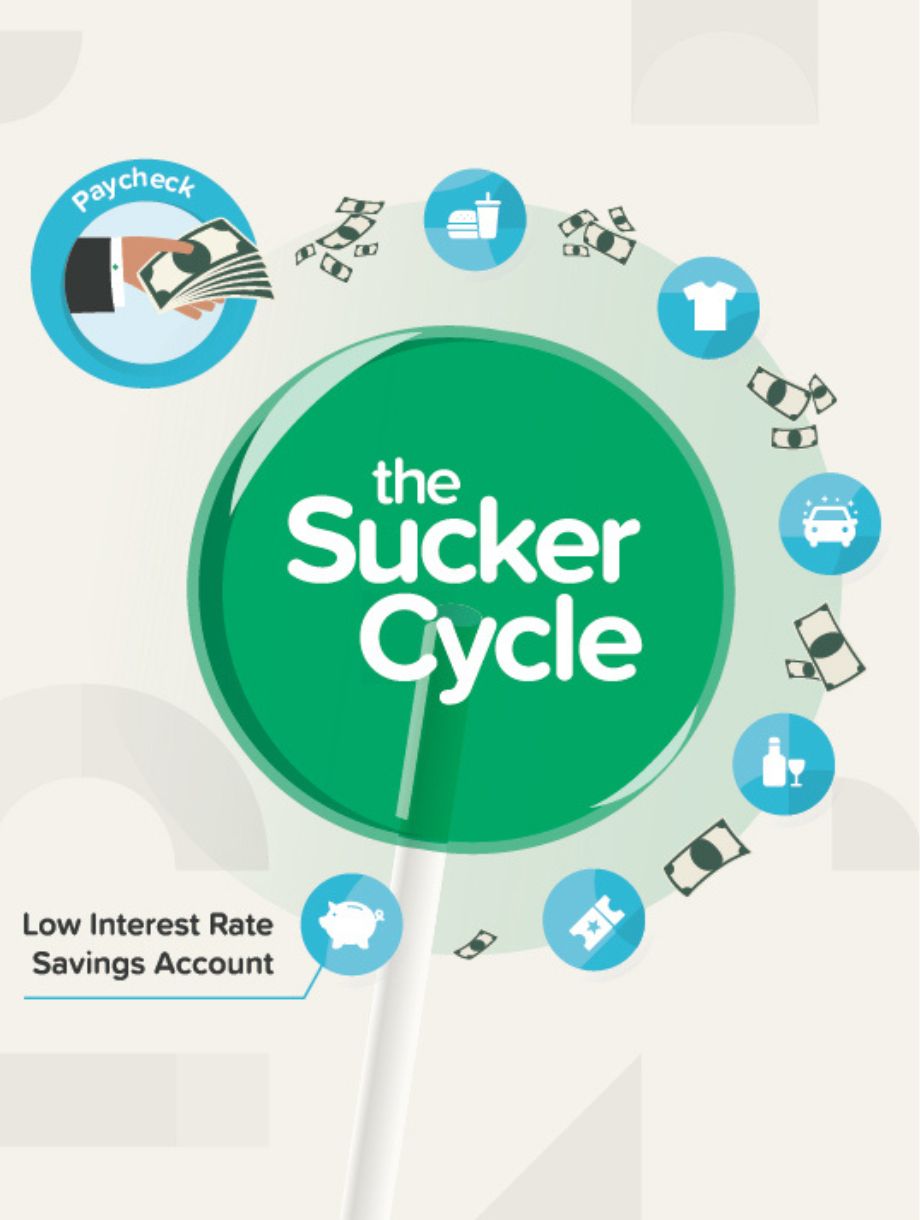
The Trap That's Holding You Back from Financial Freedom
Meet the Sucker Cycle. It’s the trap of foolish spending and low-interest saving that goes on and on—month after month, year after year—slowly draining your potential to be wealthy, free, and in control. Every couple of weeks, the cycle repeats—too much eating out, unnecessary online purchases, yet another streaming subscription. Most people know how to earn money and spend it—but that’s where it ends. The cycle keeps you stuck, making it hard to build savings, invest in your future, or achieve financial peace. But it doesn’t have to be this way. It’s time to break the Sucker Cycle.
What is the Sucker Cycle?
The Sucker Cycle is a vicious pattern of poor financial habits that keeps you trapped in a cycle of spending and debt, preventing you from reaching your financial goals. It’s easy to fall into, and once you’re in, it can feel almost impossible to escape. Here’s how it works:
The Steps of the Sucker Cycle
- Foolish Spending: Without a clear financial plan, it’s easy to spend money on things you don’t really need. Whether it’s daily coffee runs, eating out frequently, or splurging on the latest gadgets, these small expenses add up, leaving little for savings or investments.
- Low-Interest Saving: Even if you manage to save a little, it’s often in low-interest accounts that don’t help your money grow. The result? Your savings barely keep up with inflation, and your financial security remains out of reach.
- Relying on Debt: As your expenses outpace your income, turning to credit cards or loans becomes the go-to solution. But debt comes with interest, and before you know it, you’re paying more in interest than on the principal, digging yourself deeper into the hole.
- Mounting Debt and Interest: The more debt you accumulate, the more interest you have to pay. This can quickly snowball, making it harder and harder to make a dent in your debt. The stress builds, and financial freedom seems farther away than ever.
- No Real Savings or Investments: With most of your income going toward debt repayment and daily expenses, there’s little left for saving or investing. This lack of financial security leaves you vulnerable to emergencies and missing out on opportunities to grow your wealth.
- The Cycle Repeats: Without intervention, the Sucker Cycle continues, trapping you in a loop of financial frustration. Each pay period brings more of the same—spending on wants instead of needs, adding to your debt, and failing to save for the future.
Breaking the Sucker Cycle
It’s time to stop the Sucker Cycle in its tracks. Here’s how you can do it:
- Educate Yourself: Knowledge is power. Start by learning the basics of personal finance—budgeting, saving, investing, and managing debt. Plenty of free resources are available online, including blogs, courses, and ebooks that can guide you.
- Create a Budget: A budget is your blueprint for financial success. Track your income and expenses, and make sure you’re spending less than you earn. Focus on essential needs, cut unnecessary expenses, and prioritize saving.
- Build an Emergency Fund: Start by setting aside money for an emergency fund. Aim to save three to six months’ worth of living expenses. This fund will give you a financial cushion and prevent you from falling back into debt when unexpected expenses arise.
- Pay Off High-Interest Debt: Focus on paying off high-interest debts first. Use strategies like the snowball method (paying off the smallest debts first) or the avalanche method (paying off the highest interest debts first) to stay motivated and make progress.
- Start Investing: Once your emergency fund is established and your high-interest debts are paid off, start investing. Even small, regular investments can grow over time, helping you build wealth and secure your financial future.
- Plan for the Future: Set clear, long-term financial goals. Whether it’s buying a home, funding your children’s education, or preparing for retirement, having a plan will keep you focused and motivated to stay out of the Sucker Cycle.
- Work with a Financial Professional: Sometimes, getting out of the Sucker Cycle requires a little extra help. A financial professional can provide personalized advice, help you create a realistic financial plan, and guide you toward smarter financial decisions. They can also introduce you to investment opportunities and strategies that you might not have considered on your own. Working with a professional can kick-start and accelerate your exit from the Sucker Cycle, putting you on the fast track to financial freedom.
Final Thoughts
The Sucker Cycle might seem like an inevitable part of life, but you have the power to break free. By educating yourself, creating a budget, working with a financial professional, and making smarter financial choices, you can escape the cycle of debt and start building a future that’s financially secure and stress-free. It’s time to take control of your finances and stop the Sucker Cycle for good. Your journey to financial freedom starts now!
Understanding Recessions

What They Are, Signs to Watch For, and How to Prepare
The word recession is something we hear about a lot in the news, but what does it really mean? How can you tell if one is coming, and what can you do to get ready for it? Let's break it down in simple terms.
What Is a Recession?
A recession is when the economy slows down for several months or more. During this time, businesses might make less money, people could lose their jobs, and overall spending decreases. This slowdown can have a ripple effect, impacting nearly everyone.
Here’s what typically happens during a recession:
- The Economy Shrinks (GDP Declines): The total value of goods and services produced in the country, known as Gross Domestic Product (GDP), goes down.
- More People Lose Jobs: As companies struggle, they might lay off workers, leading to higher unemployment rates.
- People Spend Less: With less money coming in, people tend to cut back on spending, which can make the economy slow down even more.
- Businesses Close: Smaller businesses, in particular, might not survive a recession because of reduced demand and tougher credit conditions.
Signs That a Recession Might Be Coming
It’s hard to predict exactly when a recession will hit, but here are some signs that could indicate one is on the way:
- Interest Rates Get Weird (Inverted Yield Curve): Normally, long-term interest rates are higher than short-term rates. But when this flips, it can signal that investors are worried about the future of the economy.
- More People File for Unemployment: A sudden increase in unemployment claims can be an early sign that companies are starting to lay off workers.
- People Feel Less Confident (Declining Consumer Confidence): When people start feeling unsure about the economy, they tend to spend less, which can slow things down even more.
- Factories Slow Down (Slowing Manufacturing): If factories start producing less, it might be because businesses are expecting a drop in demand.
- Stock Market Gets Bumpy (Volatility): Big drops in the stock market can sometimes reflect fears of an economic downturn.
- Businesses Stop Spending (Decreased Investment): If companies start holding back on spending for new projects or equipment, it might be a sign that they’re worried about the future.
How to Prepare for a Recession
Even though you can't stop a recession, you can take steps to protect yourself:
- Save for Emergencies: Try to save enough money to cover 3-6 months of living expenses. This can help you stay afloat if you lose your job or face other financial challenges.
- Have More Than One Source of Income: If possible, find additional ways to earn money, like a side job or freelance work, to reduce your dependence on a single paycheck.
- Pay Down Debt: The less debt you have, especially high-interest debt like credit cards, the better off you'll be if your income decreases.
- Adjust Your Spending: Look at your budget and find areas where you can cut back. Focus on covering essential expenses and eliminating unnecessary costs.
- Invest Smartly: It might be tempting to pull your money out of the stock market during tough times, but staying invested with a well-diversified portfolio is often a better strategy. However, everyone is different, so consider talking to a financial professional about the best approach for your situation.
- Improve Your Skills: Strengthening your skills or gaining new ones can make you more competitive in the job market, which can be especially important during a recession.
- Stay Informed: Keep an eye on what's happening in the economy. The more you know, the better decisions you can make to protect yourself and your finances.
Staying Alert
Recessions are a natural part of the economic cycle, but they can be tough to go through. By understanding what they are, keeping an eye out for warning signs, and taking steps to prepare, you can better navigate these challenging times. Being proactive can help you stay secure and confident, even when the economy takes a downturn.
Winning Gold in Personal Finance

Lessons from the Summer Olympics
As we tune in to the thrilling events of the Olympics, it's impossible not to feel inspired by the athletes competing at the pinnacle of their sports. Their dedication, discipline, and strategies can teach us a great deal about achieving success—not just in athletics, but also in our financial lives. Here are some key takeaways that can help you win gold in your personal finances.
Set Clear Goals
Every Olympic athlete has a clear goal, whether it's winning a medal, setting a personal best, or simply finishing the race. Similarly, you should set clear and specific financial goals.
- Short-term goals: Save for a vacation, build an emergency fund, or pay off a small debt.
- Medium-term goals: Buy a home, save for your child's education, or purchase a new car.
- Long-term goals: Plan for retirement, build wealth, or create a financial legacy.
Write down your goals, assign timelines, and outline the steps needed to achieve them. Clear goals provide direction and motivation.
Create a Training Plan
Olympians follow rigorous training plans designed to optimize their performance. Your financial training plan should be equally disciplined.
- Budgeting: Track your income and expenses to understand your financial habits. Create a budget that aligns with your goals.
- Saving: Aim to save a portion of your income regularly. Automate your savings to ensure consistency.
- Investing: Learn about different investment options and start investing early. Diversify your portfolio to spread risk and increase potential returns.
- Debt Management: Develop a strategy to pay off high-interest debts first. Consider consolidating debts to lower interest rates and simplify payments.
Consistency and discipline in following your financial plan are key to success.
Seek Expert Coaching
Olympians have a team of coaches, nutritionists, and psychologists to help them reach peak performance. In personal finance, seeking expert advice can be invaluable.
- Financial Professional: They can help you develop a comprehensive financial plan and guide your investment choices.
- Tax Consultants: Experts who can assist with tax planning and strategies to minimize liabilities.
- Estate Planners: They can help you plan for your legacy, ensuring your assets are distributed according to your wishes.
Leveraging the expertise of professionals can help you navigate complex financial decisions and stay on track with your goals.
Stay Focused and Adaptable
The journey to the Olympics is full of challenges and setbacks. Athletes must stay focused on their goals and be adaptable to changing circumstances. In personal finance, staying focused on your goals is equally important, but life is unpredictable, and your financial plan may need adjustments along the way.
- Emergency Fund: Ensure you have a safety net to cover unexpected expenses without derailing your financial goals.
- Regular Review: Periodically review your financial plan and make adjustments as needed, such as rebalancing your investment portfolio or adjusting your savings rate.
- Continuous Learning: Stay informed about changes in the financial landscape. Read books, attend seminars, and follow trusted financial news sources.
Adaptability and resilience are crucial traits for both athletes and individuals striving for financial success.
Celebrate Your Wins
Athletes celebrate their victories, no matter how small, as each win brings them closer to their ultimate goal. Similarly, it's important to acknowledge and celebrate your financial milestones. Whether it's paying off a debt, reaching a savings target, or making a successful investment, take time to recognize your achievements.
Celebrating these wins can boost your motivation and reinforce positive financial behaviors. Share your successes with friends and family, or reward yourself with a treat that fits within your budget.
Conclusion
As we watch the Paris Olympics unfold, let's draw inspiration from the athletes' dedication, discipline, and strategic planning. By applying these principles to our personal finances, we can set ourselves up for success and achieve our financial goals. With the right mindset and approach, you too can win gold in personal finance. Let's make 2024 not just the year of the Summer Olympics, but also the year you take control of your financial future and achieve your dreams.