 Request a copy of our book(s)
The Importance of Long-Term Care Insurance

A Necessity in Today’s Ageing Society
As we move deeper into the 21st century, two significant trends are reshaping the healthcare landscape: rising medical costs and increasing life expectancy. These changes are creating a growing need for long-term care insurance, a type of coverage many may overlook, but which can prove invaluable in ensuring financial stability and quality care in our later years.
Rising Medical Costs: A Growing Concern
The cost of healthcare has been on an upward trajectory for several decades. Factors such as advancements in medical technology, prescription drug prices, and administrative expenses contribute to this rise. More specifically, as the treatments become more sophisticated and comprehensive, their costs rise accordingly, impacting how much care one can afford out of pocket.
These costs can be daunting for individuals, especially seniors, who may require prolonged medical care or assistance with daily activities. Long-term care (LTC) insurance helps mitigate these expenses, covering services that regular health insurance policies typically do not, such as in-home care, nursing facility care, or assisted living.
Extended Life Expectancy: A Double-Edged Sword
Thanks to better healthcare services, nutrition, and living conditions, people are living longer than ever before. While this is a positive development, it also brings with it the challenge of ensuring that these additional years are lived with dignity and independence. As life expectancy increases, so does the potential need for prolonged periods of medical and personal care.
Statistically, about 70% of individuals over 65 will require some form of long-term care during their lifetime. This care is not just medical; it often includes help with daily activities such as bathing, dressing, and eating—tasks that are essential for maintaining a decent quality of life.
The Role of Long-Term Care Insurance
Long-term care insurance offers several benefits:
- Financial Security: LTC insurance helps protect your savings and assets from the high costs of care, which can quickly deplete one’s life savings.
- Flexibility of Care: It provides more choices for the type of care received and the location of that care. This could mean receiving care at home, which many prefer and often less disruptive than moving to a facility.
- Relief for Family Members: Family members often bear the burden of care. LTC insurance can alleviate this pressure by providing professional care, allowing family relationships to maintain more of their traditional dynamic.
Considerations Before Purchasing LTC Insurance
While the benefits are clear, deciding to purchase LTC insurance requires careful consideration:
- Cost vs. Benefit: Premiums can be high, especially if you start purchasing late in life. It’s advisable to consider buying LTC insurance in your mid-50s to early 60s.
- Inflation Protection: As the cost of care continues to rise, it’s crucial that your LTC policy includes inflation protection to ensure that the benefits you receive keep pace with rising costs.
- Policy Details: Understand what triggers your benefits, the types of care covered, and any exclusions or limits. Each policy is different, so comprehending the fine print is essential.
Working with a Financial Professional
Choosing the right long-term care insurance requires navigating a complex landscape of options and considerations. This is where a financial professional can be invaluable. They can help you:
- Assess your Needs: They can provide personalized insights based on your health status, financial resources, and family history.
- Understand Policy Options: They can help decipher the terms and conditions of various policies, ensuring you understand what is covered and what is not.
- Evaluate Costs and Benefits: They can assist in determining the cost-effectiveness of a policy, taking into account your age, the likelihood of needing care, and the potential future costs of care.
- Stay Updated: Insurance products and regulations change frequently. Working with a professional ensures that your policy remains in line with current laws and best practices.
The Bottom Line
Long-term care insurance isn't just an insurance product; it's an integral part of financial strategy, specifically your retirement planning. As medical costs continue to climb and life expectancy stretches, having an LTC policy can be the key to maintaining your health, independence, and financial security in your golden years. Whether you are approaching retirement or are helping a loved one plan for the future, consider long-term care insurance as a vital investment in a secure and dignified later life, and consider engaging a financial professional to navigate this crucial decision.
The Rising Cost of a Comfortable Retirement

Americans Adjust Expectations in the Face of Economic Realities
In recent years, the estimated financial cushion needed for a comfortable retirement, colloquially known as the "magic number," has surged significantly among American adults. This figure has climbed to an all-time high, indicating profound shifts in economic perceptions and retirement planning. According to the 2024 Planning & Progress Study by Northwestern Mutual, U.S. adults now believe they will need $1.46 million to retire comfortably. This represents a sharp 15% increase from the $1.27 million reported just last year, and an even more staggering 53% rise from the $951,000 figure anticipated back in 2020.
This ballooning of the retirement threshold is notably outpacing current inflation rates, which fluctuate between 2% and 3%. The discrepancy highlights a growing concern among future retirees about the adequacy of their savings in the face of rising living expenses, healthcare costs, and potential economic turbulence.
The data from a survey conducted by The Harris Poll among over 4,500 U.S. adults illuminates several key trends that underline these concerns. Not only have expectations for necessary retirement funds increased, but a significant disparity exists between these expectations and current savings. The average U.S. adult currently has $88,400 saved for retirement, which is a decline from previous years and more than $10,000 below the five-year peak of $98,800 seen in 2021.
Moreover, different generations have varied expectations concerning their retirement needs. Gen Z and Millennials estimate they will need over $1.6 million to retire comfortably—significantly higher than the average. High-net-worth individuals anticipate needing nearly $4 million, reflecting perhaps both a broader awareness of future economic challenges and a more lifestyle-driven understanding of what a 'comfortable retirement' entails.
These shifting perceptions are also seen in the age demographics of retirement planning. The study shows that while the average American begins saving for retirement at age 31, Gen Z members are starting almost a decade earlier at 22. This could suggest a heightened awareness among younger Americans about the importance of early financial planning.
As concerns about financial security in retirement grow, many Americans remain unprepared for potential long-term economic downturns, healthcare costs, and the sufficiency of social security. Alarmingly, more than a third of Gen Xers and Baby Boomers have not taken any steps to address the possibility of outliving their savings, despite understanding the risks.
This study highlights a critical reality: Americans are adjusting their financial strategies and expectations to ensure a stable and comfortable retirement as the cost of living continues to rise and economic uncertainties persist. The increased "magic number" is not just a reflection of inflation but a deeper, more comprehensive reaction to the anticipated needs of the future. Whether this trend leads to a more secure retirement for many or exposes gaps in our economic preparedness remains an essential topic for policymakers, financial advisors, and the individuals planning their retirements.
The Role of Financial Literacy in Achieving Retirement Goals
Financial literacy emerges as a critical tool for effectively navigating these rising retirement costs. Understanding basic financial concepts such as compound interest, investment risk, and the benefits of diversified portfolios can significantly influence one’s ability to accumulate the necessary funds for a comfortable retirement. Financial literacy not only helps in making informed decisions but also empowers individuals to plan strategically and avoid common pitfalls such as high debt levels and inadequate savings rates.
Steps to Enhance Retirement Savings
Given the complexities of modern financial landscapes, here are actionable steps that individuals can take to better prepare for retirement:
- Start Early: The power of compound interest means that money saved today grows exponentially over time. Starting early can significantly reduce the burden of saving larger amounts later in life.
- Maximize Retirement Contributions: Take full advantage of tax-advantaged retirement accounts. Ensure to contribute at least enough to capture any employer match, which is essentially free money.
- Educate Yourself About Finances: Regularly invest time in understanding financial products and current market trends. Resources like our TheMoneyBooks series, financial blogs, and educational seminars can be invaluable.
- Create a Financial Plan: Develop a comprehensive plan that includes savings goals, growth strategies, and risk management. Consider consulting with a financial professional to tailor a plan to your personal needs and financial situation.
- Monitor and Adjust Investments: As you approach retirement, it’s crucial to adjust your investments to ensure it aligns with your risk tolerance and retirement timeline. This might mean shifting from aggressive investments to more conservative ones as you near retirement.
- Plan for Healthcare Costs: Medical expenses can be a significant burden in retirement. Consider investing in a Health Savings Account (HSA), looking into Long-Term Care plans, and researching Medicare options to ensure you are adequately covered.
- Prepare for Longevity: With life expectancies increasing, planning for a longer retirement is crucial. Ensure your savings plan takes into account the possibility of living 20 or 30 years
Navigating Towards a Secure Retirement
The rising "magic number" for retirement underscores a crucial reality: the financial landscape for future retirees is becoming increasingly challenging. With costs that outpace inflation and growing economic uncertainties, understanding and preparing for these financial needs is more important than ever. Financial literacy not only provides the tools needed to navigate this complexity but also empowers individuals to make decisions that secure their long-term financial well-being.
As Americans adjust their expectations and strategies in response to these financial pressures, the importance of proactive planning cannot be overstated. By adopting a disciplined approach to saving, investing wisely, and staying informed about financial health, individuals can not only meet but potentially exceed their retirement goals. This preparation will ensure a more comfortable retirement and provide greater financial security in a world of ever-changing economic dynamics.
The Perils of Overspending

Financial Literacy Month is a prime opportunity for everyone to recalibrate their approach to managing personal finances. In an era of easy access to credit and relentless advertising, overspending has become a common pitfall with far-reaching consequences. Let’s explore the ramifications of overspending and the vital role financial literacy plays in empowering individuals with the knowledge to make informed financial decisions.
The Reality of Overspending
Overspending is a common problem that occurs when one's spending surpasses one's income. This results in a reliance on credit and the buildup of debt, creating a cycle that is simple to enter but challenging to break free from.
To draw a parallel, imagine overspending as akin to consuming calories. If you consistently intake more calories than you burn, the surplus will eventually lead to weight gain. In the realm of finances, this "surplus" materializes as debt, which can escalate rapidly if left unattended. Just as excess calories can impact one's physical health, unchecked debt can significantly affect one's financial well-being, highlighting the importance of managing expenses wisely and living within one's means.
Consequences of Overspending
Immediate Financial Strain - The most immediate impact of overspending is the depletion of your financial cushion, leading to potential struggles to cover essential expenses. This scenario often results in increased reliance on credit cards, thereby kicking off a cycle of debt that can be challenging to break.
Debt Accumulation - Debt, particularly from high-interest credit cards, can spiral, impacting current and future financial health. It can obstruct the path to financial goals, such as saving for retirement or purchasing a home, by diverting funds that could have been saved or invested toward interest payments.
Credit Score Impact - A healthy credit score is crucial for financial flexibility and obtaining favorable terms on loans and credit. Overspending can lead to missed payments and high credit utilization ratios, significantly damaging your credit score. This, in turn, can lead to higher interest rates on future loans and credit scarcity when you most need it.
Long-Term Financial Health - The long-term consequences of unchecked overspending are severe. They include delayed or compromised retirement plans, an inability to accumulate wealth, and potential financial insecurity during emergencies. The stress of debt can also take a toll on mental health and personal relationships.
The Importance of Financial Literacy
Financial literacy offers the tools and knowledge necessary to navigate the complex world of personal finance. It encompasses understanding how to create and adhere to a budget, use credit responsibly, and set and achieve financial goals.
Budgeting and Planning - A well-structured budget is the foundation of financial health, enabling individuals to track and control their spending, save for the future, and allocate funds toward debt repayment. Understanding your cash flow — what comes in and what goes out — is critical in avoiding overspending.
Wise Use of Credit - Financial literacy includes understanding the cost of credit and how to use it to your advantage. This means knowing when and how to use credit cards, paying off balances in full to avoid interest, and leveraging credit for significant purchases without jeopardizing financial stability.
Setting Financial Goals - Identifying and working toward financial goals is a motivational aspect of financial literacy. Whether building an emergency fund, saving for a down payment on a home, or planning for retirement, having clear objectives helps focus spending and saving behaviors toward achieving those goals.
Embracing Financial Literacy
Financial literacy is the foundation of understanding and effectively managing your finances. It encompasses a range of essential skills and knowledge that empower individuals to make informed decisions about their money. From creating and sticking to a budget to using credit responsibly and setting achievable financial goals, financial literacy equips individuals with the tools needed to navigate the complexities of personal finance confidently.
By developing a strong grasp of financial concepts and practices, individuals can not only make sound financial decisions in their daily lives but also build a secure financial future. This includes learning to save and invest wisely, understanding the implications of different financial choices, and planning for long-term financial stability.
Moreover, financial literacy plays a crucial role in promoting financial well-being and independence. It empowers individuals to take control of their financial situations, avoid common pitfalls such as debt accumulation, and work towards achieving their financial aspirations. Ultimately, cultivating financial literacy is a lifelong journey leading to greater financial security, peace of mind, and the ability to confidently navigate the ever-changing financial landscape.
Financial Literacy vs. Financial Capacity

Empowering Choices in April's Financial Literacy Month
April marks Financial Literacy Month, a time dedicated to raising awareness about financial education and empowering individuals to make informed financial decisions. While financial literacy is a term many of us are familiar with, the concept of financial capacity may not be as widely recognized. Yet, understanding the distinction between financial literacy and financial capacity is crucial for navigating the complexities of today's financial landscape.
What is Financial Literacy?
Financial literacy refers to the set of skills and knowledge that allows an individual to make informed and effective decisions with all of their financial resources. It encompasses understanding key financial concepts such as budgeting, saving, investing, and managing debt. Financial literacy is the foundation upon which individuals can build a secure financial future, navigate the complexities of financial products, and avoid common pitfalls like high-interest debt.
What is Financial Capacity?
Financial capacity, on the other hand, goes a step further. It not only involves having financial knowledge but also the ability to apply that knowledge in everyday life. Financial capacity includes the skills, tools, and resources necessary to make financial decisions effectively. This concept focuses on the practical application of financial literacy, taking into account an individual's unique financial situation, goals, and challenges.
The Interplay Between Financial Literacy and Financial Capacity
Imagine financial literacy as the theoretical knowledge you gain from reading a book on how to ride a bike, while financial capacity is the actual ability to get on the bike, balance, pedal, and navigate through traffic. You need the theory (literacy) to understand the mechanics and the practice (capacity) to actually ride the bike.
The Role of Financial Literacy Month
Financial Literacy Month serves as a crucial reminder of the importance of both understanding financial concepts and applying them to make sound financial decisions. It's an opportunity for individuals, communities, and organizations to engage in activities that promote financial education, from workshops and seminars to online resources and tools.
Building Financial Capacity
Building financial capacity requires taking proactive steps beyond acquiring knowledge. This includes:
- Setting Clear Financial Goals: Understand what you want to achieve, whether it's saving for retirement, buying a home, or funding education.
- Accessing Resources and Tools: Utilize budgeting apps, meet with financial professionals, and enrol in educational courses to manage your finances more effectively.
- Practicing Financial Decision-Making: Apply your knowledge by making real-life financial decisions, starting with smaller choices and gradually tackling more complex ones.
The Impact of Financial Literacy and Capacity
Enhancing both financial literacy and capacity can have a profound impact on individuals and communities. It leads to better financial well-being, reduces stress related to financial issues, and promotes a culture of informed financial decision-making. On a larger scale, it contributes to the overall economic stability and growth by fostering a financially educated population.
As we observe Financial Literacy Month, let's embrace both the acquisition of financial knowledge and the cultivation of financial capacity. By understanding the difference and importance of these concepts, individuals can navigate their financial journeys with confidence and resilience. Remember, financial literacy opens the door to knowledge, but it's through financial capacity that we can walk through it and take control of our financial destinies.
Empowering Older Women Through Grey Divorce: Insights and Solutions

The phenomenon of grey divorce, defined as divorce among adults aged 50 and older, has increasingly entered the public consciousness. As outlined in a detailed study published in the Journals of Gerontology: Social Sciences by Susan L. Brown, Ph.D., and I-Fen Lin, Ph.D., from Bowling Green State University, this demographic trend has been rising over the past five decades in the United States. Their research, "The Graying of Divorce: A Half Century of Change," not only charts this rise but also sheds light on the unique challenges and transitions faced by older adults, particularly women, navigating the complexities of divorce later in life.
The Growing Trend of Grey Divorce
Historically, the rate of grey divorce was modest but began to double from 1990 to 2010. Although there has been a slight decrease since then, the overall rate remains significantly elevated compared to earlier decades. Notably, while the rate among middle-aged adults has stagnated, it continues to climb among those aged 65 and older. This shift indicates a demographic change in those experiencing divorce, highlighting the importance of addressing the specific needs of this older population.
The Impact on Older Women
Older women facing grey divorce encounter distinctive challenges. Financial disparities, longer life expectancies, and potential employment gaps make the financial impact of divorce particularly pronounced for women. Socially, the task of rebuilding networks post-divorce can be daunting. At the same time, emotionally, the end of a long-term marriage brings its own set of grief and adjustment challenges.
Empowering Solutions for Navigating Grey Divorce
As the landscape of family dynamics shifts with the rising trend of grey divorce, it becomes crucial to address the specific challenges faced by older women embarking on this transition. The journey through a divorce later in life can be fraught with emotional upheavals, financial uncertainties, and social adjustments. However, within this transformative period lies an opportunity for growth, empowerment, and the rediscovery of individual resilience. Recognizing the unique hurdles older women face, below is a list of empowering solutions to navigate the intricacies of grey divorce.
Financial Independence and Security
- Financial Literacy Workshops: Tailored to the needs of older women, these workshops focus on managing finances independently, retirement planning, and understanding social security benefits.
- One-on-One Financial Planning: Consulting with financial professional specializing in divorce can clarify the implications of divorce settlements and retirement accounts.
Legal Support and Resources
- Accessible Legal Clinics: Legal clinics and pro bono services ensure women are well-informed about their rights and options, guiding them through the legal complexities of divorce proceedings.
Emotional Wellness and Support Networks
- Support Groups: Peer support groups offer a platform for sharing experiences and strategies, fostering community and mutual support.
- Counseling Services: Professional counseling can address the emotional aspects of divorce, offering personalized coping strategies.
Rebuilding Social Connections
- Community Engagement: Participation in community events, classes, or clubs can help rebuild social networks and foster new interests.
- Learning Opportunities: Pursuing new skills or hobbies can lead to personal growth and opportunities for social interaction.
Health and Wellness
- Wellness Programs: Programs focusing on nutrition, exercise, and mental health support the overall well-being of older women navigating divorce.
- Healthcare Navigation: Understanding post-divorce healthcare options is crucial, especially for those transitioning from a spouse’s insurance plan.
Secure and Comfortable Living
- Housing Guidance: Advice on downsizing, renting, or finding new housing can help women find secure and comfortable living arrangements post-divorce.
- Financial Aid for Housing: Financial assistance programs can ensure access to safe and affordable housing options.
Moving Forward
The increasing prevalence of grey divorce calls for a concerted effort to support older adults, particularly women, as they navigate this life transition. The research by Brown and Lin provides a critical foundation for understanding these needs and developing adequate support mechanisms. By focusing on areas such as financial planning, legal support, emotional well-being, and social connectivity, older women can emerge from the experience of grey divorce empowered and prepared to embrace a new chapter in their lives.
The Recipe for Longevity

Better Health and More Wealth
Two indispensable ingredients stand out in the pursuit of a long and fulfilling life: better health and more wealth. Renowned gerontologist Dr. Ken Dychtwald, through his extensive research and insightful books, illuminates the significance of these factors in shaping our longevity journey.
By prioritizing our physical and mental well-being, adopting healthy lifestyle habits, and investing in our financial security, we can optimize our chances of leading a vibrant and prosperous life well into our golden years. Dr. Dychtwald's work illuminates the interconnectedness of health and wealth, offering valuable guidance and empowering individuals to make informed choices that positively impact their long-term well-being. Together, these essential elements create a solid foundation for a life of longevity, purpose, and fulfillment.
Dr. Dychtwald, a leading authority on aging, emphasizes the pivotal role of health in longevity. In his book "Age Wave," he articulates, "Health is not an optional luxury. Without it, we cease to be fully functional participants in life." Through this lens, he underscores the importance of proactive health management as a cornerstone of longevity. From maintaining a balanced diet to regular exercise and proactive healthcare practices, prioritizing health becomes a non-negotiable aspect of extending one's lifespan.
Moreover, Dr. Dychtwald emphasizes the correlation between financial well-being and longevity. In his book "The Power Years," he delves into the intertwined nature of wealth and longevity, stating, "Financial security provides a sense of stability and peace of mind that directly impacts our physical and emotional well-being." He advocates for prudent financial planning, emphasizing the significance of saving, investing wisely, and creating a robust financial framework to sustain oneself through life's journey.
Dr. Dychtwald recommends exploring educational resources like the TheMoneyBooks series to achieve these twin pillars of longevity. These books offer practical insights into financial literacy, empowering individuals to make informed financial decisions. By understanding concepts such as budgeting, investing, and wealth accumulation, readers can lay a solid foundation for their financial future.
Furthermore, Dr. Dychtwald stresses the importance of seeking guidance from financial professionals. Collaborating with a trusted advisor can provide personalized strategies tailored to individual financial goals and circumstances. This proactive approach not only enhances financial literacy but also cultivates a sense of confidence and security regarding one's financial trajectory.
The keys to a long and prosperous life lie in nurturing better health and cultivating more wealth. Drawing from Dr. Dychtwald's wisdom, these two elements are intertwined and essential for realizing our longevity potential. By embracing proactive health practices, educating ourselves on financial literacy, and seeking guidance from professionals, we can pave the way for a vibrant and fulfilling journey through the years ahead.
For those eager to embark on a transformative journey toward longevity and overall well-being, I strongly recommend immersing yourself in the thought-provoking and illuminating books Dr. Dychtwald wrote. With his extensive expertise in the field, his insightful writings will expand your knowledge and serve as a guiding light, inspiring you to take meaningful action toward a healthier, more fulfilling life. By delving into his wisdom, you will gain invaluable insights and practical strategies that can transform your perspective and empower you to make positive changes for long-term well-being and personal growth.
In addition to immersing yourself in the invaluable wisdom shared in Dr. Dychtwald's books, I highly encourage you to delve into the captivating TheMoneyBooks series. These empowering resources will equip you with the essential financial knowledge and skills needed to navigate the complexities of money management confidently, make informed decisions, and embark on a journey toward sustainable wealth creation.
Whether you are just starting your financial journey or seeking to enhance your existing knowledge, this series offers a comprehensive guide that covers a wide range of topics, from budgeting and investing to retirement planning and estate management. Embrace the opportunity to expand your financial literacy and empower yourself with the tools to secure a prosperous future.
To maximize your journey toward holistic success, consider partnering with a trusted and knowledgeable financial professional. Together, you can craft a personalized roadmap tailored to your unique circumstances and aspirations. This collaborative approach will ensure you are on the right track toward a healthier, wealthier, and more fulfilling life.
By investing in both your physical and financial well-being today, you are making a profound commitment to your future self. Take this valuable opportunity to create lasting positive change and establish a rock-solid foundation for a prosperous and purposeful future. Your future self will undoubtedly express gratitude for your proactive and transformative step towards a life brimming with abundance, fulfillment, and overall wellness. Seize the chance to cultivate a holistic approach to health and wealth that will shape your journey toward a genuinely extraordinary existence.
Equal Pay Day 2024

A Milestone and a Spotlight
Equal Pay Day symbolizes the ongoing struggle for gender wage equality. This significant day sheds light on the additional days women must work into the new year to reach parity with their male counterparts' earnings from the previous year. In 2024, women did not catch up to men’s income from 2023 until March 12th, more than two months after the end of the year.1
Despite progress made since the Equal Pay Act was established in 1963 during President Kennedy's administration, the journey to closing the gender pay gap remains fraught with challenges and slow progress. Addressing systemic barriers and advocating for fair wages for all individuals, regardless of gender, remains a crucial focus in our ongoing pursuit of equality in the workplace.
The landscape in 1963 witnessed a groundbreaking moment with the Equal Pay Act, a pivotal step toward eliminating wage discrimination based on gender. At that time, women earned a mere 60 cents for every dollar a man made. Moving forward to 1990, thirty years later, the gap only slightly narrowed to 70 cents.2 Fast forward another three decades to today, and women now earn 82 cents for every $1 men earn. While this progress is commendable, it reveals the gradual and uneven trajectory toward equality.3
The disparities are even worse for women of color, who confront the compounded challenges of gender and racial pay gaps. Black women earn 58 cents, Latinas earn 54 cents, and Native American women earn 60 cents for every $1 white, non-Hispanic men earn. Consequently, Equal Pay Day for these groups falls much later in the year (July 9 for Black women, October 3 for Latinas, and November 21 for Native women), casting a long shadow over their economic contributions and rights.1
Projections indicate that the gender pay gap may persist until 2059, a further 35 years into the future.4 This sluggish rate of change is unacceptable. It demands a renewed dedication to policies and strategies addressing the core issues of wage inequality. The gender pay gap transcends being merely a women's issue; it is a societal matter impacting the financial welfare of families and communities.
Advocating for pay transparency, robust enforcement of equal pay regulations, and bolstering support for women in underrepresented high-paying professions are crucial steps to expedite progress. Additionally, combatting the "motherhood penalty" and strong support for work-life balance is paramount to prevent women from sacrificing career growth for family obligations.
Equal Pay Day serves as both a milestone recognizing advancements women have achieved and a spotlight on the work that lies ahead. It beckons policymakers, employers, and individuals to redouble their efforts in attaining genuine wage parity. Let this Equal Pay Day not only be a commemoration of the past but a catalyst for a future where pay fairness is not just an aspiration but a concrete reality. The journey is long, but the goal remains clear: a future where pay is based on skill and ability, not gender or race.
Kim Scouller
1. AAUW, “March 12 is Equal Pay Day 2024,” (2024). https://www.aauw.org/resources/article/equal-pay-day-calendar/
2. Investopedia, “Gender and Income Inequality: History and Statistics,” GregDaugherty (Mar 1, 2023). https://www.investopedia.com/history-gender-wage-gap-america-5074898
3. Pew Research Center, “The Enduring Grip of the GenderPay Gap,” Rokesh Kochhar (Mar 1, 2023). https://www.pewresearch.org/social-trends/2023/03/01/the-enduring-grip-of-the-gender-pay-gap/#:~:text=The%20gender%20pay%20gap%20–%20the%20difference%20between,when%20they%20earned%2080%20cents%20to%20the%20dollar.
4. Forbes, “Gender Pay Gap Statistics in 2024,” KatherineHaan (Feb 27, 2023). https://www.forbes.com/advisor/business/gender-pay-gap-statistics/
Navigating Credit Invisibility

Empowering Women to Build Their Own Credit Identity
In the intricate dance of personal finance, credit invisibility remains a significant barrier for many. Still, it disproportionately affects women, especially those who have historically relied on their spouse's credit history. This reliance can leave women vulnerable and financially invisible when they face life changes such as divorce or widowhood. Understanding credit invisibility, its implications, and pathways to credit visibility is crucial in empowering women to establish and maintain financial independence.
The Reality of Credit Invisibility Among Women
Credit invisibility occurs when an individual lacks a credit report or has insufficient history to generate a credit score. This situation is particularly common among women who may have deferred financial management to their spouses, including using credit. As a result, despite potentially managing household finances or making regular payments, their financial reliability remains undocumented in the eyes of credit bureaus.
The Implications for Women
For women emerging from the shadow of a spouse's credit history, the implications of credit invisibility can be far-reaching. It can limit access to financial products necessary for independence, such as personal loans, mortgages, and business financing. This invisibility can also affect renting apartments, securing jobs that require credit checks, and obtaining competitive rates for insurance and utilities.
Pathways to Visibility for Women
Empowering women to build their own credit identity is vital for financial autonomy. Here are targeted example strategies that could help women transition from credit invisibility to visibility:
Secured Credit Cards: A practical first step, secured credit cards require a deposit that typically serves as the credit limit. This tool is invaluable for women looking to build credit independently, offering a way to demonstrate financial responsibility.
Credit Builder Loans: These loans are designed to help individuals build credit. The borrowed amount is held in an account. At the same time, payments are made, ideally suited for women aiming to establish a credit score without the risk of accruing unmanageable debt.
Authorized User Status: Becoming an authorized user on a trusted person's credit card can help women benefit from another's credit history. It's crucial to ensure that the primary account holder's credit behavior will positively impact your credit score.
Report Alternative Payments: Reporting rent and utility payments to credit bureaus can help establish a credit history. Services that facilitate this reporting can be particularly beneficial for women who have managed household expenses without receiving credit recognition.
Retail and Gas Credit Cards: While these cards often come with higher interest rates, they are generally more accessible. They can be a stepping stone for women to build their credit, provided balances are managed wisely.
Financial Education and Support: Seeking out financial education resources and support networks can empower women with the knowledge to navigate credit building and financial planning effectively.
Empowering Women Financially
For women facing credit invisibility due to relying on a spouse's credit history, the journey to establishing their credit identity is empowering and essential. By leveraging tools designed to build credit and adopting responsible financial habits, women can overcome the challenges of credit invisibility. This journey not only enhances their ability to access financial products but also secures their financial independence and resilience. As women take charge of their credit identities, they pave the way for a future where financial empowerment is within reach for all.
Teaching Children How Money Works

A Guide for Parents
One of the many responsibilities for parents is preparing our children for the real world, and a significant part of that preparation involves understanding money and finances. Teaching children how money works from a young age can set them up for success later in life. Here are some simple ideas for introducing financial concepts to your children in an engaging and age-appropriate way.
Start with the Basics: What is Money?
Begin by explaining what money is, the different forms it can come in (coins, bills, digital), and its purpose. Use real money as a visual aid; let them hold, count, and sort coins and bills to familiarize themselves with different values.
Activities:
Coin Identification: Teach them to identify and value different coins.
Play Store: Set up a mini-marketplace at home where they can "buy" and "sell" items.
Earning and Saving
Once they understand what money is, introduce the concept of earning money through chores or tasks. This not only teaches them the value of work but also the importance of saving.
Activities:
Chore Chart: Create a chore chart with associated earnings. It helps them understand work-reward dynamics.
Piggy Bank Savings: Encourage them to save their earnings in a piggy bank for something they want to buy.
Budgeting
Teaching kids to budget is about planning how to spend their money wisely. You can start this lesson even with young children using simple terms and examples.
Activities:
Envelope System: Use envelopes to allocate money for different purposes (e.g., savings, spending, charity). It visualizes budgeting concepts.
Goal Setting: Help them set financial goals, like saving for a toy, and plan their savings accordingly.
The Concept of Credit
While credit might seem a complex topic for kids, it’s crucial in today’s digital age. Explain credit as borrowing money that needs to be returned, usually with extra (interest).
Activities:
Loan for a Toy: Offer to "lend" them money for a toy they want, with a simple "interest" concept, like doing extra chores.
Smart Spending
Teach them that spending money wisely means thinking carefully about what you're buying and whether you need it.
Activities:
Wants vs. Needs: Discuss the difference between wants and needs, and have them categorize items in a magazine or flyer.
Comparison Shopping: Show them how to compare prices and the value of items in stores or online.
Generosity and Giving
Understanding money also involves learning about generosity and giving to those in need.
Activities:
Charitable Giving: Encourage them to allocate a portion of their savings to donate to a charity of their choice.
Volunteering: Involve them in volunteer activities that don’t involve money but time and effort, teaching them other ways to give back.
Use Resources Wisely
Many tools and resources are available to make learning about money fun and engaging, including apps, games, and books tailored to children.
Activities:
Financial Literacy Apps: Utilize child-friendly apps designed to teach money management through games.
Books on Money: Read books that introduce financial concepts in story formats suitable for children, like our How Money Works series!
Be a Financial Role Model
Children learn a lot by observation. Let them see you budgeting, shopping wisely, and saving. Discuss your financial decisions with them at an appropriate level to involve them in the process.
Teaching your children about money management is a gift that will benefit them throughout their lives. By starting early and using engaging, practical activities, you can help them develop a healthy relationship with money. Remember, it's not just about giving them financial knowledge but also instilling values around money that will guide their decisions in the future.
Social Security's Financial Saga

Unraveling Myths and Facing Stark Truths
"Social Security teeters on a precarious edge," proclaimed the 2023 annual report of the Social Security Board of Trustees. The surplus in the trust funds that disburse retirement, disability, and other Social Security benefits could be depleted by 2034. This stark warning serves as a wake-up call, urging Congress to take immediate action to strengthen and secure the program's future. The report not only presents a dry financial forecast but also highlights the significance of addressing this issue head-on.
Despite the urgency and the availability of viable, pragmatic solutions, our collective inertia has hindered progress. As the clock ticks, the need for political bravery to confront this daunting challenge becomes more pronounced. It’s imperative that we prioritize and invest in the long-term sustainability of Social Security, ensuring the financial well-being of current and future generations. We need to seize this opportunity to enact meaningful reforms and safeguard this vital social safety net.
A Glimpse into the Challenge
The unvarnished truth? Securing a comfortable retirement will cost more than ever before. As advances in healthcare continue to increase our life expectancy, the need for adequate retirement savings becomes even more crucial. Additionally, the rising costs of healthcare place an added burden on retirees. Furthermore, with the aging workforce, there is a growing strain on the Social Security system, making it imperative to strengthen its foundations. In this evolving landscape, it is vital to promote robust workplace retirement plans as well, ensuring that individuals have multiple avenues to secure their financial future.
Pessimism often clouds our view, given the long-standing deficit projections of Social Security. However, it is important to recognize that these forecasts have been remarkably consistent over time, highlighting a stark reality that cannot be ignored. The ongoing crisis is not merely a result of analytical inaccuracy, but rather a consequence of the glaring absence of decisive and corrective action. It is imperative that we delve deeper into the intricacies of this issue, understanding the underlying factors that contribute to the persistent challenges faced by Social Security. By doing so, we can pave the way for effective and sustainable solutions that address the root causes and ensure a brighter future for this crucial social program.
A Historical Interlude: The 1983 Game-Changer
Reflecting on the past can be an enlightening journey. Let's delve into the historical significance of the 1983 legislative revamp of Social Security funding, a relic from the era of Atari consoles. This remarkable legislative mastery, grounded in economic and demographic foresight, has not only sustained the system for four decades but has also played a pivotal role in ensuring the well-being of countless individuals. As we applaud this foresight, we must acknowledge the passage of time and pivot our focus to today's actuarial realities, embracing the need for updated projections and strategies to ensure a secure future for all.
A Political Tightrope: The Unthinkable Prospect of Benefit Cuts
Imagine a future where Social Security, the lifeline for retirees, slashes benefits by a staggering 20-25%. The mere thought of such a drastic reduction seems unthinkable, right? This looming threat not only rattles the financial stability of retirees but also creates unease among politicians, who are well aware that alienating the influential demographic of seniors is a political misstep they simply cannot afford to make. As we reflect on the strategic moves made by politicians in the past, such as George W. Bush's 2004 Medicare expansion, we are reminded of the political truism that harming seniors is deemed completely off-limits in the realm of policymaking.
Inevitably, Congress will take action to address the critical importance of Social Security. This vital program serves as a lifeline for millions of individuals, providing essential support and financial security. However, any delay or hesitation in addressing the issues at hand only serves to increase the cost of finding a solution. In the event of a last-minute rescue, it may become necessary to tap into federal funds, a rare and potentially controversial fiscal maneuver that highlights the urgency of the situation.
The Taxation Quandary: Who Bears the Burden?
This dilemma isn't just about numbers; it's about fairness. Resorting to general funds for Social Security might shift the financial burden disproportionately onto higher-income taxpayers, without commensurate benefit increases. This could potentially destabilize the program's long-standing principle: a direct correlation between one's payroll contributions and benefits. Such a shift in financial responsibility could have far-reaching implications, not only impacting the financial well-being of higher-income individuals but also potentially undermining public trust in the Social Security system. It is crucial to carefully consider the potential consequences and explore alternative solutions that preserve the integrity and fairness of the program.
The Time Factor: An Urgent Call for Action
As with any retirement plan, taking early action reaps significant rewards. For Congress, the decision to delay Social Security reform only serves to escalate both the financial cost and the complexity of the issue. Therefore, it becomes imperative to take immediate action, not just as a gesture towards our valued seniors, but as a testament to our commitment to fiscal prudence and responsible governance. By addressing this matter promptly, we can ensure a secure and sustainable future for all.
The saga of Social Security's finances is more than just a policy debate; it serves as a poignant reflection of our societal values and the importance of forward-thinking. As we find ourselves at this critical crossroads, the choices we make today will resonate and reverberate through generations to come, significantly shaping the very fabric and resilience of our social safety net.
It’s imperative that we approach these decisions with careful consideration and a deep understanding of the long-lasting impact they will have on the well-being and security of individuals and families across our nation.
What We Can Do As Individuals
In light of the challenges confronting Social Security, personal financial planning emerges as a critical endeavor. Herein, we outline strategic measures individuals can undertake to secure their financial future:
1. Commence Savings Early - Leveraging the compound interest effect by initiating savings at an early stage can significantly augment one's retirement fund.
2. Diversify Income Sources - Reliance solely on Social Security is precarious. Cultivating multiple income streams, such as investments, rental income, or part-time entrepreneurship, can enhance financial stability in retirement.
3. Optimize Retirement Contributions - Maximizing contributions to employer-sponsored retirement plans and personal retirement accounts is pivotal. For individuals nearing retirement, leveraging catch-up contributions can be especially beneficial.
4. Prudent Investment - Adopting a strategic approach to investing, aligned with one's risk tolerance and retirement objectives, is crucial. Seeking the counsel of a financial advisor can optimize investment decisions.
5. Healthcare Cost Planning - Anticipating healthcare expenses in retirement is essential. Contributions to Health Savings Accounts (HSAs), where applicable, offer tax advantages and can alleviate future healthcare costs.
6. Develop a Holistic Financial Plan - A comprehensive financial strategy should encompass budgeting, an emergency fund, insurance coverage, and estate planning, with periodic reviews to adapt to changing circumstances.
7. Stay Informed - Maintaining awareness of legislative changes affecting Social Security and retirement policies enables informed decision-making and timely adjustments to one's financial plan.
8. Seek Professional Guidance - Engaging a financial professional can provide personalized advice, facilitating the development of a robust retirement strategy that considers all potential income sources, including Social Security.
9. Financial Literacy - Empowerment through financial education is fundamental. A solid understanding of financial principles can significantly impact one’s ability to make informed decisions.
10. Longevity Planning - With increasing life expectancies, planning for an extended retirement period is imperative. Ensuring adequate savings to support a potentially 30-year retirement phase is essential.
The discourse surrounding Social Security’s financial health is emblematic of broader societal values and the collective commitment to future generations' welfare. Personal financial planning stands as a safety net against the uncertainties of Social Security, underscoring the importance of proactive measures in securing a financially stable retirement. The essence of navigating this landscape lies in preparation, diversification, and ongoing education, ensuring resilience against the ebbs and flows of public policy and economic shifts.
Celebrating Love and Finance

A Guide for Couples this Valentine's Day
Valentine's Day, the day of love and romance, is a special time for couples to exchange heartfelt gestures and expressions of affection. However, beyond the traditional symbols of roses and chocolates, it presents a unique opportunity for partners to delve into a lesser-discussed aspect of their relationship: their financial compatibility and planning for the future.
This year, let's take a closer look at how couples can not only celebrate their love but also cultivate financial savvy, ensuring a strong and prosperous journey together.
1. Budget-Friendly Celebrations
Valentine's Day is truly about the sentiment, not the expenditure. Instead of extravagant gifts, couples can find joy in cooking a special meal together, recreating their first date at home, or enjoying a cozy movie night. These shared experiences often hold more value and create lasting memories than any costly gift could.
2. Financial Compatibility
Understanding and respecting each other's financial perspectives is crucial in a relationship. Regular conversations about budgeting and spending habits can help align financial goals and avoid misunderstandings, paving the way for a harmonious financial future together.
3. Experiences Over Material Gifts
The value of shared experiences, like a cooking class or a hike, far exceeds that of material gifts. These activities not only create lasting memories but also strengthen the bond between partners, enriching the relationship in a more meaningful way.
4. Joint Financial Goals
Setting shared financial goals, such as saving for a vacation or a home, is a journey that brings couples closer. It involves teamwork and building a shared vision, making the process incredibly rewarding and a testament to the strength of the relationship.
5. Money and Communication
Open and honest communication about finances is key. Regular discussions about money, including understanding each other's financial concerns, build trust and prevent money matters from turning into relationship issues.
6. The Role of Financial Planning in Relationship Health
Proactive financial planning can significantly reduce stress in a relationship. Having a clear financial plan and budget helps couples avoid surprises and feel more secure about their shared future.
7. Learning Together
Approaching financial education as a joint venture can be both enjoyable and beneficial. Engaging in financial workshops, webinars, or reading books on personal finance together can enhance financial skills and mutual understanding.
8. Celebrating Financial Milestones
Achievements like paying off debt or reaching savings goals are milestones worth celebrating. These moments are as significant as traditional romantic milestones, symbolizing the hard work, commitment, and mutual support in the relationship.
9. Respecting Different Spending Habits
It's normal for partners to have different spending habits. Finding a balance that works for both involves setting a joint budget for common expenses while allowing for personal discretionary spending, thus maintaining financial harmony.
10. Investing in the Future
Investing in the future is about more than just finances; it's about investing time and effort into the relationship. Regular discussions and planning for the future can be a profound way of celebrating and strengthening the bond, reminding couples that their commitment extends beyond the present.
This Valentine's Day, as couples come together to celebrate their love, it is also an opportune moment to reflect on their shared journey towards financial wisdom and security. By acknowledging the importance of sound financial decisions and planning, they not only deepen their affectionate bond but also lay a solid foundation for their partnership to flourish in the years to come.
Through open and honest communication, unwavering mutual support, and mindful financial practices that prioritize both short-term goals and long-term aspirations, we can effectively navigate life's inevitable challenges with unwavering confidence and grace. By doing so, we ensure a prosperous and fulfilling future together, built on a foundation of shared values, aspirations, and a deep understanding of one another's dreams and ambitions.
So, on this Valentine's Day, let’s not only celebrate and embrace the boundless love that unites us but also empower ourselves with the invaluable tools, resources, and knowledge necessary to build a resilient and thriving financial future. With these empowering insights, we can forge ahead, hand in hand, confidently embracing the journey ahead as we continue to grow, adapt, and create a life that is both harmonious and prosperous in every sense of the word.
Unlocking The 7 Money Milestones Before Age 40

A Guide to Thriving, Not Just Surviving!
Hey, future young millionaires in the making! As we sprint towards the big 4-0, one key question might be burning in your mind: "How do I set up a killer financial game plan by the time I hit 40?"
Don't sweat it! We've got the secret sauce for you – The 7 Money Milestones® you must achieve and why they're crucial. Plus, some gems from financial educators Lauren Fairey and Christa Mathews can ensure you're not just playing but winning the money game!
The '80 Percent' Retirement Rule
Imagine lounging by the beach, sipping on a piña colada in your golden years. Sounds like a dream, right? You must know the '80 percent' rule to make that a reality. Christa Mathews explains,
“In retirement, you'd ideally want to live on 80% of your current income. So, start planning with that goal in mind.”
Navigating retirement requires foresight, precision, and an in-depth understanding of your financial health. At the heart of this preparation lies a fundamental principle: knowing your numbers. It's not just about how much you save; it's about understanding how those savings translate to your future lifestyle.
Quick math: If you're earning $100,000 now, aim to have enough long-term savings to spend $80,000+ yearly in retirement. Sounds like a lot? Remember, with the magic of compounding and intelligent investing, this dream figure can be within your grasp!
Retirement Income Calculator:
Your gateway to a secure future, a calculator like this, is designed to provide a comprehensive projection of the monthly income you can expect during your golden years. Based on both your current nest egg and anticipated retirement contributions, it can offer a clear picture of your financial horizon. If your aspirations for retirement seem beyond reach with your current trajectory, a financial calculator can serve as an invaluable guide, highlighting areas for potential adjustment.
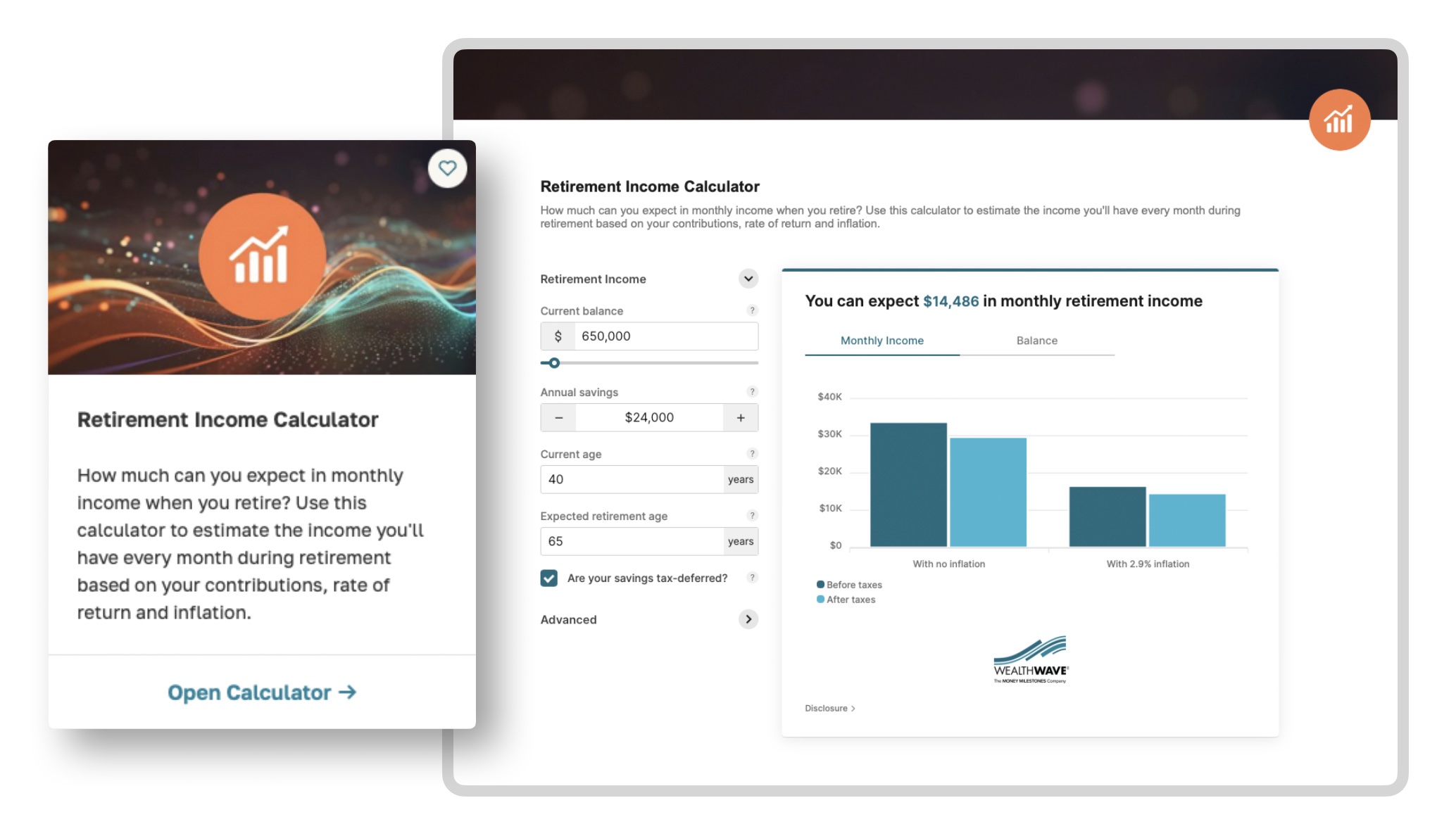
Should you envision a retirement commencing at 65, this tool becomes essential. Input your present savings, forecasted returns, and monthly contributions, and gain clarity on whether you're genuinely on the path to the retirement you desire. Because, in retirement planning, knowledge isn't just power – it's peace of mind.
Navigating the intricate maze of personal finance can often feel daunting. From managing daily expenses to planning for a future filled with dreams and uncertainties, creating an adaptable and robust roadmap is challenging. A clear path can not only alleviate the overwhelm but can turn financial planning from a chore into an exciting journey of empowerment.
The best-selling TheMoneyBooks series has crystallized this path into seven pivotal money milestones. These milestones are more than just steps; they're transformative shifts that ensure individuals and families survive and thrive in their financial landscapes. As we delve into each milestone, envision them as guiding beacons, illuminating your path to financial mastery and independence.
1. Get a Financial Education
In an age where financial uncertainty looms, arming yourself with knowledge is the first line of defense. Financial education hasn't been a priority in most schools. By diving into one of our TheMoneyBooks, you're giving yourself an invaluable gift: the comprehensive financial education you missed. It serves as a compass, helping navigate the complexities of the monetary world. As the adage goes, knowledge is power – and with these books, you're taking the first vital step to control and optimize your financial destiny.
2. Secure Proper Protection
Life is unpredictable, filled with both exhilarating highs and unforeseen challenges. Securing proper protection through life insurance isn't just a checkbox task; it's a testament to your foresight and care for your loved ones. It ensures that they remain financially shielded against life's curveballs. By investing in life insurance, you're sending a clear message: come what may, the financial well-being of my loved ones is non-negotiable.
3. Create an Emergency Fund
An emergency fund isn't merely a financial buffer; it's the anchor that keeps your financial ship steady during turbulent times. Whether unforeseen medical expenses, sudden job loss, or unexpected repairs, this fund ensures that life's hiccups don't derail your financial journey.
It allows you to face challenges head-on without compromising your long-term financial vision. Your fixed expenses (think mortgage, utilities, groceries) aren't going to pay themselves. Lauren Fairey says,
“Having three months of cash reserve is non-negotiable. It's your safety net against life's curveballs.”
And why three months? Turns out, that's the average time a 40-something needs to score a new gig. As you age, this buffer needs to increase, so by 50, target a six-month reserve.
Your emergency fund is sacred, but life's also for a living! By 40, aim to set aside a cool $5,000 (or more!) for those 'treat yourself' moments. As Lauren says,
“Think of this as the adult version of your childhood piggy bank, but instead of candies, you're splurging on that Parisian getaway or a sleek kitchen makeover.”
4. Apply Debt Management
Debts can be like shackles, holding you back from achieving your financial dreams. However, with strategic debt management, these chains can be broken. It's about understanding, strategizing, and methodically eliminating debt, freeing up resources to fuel your dreams. By managing your debts effectively, you're paving a smoother, more straightforward path to financial prosperity.
5. Increase Cash Flow
Financial growth is not just about saving; it's about expanding your income streams. Actively seeking opportunities to increase your cash flow transforms your financial landscape, opening doors to new investments, opportunities, and financial milestones. With more cash flowing in, you're better positioned to make decisions that align with your present needs and future aspirations.
6. Build Your Wealth
Saving is the beginning; wealth building is the masterstroke. This milestone is all about making your money work for you. Through savvy investing, intelligent financial decisions, and leveraging opportunities, you're not just accumulating wealth but ensuring it can grow, multiply, and create a legacy. It's about transitioning from being a passive saver to an active wealth builder.
7. Protect Your Wealth
Building wealth is commendable, but ensuring it's protected and seamlessly passed on is where true financial mastery lies. Estate planning is the guardian of your financial legacy. It ensures that your hard-earned assets are distributed according to your wishes, safeguarding your loved ones and preserving your financial vision even if you're not around.
These seven milestones offer a holistic blueprint for any individual or family seeking a robust financial future. With these as your guiding principles, the road to financial mastery becomes clear, achievable, and truly empowering. Christa challenges us,
“Planning for your financial future is not about restriction, but about empowering yourself to live fully today and tomorrow!”
So, gear up, take charge, and let's make the journey to 40 and beyond a financially fabulous one!
Setting the Stage for Future Success
Now that we've unlocked the crucial seven money milestones, it's not just about setting these goals but actively working towards them with enthusiasm and determination. Achieving these milestones doesn't happen overnight. It's a marathon, not a sprint, so prepare for a journey full of learning, adapting, and growing. Lauren wisely explains,
“Financial freedom isn't just about accumulating wealth. It's about creating opportunities, having peace of mind, and affording the lifestyle you've always envisioned for yourself and your family.”
Every dollar saved and invested is a step closer to building a financial fortress that allows you to live boldly and confidently.
Furthermore, remember that these milestones aren't set in stone. Life is dynamic, with its fair share of twists and turns. Periodically review and adjust your financial plan to align with your evolving lifestyle, goals, and dreams. As your income grows and your responsibilities change, your approach to money should also mature and develop.
“Your financial plan should be a living, breathing entity that grows and evolves with you. It should be your compass, guiding you through the financial wilderness towards a destination of financial stability and independence,”
advises Christa. Let these milestones be your North Star, illuminating the path towards a stable, secure, and enjoyable life in retirement.
Call to Action
Eager to champion your finances? The ideal time is now! Seize the moment and strategically position yourself for a cascade of financial success. Whether you're a blank canvas just beginning your financial journey or you've already painted a few strokes, let those seven milestones illuminate your pathway. And remember, when you're young, time isn't just on your side — it's your greatest asset. Leverage it!
Don't leave your golden years to chance. Utilize a retirement income calculator to ensure your financial strategy aligns seamlessly with your future aspirations. You can gauge whether you're on track to meet or exceed your retirement dreams by inputting your savings details and anticipated contributions. Planning today brings peace of mind for tomorrow; let the calculator guide you toward a fulfilling retirement.
Engage with financial educators like Lauren and Christa, immerse yourself in financial websites like howmoneyworks.com, and join communities of like-minded individuals navigating their financial journeys. With determination, discipline, and the proper knowledge, the vision of your financially secure future is not just a dream but an achievable reality.
Remember, knowledge is your superpower in personal finance, and action is your ally… especially if you're under 40. So, empower yourself, embrace the challenge, and let's secure a future that's not just financially sound but downright thrilling!