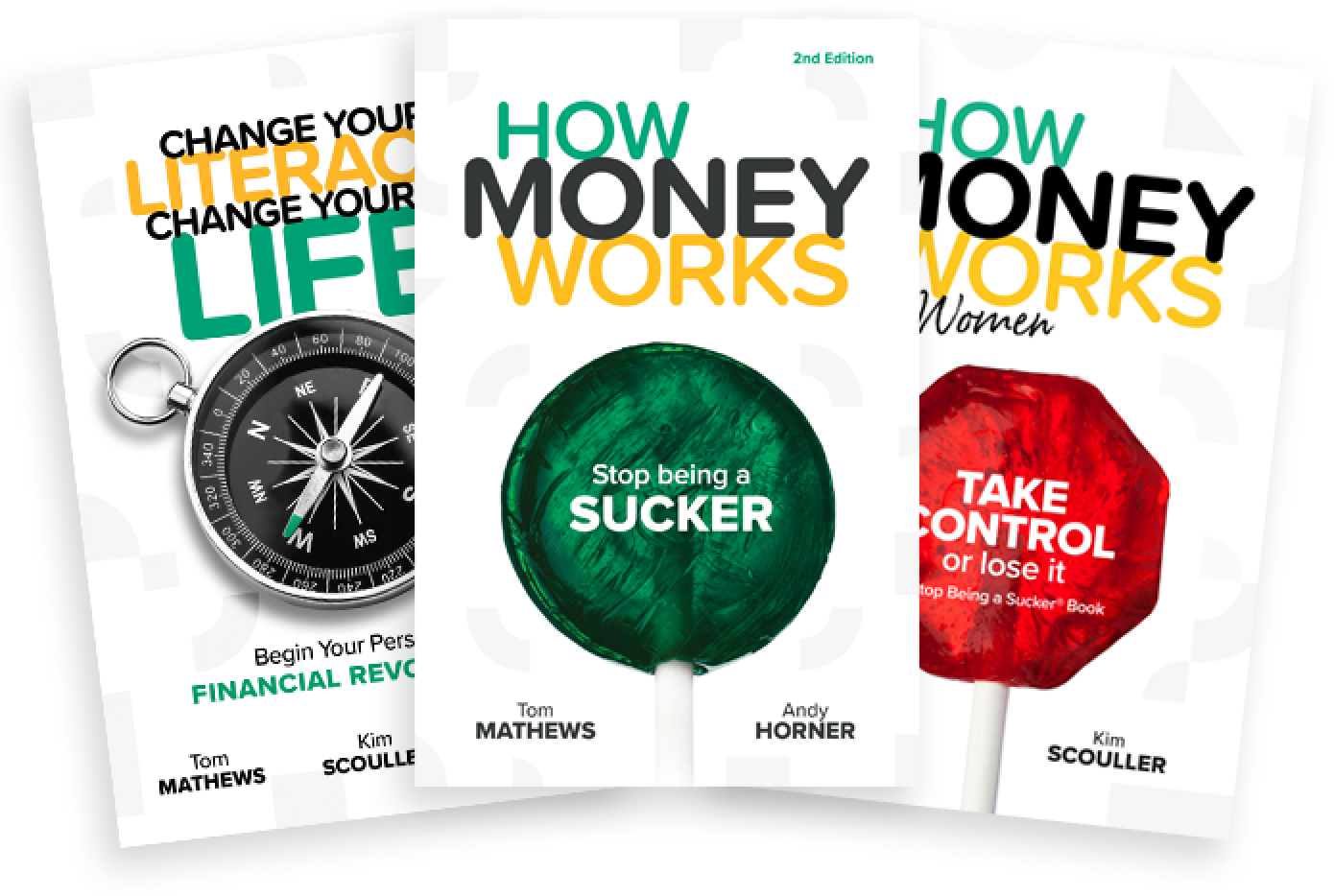
 Request a copy of our book(s)
Redefining Wealth

It's Not Just About the Money
In an era characterized by financial aspirations, a new understanding of wealth emerges from America's heartland. Schwab’s seventh annual Modern Wealth Survey, which meticulously dissected the thoughts of Americans about money and affluence, showcased an intriguing twist to the common narrative of wealth.
While many might conjure images of sprawling mansions and hefty bank statements when thinking of affluence, a significant portion of Americans have a more profound, heartfelt interpretation. For them, the genuine essence of wealth isn't measured solely in dollars and cents.
Surveyed individuals were posed with the challenge of quantifying the monetary value equated with being "wealthy" in America. The collective consensus settled around an average of $2.2 million. Yet, a remarkable observation was that nearly half of the surveyed Americans, who self-proclaimed they felt wealthy, had an average net worth of $560,000. This is merely a fraction of the average amount. So, what gives?
Diving deeper, it becomes clear that for many, non-financial assets like health, family, and emotional well-being carry more weight in defining wealth than the zeros in one's bank account. Over 62% of respondents believe that nurturing healthy relationships defines wealth more accurately than amassing large sums of money. An even more heartwarming statistic reveals that seven in 10 Americans believe wealth is fundamentally about being free from financial stress rather than hoarding more money.
Expressing their sentiments about wealth, Americans, especially the older generation, prioritize well-being and experiences over monetary accumulation. For them, the richness of life isn't encapsulated by materialistic pursuits but rather by meaningful experiences, relationships, and peace of mind.
Yet, even in this redefined landscape of wealth, the survey found that planning for financial goals remains an afterthought for many. Only about one-third of Americans have actively charted their financial journey. The reasons range from perceived insufficiency of funds to complexity or sheer lack of time.
In this interconnected age, while strong familial ties are the cornerstone of perceived wealth, the world of social media offers a double-edged sword. It's a space where comparisons can easily sow seeds of doubt and insecurity, reshaping perceptions of personal wealth. The ability to live a life on par with peers is a significant determinant of feeling affluent for almost half the surveyed individuals. Social media amplifies this comparison, influencing lifestyle choices, financial decisions, and investment strategies, especially among younger Americans.
To navigate these complex feelings and decisions about wealth, a new wave of financial educators is rising to provide tools and content to address financial queries and empower individuals to make informed choices.
As America strides forward, the nation's heartbeat echoes a new mantra: Wealth isn't just about money; it's about life's riches that money can't buy. Whether it's the warmth of family gatherings, the joy of memorable experiences, or the peace of a stress-free life, the real treasures lie in the intangibles.
"Wealth consists not in having great possessions, but in having few wants.”
- Epictetus
"True wealth is not of the pocket, but of the heart and of the mind.”
- Kevin Gates
“Wealth is the ability to fully experience life.”
- Henry David Thoreau
"The real measure of your wealth is how much you'd be worth if you lost all your money.”
- Anonymous
"Wealth is not about having a lot of money; it's about having a lot of options.”
- Chris Rock
Loud Budgeting

Loud budgeting, a relatively new trend in personal finance, has gained significant popularity through various social media platforms. It involves a movement where individuals openly and publicly share their budgeting experiences, financial goals, and spending habits.
This transparent approach stands in contrast to the traditional method of keeping one's financial matters private. By embracing loud budgeting, individuals not only gain insights and inspiration from others but also foster a sense of accountability and motivation in their financial journeys.
This trend encourages a supportive community where people can learn from each other's successes and setbacks, ultimately leading to improved financial well-being and a more mindful approach to money management. So, whether you're looking to save for a dream vacation, pay off debt, or simply gain a better understanding of your financial habits, loud budgeting can provide the guidance and support you need to achieve your goals.
Here are some key aspects of how loud budgeting works:
1. Public Sharing of Financial Goals and Budgets: Individuals post their financial goals, budgets, and even detailed expense tracking online. This can be done through various social media platforms like Instagram, Twitter, or personal blogs. The idea is to be as transparent as possible about one's financial situation.
2. Accountability and Community Support: By sharing their financial journey publicly, people seek accountability and support from their online community. Followers might offer encouragement, share tips, or even hold the individual accountable for their financial decisions.
3. Educational Aspect: Many who participate in loud budgeting also aim to educate others. They share financial tips, tricks, and sometimes even mistakes they've made, turning their personal finance journey into learning opportunities for others.
4. Real-time Updates: Unlike traditional methods where budgeting is a private and sometimes infrequent activity, loud budgeting often involves regular, even real-time, updates about spending, savings, and financial challenges.
5. Use of Digital Tools and Apps: Participants often use budgeting apps, spreadsheets, or other digital tools to track their finances, which they then share screenshots or summaries of on social media.
6. Inclusivity and Diversity: Loud budgeting has opened the door to diverse voices in the field of personal finance. People from various socio-economic backgrounds share their unique perspectives and challenges, making financial discussions more inclusive.
Examples of Loud Budgeting:
1. Instagram Stories: An individual might use Instagram Stories to share their weekly or monthly budget, including breakdowns of expenses, savings, and financial goals.
2. Twitter Threads: Someone could create a thread documenting their journey toward a specific financial goal, such as paying off debt or saving for a house, including the ups and downs along the way.
3. YouTube Vlogs: Personal finance vloggers might create detailed videos explaining their budgeting techniques, showing how they allocate funds each month, and discussing how they adjust their spending habits.
4. TikTok Challenges: Short-form videos on TikTok where users participate in savings challenges, showcasing their progress and encouraging others to join.
5. Blogging: Detailed blog posts that include monthly financial reports, reflections on spending habits, and lessons learned about personal finance.
Loud budgeting has become a rapidly growing movement in personal finance. With the advent of social media, people now have the power to create a more open and supportive financial culture like never before. This shift in mindset not only encourages accountability and responsible spending, but also fosters a deep sense of solidarity as people from all walks of life come together to share their experiences, offer valuable tips, and overcome common challenges in managing their finances.
Through collaboration, people can forge a resilient, economically empowered community that uplifts and fosters mutual support on the journey toward financial success. Together, we can make financial well-being a tangible reality for everyone!
Kim Scouller
Navigating the Complexities of Social Security in 2024

The Information You Need
As we step into 2024, understanding the intricacies of Social Security becomes increasingly essential, especially for those nearing retirement. This vital program, often the cornerstone of retirement planning, demands strategic decision-making to maximize its benefits.
According to a study by the Social Security Administration, approximately 61% of retired individuals rely on Social Security for at least half of their retirement income. This underscores the significance of this program for many retirees in the United States, serving as a primary source of income during their golden years.
But how does Social Security actually work? And what factors determine the amount of benefits that an individual receives?
As mentioned, Social Security provides retirement income for millions of Americans. But it also serves as a safety net for people with disabilities and for surviving spouses and children. The program is funded through payroll taxes, which are withheld from workers' paychecks throughout their careers.
Bernie Sanders emphasized the value of Social Security, calling it “the most important and valuable social program in the history of the United States.”
Early Application: A Strategic Move
Initiating your Social Security retirement benefits requires a proactive approach. You are eligible to apply up to four months before your intended start date. However, timing is crucial. While you can commence receiving benefits as early as 62, each year you delay (up until 70) significantly increases your monthly payout.
Critical Considerations: When to Start Your Benefits
The decision of when to start receiving Social Security should not be taken lightly. If you opt to receive benefits at 62, you'll face a reduction compared to waiting until the full retirement age (FRA) of 67. Patience pays off; delaying benefits past your FRA can increase your monthly amount until you turn 70.
Payment Schedule: Understanding the Lag
Social Security operates on a delayed payment system. Benefits for any given month are paid in the following month. For instance, September's benefits will be disbursed in October. Your birthday significantly influences your payment schedule:
- 1st-10th of the month: Benefits arrive on the second Wednesday of the following month.
- 11th-20th of the month: Expect your benefits on the third Wednesday of the following month.
- 21st-31st of the month: Benefits are paid on the fourth Wednesday of the following month.
Application Process: A Step-by-Step Guide
Applying for Social Security is a straightforward process, primarily conducted online at ssa.gov. The website offers various applications, encompassing retirement, spousal, disability (SSDI), and Medicare benefits. Alternatively, you can call 800-772-1213 or visit a local office. To expedite the process and reduce wait times, scheduling an appointment is recommended.
Required Documentation: Preparing for Your Application
A successful application necessitates a comprehensive collection of personal and professional information, including:
- Personal details: Birth information, Social Security number, citizenship status, and proofs of birth and U.S. citizenship/work authorization.
- Spouse and children's information: Names, Social Security numbers, birthdates, marriage/divorce/death details.
- Previous Social Security applications, bank account details for benefit deposit, and intended start date for benefits.
- Employment information: Employer details, earnings, W-2 forms or self-employment tax returns, Social Security statement or earnings record, and special work or benefits history.
Which Claiming Age is the Best?
In-depth research conducted by United Income, a prominent online investment management firm, has shed light on the critical question: When is the best age to claim Social Security benefits for maximum lifetime income? This question, crucial for future retirees, intertwines factors like health, marital status, and financial needs, making the decision complex and uncertain.
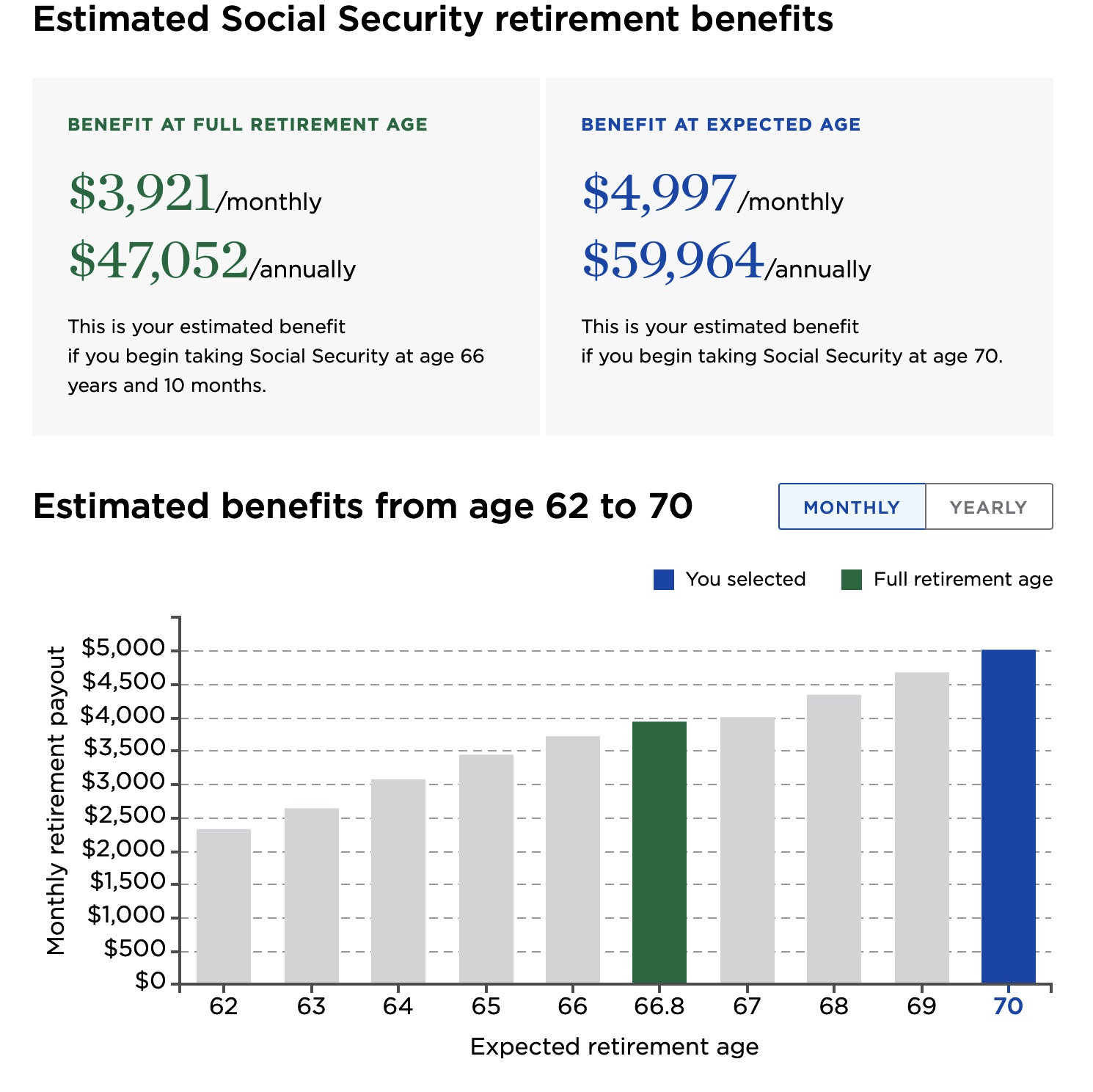
United Income's groundbreaking study, titled "The Retirement Solution Hiding in Plain Sight," delved into the Social Security claim records of 20,000 retired workers. These records, sourced from the University of Michigan's Health and Retirement Study, date back to 2019. The findings reveal a striking contrast between the common practice of early claims and the actual age that yields the highest lifetime benefits.
The analysis uncovered that only a mere 8% of those who claimed their Social Security benefits between the ages of 62 and 64 made the optimal decision in terms of maximizing lifetime income. On the other hand, a substantial 57% of retirees would have benefited most by waiting until the age of 70 to claim their benefits. While claiming at age 66 does offer a better outcome than claiming at 62, it's still surpassed by the benefits accrued from waiting until ages 67 through 70.
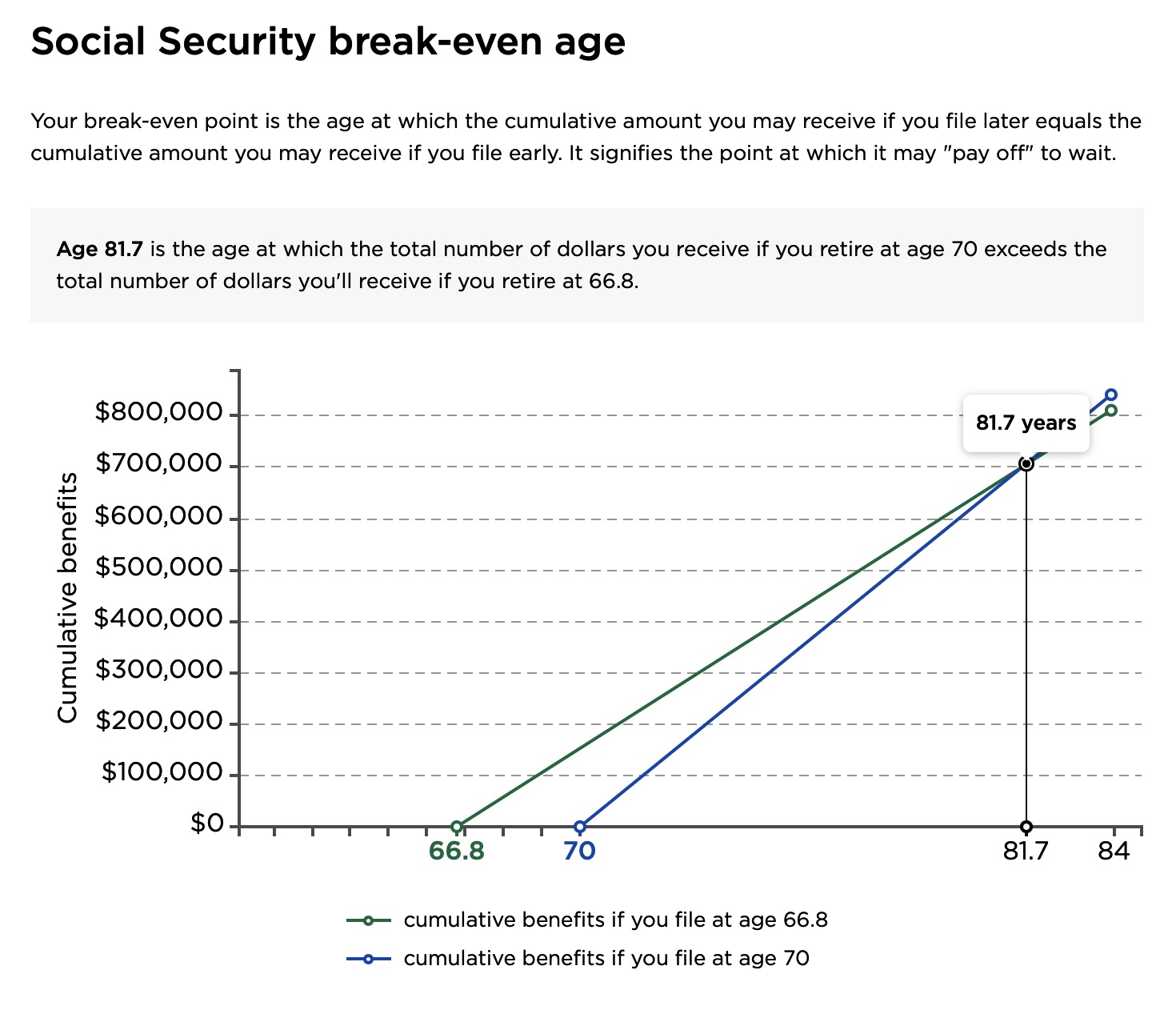
It's important to note, however, that this study does not dismiss the validity of early claims in certain scenarios. Individuals facing chronic health issues potentially reducing their life expectancy may find that claiming benefits early could result in higher overall income. Nevertheless, the overarching message from United Income's comprehensive research is clear: For the majority of future retirees, patience can be a strategic asset in maximizing their lifetime Social Security benefits.
2024 Social Security Updates: What to Expect
Social Security is a dynamic program continually evolving to serve its beneficiaries better. Key changes for 2024 include:
- Cost-of-Living Adjustment (COLA): Beneficiaries will receive a 3.2% COLA, enhancing monthly payouts to counter inflation.
- Varied Full Retirement Ages: Individuals born in 1957 and 1958 will experience different FRAs, impacting when full benefits can be accessed.
- Increased Maximum Benefits: The maximum benefit for high-income earners retiring in 2024 has risen, reflecting recent inflation trends.
- Higher Payroll Taxes for Top Earners: The wage base for Social Security payroll taxes has increased, affecting high-earning employees and self-employed individuals.
Empower Your Retirement: Staying Informed
Maximizing your Social Security benefits requires staying informed and making strategic decisions. Regularly monitoring your Social Security status and understanding annual changes are crucial steps in ensuring you receive the full financial support the program aims to provide. As 2024 unfolds, let this be your guide to navigating Social Security with confidence and clarity.
The Rule of 72

Unlock the Power of Compounding
In the world of personal finance, understanding the power of compound interest is crucial for making informed decisions. One valuable tool for grasping its implications is the Rule of 72, which offers a brilliantly simple way to estimate the time it takes for an investment to double. But did you know that this rule is equally insightful when considering the impact of borrowing?
Let's dive deeper into how the Rule of 72 can work both for you and against you, using real-world data as of December 2023. By exploring concrete examples and scenarios, we can gain a clearer understanding of the potential long-term effects on your financial goals. So buckle up as we delve into the details and uncover the fascinating dynamics of this mental math shortcut, The Rule of 72!
How the Rule of 72 Works
The Rule of 72, a simple and useful formula, provides an estimate of the time required for an investment to double. By dividing the number 72 by the annual rate of return or interest rate, you can obtain an approximate number of years it will take for your investment to double its initial value.
This rule is commonly employed by consumers as a quick assessment tool to evaluate the potential growth of their investments and make informed decisions about their financial goals.
By understanding the Rule of 72, you can better strategize and plan your investment portfolios, considering factors such as risk tolerance, time horizon, and desired returns.
When You Save: A Slow Climb
The national average Annual Percentage Yield (APY) for savings accounts currently stands at 0.57%1 as of December 2023. This means that for every $1,000 you save, you could expect to earn approximately $5.70 in interest over the course of a year.
Using the Rule of 72, which states that you can estimate the number of years it takes for your money to double by dividing 72 by the interest rate, we can see that it would take around 126 years for your savings to double at this rate.

This calculation unveils a stark reality: at the current rate of growth, it would take a staggering 126 years for your savings to double. This emphasizes the slow and sluggish nature of money's growth in traditional savings accounts, further underscoring the urgent need for more effective investment strategies.
The Impact of Low-Interest Rates
Now, let's contrast these figures with the reality of many traditional banks. Despite the national average for savings account APY being 0.57%, a significant number of bigger banks are offering meager interest rates as low as 0.01%.5
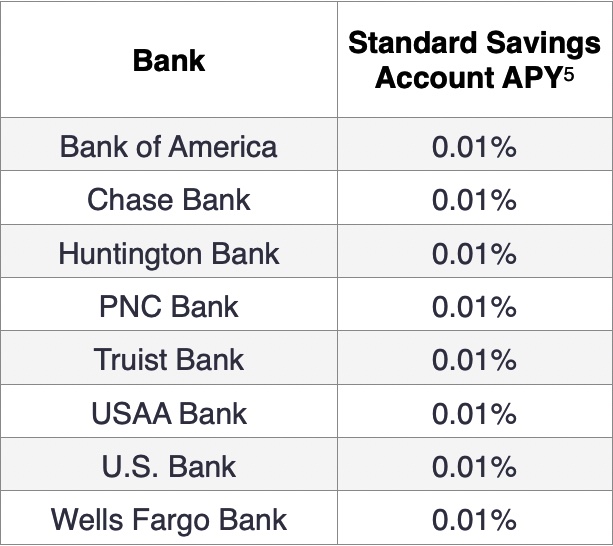
Applying the Rule of 72, this would theoretically require an astonishing 7,200 years for the amount to double. It's a sobering reminder of the importance of carefully considering where and how you decide to save and invest your money.
82% Overlook The Opportunity for Growing Wealth
As you can see, it’s not uncommon for bigger banks to offer lower savings account rates, as they have less need to attract new customers for deposit accounts. To truly outpace inflation and achieve substantial wealth accumulation over time, it’s crucial to explore alternative investment avenues that offer higher returns and greater financial opportunities.5
When it comes to saving money, many Americans are missing out on a fantastic opportunity to grow their savings with minimal risk. High-yield savings accounts can offer attractive interest rates, currently exceeding 5%, which is almost 10x higher than the national average for traditional savings accounts. Shockingly, a recent CNBC Select and Dynata Banking Behaviors Survey3 revealed that a staggering 82% of the population does not take advantage of these accounts.
The significance of this is clear - countless Americans are unknowingly forfeiting the chance to earn free money. Consider this: according to the Federal Reserve4, the average American family holds approximately $8,000 across various bank accounts, including checking and savings. If this amount were to earn the current average 0.57% APY in a traditional savings account, the total interest earned in a year would be a meager $46. Of course, this is far superior to the meager $0.80 you would have earned from one of the banks offering a negligible 0.01% APY. Conversely, if the same amount were deposited into a high-yield savings account earning 5.0% APY, the interest earned would exceed $400 for the same timeframe.
It is evident that by neglecting high-yield savings accounts, Americans can miss out on a significant opportunity to maximize their savings and make their money work harder for them.5
When You Borrow: A Fast Descent
The national average Annual Percentage Rate (APR) for new credit cards currently stands at a staggering 24.56%2 as of December 2023. This means that for every $1,000 balance you keep, you can expect to pay approximately $246 in interest over the course of a year.
Taking into account factors such as interest charges and fees, the APR provides a comprehensive understanding of the financial implications associated with credit card usage. By gaining a deeper insight into this significant metric, you can make more informed decisions when it comes to managing your finances and choosing the most suitable credit card options.

In less than three years, the amount you owe could double, compounding the urgency and illustrating the alarming speed at which debt can grow. This serves as a critical reminder of the perils of high-interest debt, emphasizing the importance of managing credit responsibly and taking proactive steps to mitigate its impact on financial well-being.
By adopting sound financial practices, such as budgeting, saving, and making timely payments, Americans can safeguard themselves against the detrimental effects of mounting debt and pave the way for a more secure and stable future.5
A Tale of Two Candies: Dum-Dums and Smarties
Banks often go the extra mile to offer small tokens of appreciation to their customers, such as delicious candies. Interestingly, one common choice that catches the eye is Dum-Dums lollipops. At first glance, it might seem like a simple and innocent gesture, but if we delve deeper, we can uncover a subtle metaphor that reflects the financial choices we encounter in our lives.

What's intriguing is that Dum-Dums are manufactured by the same company, Spangler, that produces another popular candy, Smarties. This stark contrast between the two candies serves as a powerful symbol, representing the decisions we make when it comes to our finances.
On the one hand, Dum-Dums represent the allure of financial complacency, where we may be tempted to make unwise choices without considering the long-term implications. On the other hand, Smarties embody the essence of smart and informed financial decisions, highlighting the importance of making choices that align with our goals and aspirations.
By offering these seemingly insignificant candies, banks remind us of the profound impact our financial decisions can have on our lives. It encourages us to reflect on the choices we make and strive to be more conscious and intentional in our financial journey.
For Savers: Seek Better Returns
Given the historically dismal returns on traditional savings accounts, it's crucial for consumers to explore other investment avenues that have the potential to generate higher returns over the long term.5 One such avenue to consider is low-cost index funds, which are designed to track the performance of a specific market index and offer diversification benefits.5
Additionally, investing in individual stocks or bonds can provide opportunities for higher returns, although they may come with higher risks.5 By diversifying your investment portfolio across different asset classes, you can increase your chances of achieving your financial goals and building long-term wealth.5
For Borrowers: Manage and Reduce Debt
If you carry high-interest debt, especially on credit cards, it is crucial to prioritize paying it off as soon as possible. One effective strategy to consider is debt consolidation, which involves combining multiple debts into a single loan with a lower interest rate.5
Another option is transferring balances to lower-rate cards, which can help reduce the overall interest charges and make it easier to pay off the debt faster. By taking these proactive steps, you can regain financial control and save money in the long run.5
Educate and Empower Yourself
Knowledge is a powerful asset that can greatly impact your financial decisions. By familiarizing yourself with tools like the Rule of 72, you gain a deeper understanding of how money works and can make smarter choices. It's important to seek financial education and advice to further enhance your financial literacy.
Remember, whether you choose the path of the Dum-Dums (those who lack financial knowledge) or the Smarties (those who make informed decisions), the choice is ultimately yours to shape your financial future.
The Rule of 72 is more than just a mathematical shortcut; it's a powerful tool that provides valuable insights into your financial decisions. By comprehending the dynamics of how money can either work for you or against you, you gain the ability to take control of your financial future.
With this knowledge, you can make informed choices that pave the way for prosperity and ultimately lead to lasting financial freedom. So, embrace the Rule of 72 as a guiding lens, empowering you to navigate the intricacies of personal finance with confidence and success.
- Average Savings Account Rate 12/13/2023: https://www.bankrate.com/banking/savings/average-savings-interest-rates/
- Average New Credit Card Rate 12/13/2023: https://www.lendingtree.com/credit-cards/average-credit-card-interest-rate-in-america/
- CNBC Savings Article https://www.cnbc.com/select/americans-not-using-high-yield-savings-accounts/
- Federal Reserve Survey of Consumer Finances: https://www.federalreserve.gov/econres/scfindex.htm
- The information provided is for educational and informational purposes only and should not be construed as financial advice. The discussion about the impact of low savings account interest rates and the opportunities for growing wealth through alternative investment avenues, including high-yield savings accounts, and high credit cards rates, reflects general market trends and data available 12/13/2023. Individual financial situations and goals may vary, and it's crucial to consult with a qualified financial professional before making any savings, investment or credit decisions. The examples and data cited, including interest rates and survey results, are illustrative and may not represent current market conditions. Readers should conduct their own research and consider their financial circumstances and risk tolerance before investing.
Financial Empowerment for Women

Insights from Kim Scouller
Attorney and Certified Financial Educator Kim Scouller, celebrated for her new book How Money Works for Women, was recently interviewed on the global health and wellness show Bloom on NBC Tampa. Hosted by Gayle Guyardo, the episode provided a platform for Kim, a stalwart Women’s Financial Advocate, to shed light on the inspirations behind her literary piece.
During her engaging chat with Gayle, Kim imparted valuable financial wisdom tailored to women. Here's a glimpse of the financial empowerment she advocated:
Break the Silence on Money
Traditionally, discussions about money have remained muted amongst women. To foster change, it's essential that women, more than anyone, discuss financial matters with family, friends, and fellow women. Let's shift money talk from a hush-hush topic to an open conversation.
Grasp Your Financial Reality
Understanding one’s financial situation is paramount. Every woman must be aware of her cash flow, assets, insurance, and debts. Acquiring a holistic view of your finances helps in recognizing areas of strengths and opportunities for improvement. It's all about being proactive and being in the driver’s seat of your financial journey.
Chart Your Financial Journey
Carve out your own savings and spending plans aligned with your financial aspirations. To amplify your financial health, introspect: How can I augment my income? How do I transcend the paycheck-to-paycheck life? What's my strategy to curtail unwanted debt? Do my savings suffice for retirement? What's my investment capacity right now?
Dive into Fundamental Financial Concepts
Many might be oblivious to financial terminologies such as Compound Interest, The Time Value of Money, or The Rule of 72. Yet, these are foundational concepts that can magnify your financial growth. Hence, it's vital for women to familiarize themselves with the mechanics of money.
Forge Alliances with Financial Experts
Engaging with a financial expert isn't a luxury limited to the affluent. It’s a necessity for all. Seek a trustworthy financial professional who can offer insights specific to your financial scenario. Such collaborations can pave the way for a robust financial future tailored to your individual needs.
Kim's appearance on NBC Tampa and Bloom not only highlighted the essence of her book but also reiterated the importance of financial literacy amongst women. As women move forward, let her insights be a beacon for them to achieve financial autonomy and security.
The Power of Financial Education

In today's rapidly changing and complex economic landscape, the importance of financial education cannot be overstated.
Only 23 States offer courses in high school that could start the process. Financial literacy, the understanding of basic financial concepts and the ability to make informed decisions about money, is a fundamental skill that can pave the way to success and prosperity. From managing personal finances to making investment decisions, a solid foundation in financial education is crucial for individuals to navigate the intricate world of money effectively.
The Financial Literacy Gap
One of the pressing challenges facing many people is the financial literacy gap. A significant portion of the population lacks the knowledge and skills required to make sound financial decisions. This gap can lead to dire consequences, including high levels of debt, poor retirement planning, and limited access to wealth-building opportunities. Without a proper understanding of financial principles, individuals may fall victim to predatory lending, make uninformed investment choices, and struggle with long-term financial stability.
Empowering Decision-Making
Financial education empowers individuals to take control of their financial destinies. By providing the knowledge needed to manage budgets, create savings plans, and understand the implications of different types of debt, people can make informed decisions that align with their long-term goals. This level of empowerment reduces financial stress, enhances financial well-being, and opens doors to opportunities that might otherwise be out of reach.
The Benefits of Early Education
Introducing financial education at an early age is particularly impactful. When children and young adults learn about the importance of saving, investing, and budgeting from an early stage, they develop healthy financial habits that can last a lifetime. Understanding the value of money, the power of compounding, and the risks and rewards of different financial choices gives young people a head start in building a secure financial future.
Navigating the Complex World of Investments
Investing is a cornerstone of building wealth, but it can be daunting for those without a solid financial education. Understanding the basics of stocks, bonds, mutual funds, and other investment vehicles is crucial to making informed choices that align with individual risk tolerance and financial goals. Without this knowledge, individuals might be susceptible to fraudulent schemes or might miss out on opportunities for growth.
Adapting to Changing Times
The financial landscape is continually evolving, with new technologies, investment options and economic trends emerging regularly. Without a foundation in financial education, individuals can struggle to keep up with these changes and make well-informed decisions. Financial education not only imparts timeless principles but can also teach individuals how to adapt and thrive in a rapidly changing financial environment.
Bridging the Gap with Financial Education
Families, companies, educational institutions, and communities can all play vital roles in bridging the financial literacy gap. Integrating financial education into daily life at home or work and school curricula growing up can foster a culture of open conversations about money and collectively elevate financial literacy rates.
Individuals themselves also have a role to play. Taking the initiative to seek out financial education resources, reading books like HowMoneyWorks: Stop Being a Sucker and HowMoneyWorks for Women: Take Control or Lose It, attending classes, and working with a financial professional can all contribute to one's personal growth in financial literacy.
In a world where financial decisions have a profound impact on our lives, the need for financial education cannot be overstated. Empowering individuals with the knowledge and skills to make informed decisions about money is a crucial step toward financial success. Whether it's managing personal finances, making informed savings choices, or planning for retirement, a solid foundation in financial education can provide the tools necessary to navigate the complex world of finance with confidence. By investing in your financial education today, you can secure your financial future and pave the way for a life of prosperity and success.
Understanding the Time Value of Money

A Fundamental Financial Concept
When it comes to financial literacy, few principles are as essential and foundational as the time value of money (TVM). It's a concept that serves as the bedrock for many financial decisions, from investments to loans and savings. But what is the time value of money, and why is it so crucial?
What is the Time Value of Money?
At its core, the time value of money posits that the purchasing power of a unit of currency can vary over time. In other words, a dollar today doesn't have the same value as a dollar tomorrow. This principle implies that money's worth is intrinsically tied to time.
Why Does Money Have Time Value?
There are several reasons why money changes value over time:
Opportunity Cost: Money has potential earning capacity. If you have $100 today, you could invest it and earn interest, making your $100 worth more tomorrow. Conversely, if you receive $100 a year from now, you've lost a year's worth of potential earnings on that money.
Inflation: Over time, most economies experience inflation, which means that goods and services gradually increase in cost. As a result, the purchasing power of money decreases. A candy bar that costs $1 today might cost $1.10 next year due to inflation.
Risk and Uncertainty: The future is always uncertain. There's a risk that you might not receive money in the future due to various reasons, such as a borrower defaulting on a loan. Hence, money today is considered more valuable than the promise of the same amount in the future.
Consumption Preferences: Many people prefer immediate gratification over delayed rewards. This preference means that they might value having money today to spend immediately rather than waiting.
Applications of the Time Value of Money
Understanding TVM is crucial for various financial applications:
Investment Decisions: When considering an investment, you'll want to know the future value of your money based on the returns you expect to earn.
Loan Calculations: Lenders charge interest to compensate for the opportunity cost of lending money. TVM helps in determining appropriate interest rates.
Retirement Planning: When planning for retirement, it's vital to consider how much money you'll need in the future, accounting for inflation and expected returns on investments.
Valuation of Businesses: In business valuation, future revenues and costs are discounted back to their present values to provide an accurate valuation.
Key TVM Concepts
Present Value (PV): This refers to today's value of money. It answers the question, "What is the value of future money in today's terms?"
Future Value (FV): This refers to what money today will be worth in the future after earning interest or returns.
Discount Rate: This rate is used to discount future money back to its present value. It represents the interest rate or return rate and can be thought of as the opportunity cost of money.
Delving Deeper Into the Time Value of Money: Its Implications and Real-World Examples
While the foundational understanding of the time value of money (TVM) rests on the idea that the worth of a currency unit varies over time, the implications of this principle permeate vast areas of finance and economics. Let’s delve deeper into the nuances of TVM and examine how it plays a role in everyday life and sophisticated financial scenarios.
Compounding: The Eighth Wonder of the World
Albert Einstein famously said, “Compound interest is the eighth wonder of the world. He who understands it, earns it; he who doesn't, pays it.” Compounding refers to the process by which an investment grows not only based on the principal (the initial amount) but also on the accumulated interest from prior periods.
Example: If you invest $1,000 at an annual interest rate of 5%, you'll have $1,050 after one year. If you keep it invested, you won't just earn 5% on the original $1,000 during the second year; you'll earn it on the full $1,050, leading to even more significant growth.
Discounting: The Reverse of Compounding
Just as compounding allows us to determine the future value of present money, discounting enables us to figure out the present value of future money. This is particularly valuable in scenarios like valuing cash flows expected from an investment in the future.
Real-World Scenarios: TVM in Action
Mortgages and Car Loans: When banks determine monthly payments, they consider the TVM. This is why interest payments are higher at the beginning of a loan term.
Annuities and Pensions: Monthly retirement benefits are calculated based on TVM, ensuring that the sum set aside today will cover future retirement needs.
Lease Agreements: Companies that lease equipment or property will use TVM to determine lease payments, ensuring the lessee pays for both the use of the asset and the lost potential interest.
Project Valuation: Companies use TVM to decide whether to pursue projects. They'll discount future cash flows to determine if they present a positive net present value.
Factors Affecting TVM
Interest Rate Fluctuations: As central banks adjust rates in response to economic conditions, the TVM shifts. For example, in a high-interest environment, the future value of money invested today becomes more significant.
Economic Policies: Governmental fiscal policies can influence inflation and, in turn, the purchasing power of money, affecting its time value.
Global Events: Events like pandemics or geopolitical tensions can lead to economic uncertainties, affecting interest rates and inflation expectations.
Tools for TVM Calculations
In today's digital age, various tools can help individuals and professionals with TVM calculations:
Online Financial Calculators: Online financial calculators stand out as a prime example of modern financial technology tools that cater to both seasoned professionals and financial novices. Designed with user-centric principles, these calculators simplify complex financial computations, enabling users to effortlessly evaluate investment returns, project retirement savings, and assess debt repayment strategies, among other tasks.
Moreover, the integration of real-time data ensures that the calculations are always based on the most current market conditions. Coupled with an intuitive interface and robust data visualization tools, these online calculators not only demystify the numerical aspects of finance but also empower individuals to make informed decisions that align with their financial goals.
Spreadsheet Software: For those who love do-it-yourself, platforms such as Microsoft Excel, Apple Numbers, and Google Sheets have transformed the realm of financial calculations with their built-in functions tailored for computing present and future values, factoring in diverse variables.
These versatile spreadsheet tools are more than just digital canvases for data entry; they enable users to create dynamic financial models, run simulations, and visualize trends. With just a few keystrokes, you can swiftly analyze investment scenarios, compare loan offers, or chart retirement savings trajectories.
Mobile Apps: Numerous finance and investment apps offer the capability to perform TVM calculations on-the-go, significantly aiding in swift and informed decision-making. Many finance professionals lean into the digital age by using the HP 12C Platinum app on their smartphones. The app, a digital replica of the iconic HP 12C calculator, brings the familiarity of classic financial calculations to the palm of your hand.
Final Thoughts
The time value of money is a prism through which myriad financial decisions should be viewed. Its principles are immutable, yet the factors influencing it are dynamic. As we navigate our financial journeys, understanding the interplay of money, time and potential opportunities ensures we remain informed, proactive and prepared for the future.
The time value of money is a fundamental financial concept that underscores many personal and business financial decisions. Whether you're saving for a significant purchase, planning for retirement, or considering an investment opportunity, understanding how money's value changes over time can lead to better, more informed decisions.
Remember: A dollar today isn't just a dollar—it represents potential growth, opportunities, and future security.
Unveiling the Silent Partner in Your Financial Journey

Exploring the Unseen Impact of Inflation on Your Finances
In the world of personal finance, where numerous factors play a crucial role in shaping your financial future, one often overlooked companion stands out: inflation. Inflation, an economic phenomenon characterized by the gradual increase in the prices of goods and services over time, wields a significant influence over the economic landscape.
It can erode the purchasing power of money, affecting everything from the cost of living to investment returns.
Understanding the implications of inflation is paramount for making informed financial decisions and safeguarding your financial well-being in the long run.
Four Decades of Inflation
Over the past 40+ years, inflation rates in the U.S. have exhibited a downward trend with moderate fluctuations. In the early 1980s, the country experienced high inflation, with rates soaring over 13%. This was partly due to the Federal Reserve's effort to quell the rapid inflation of the 1970s. The remainder of the decade witnessed a steady decline, with inflation averaging around 4% by the late 1980s.
Moving into the 1990s, inflation rates remained relatively stable, hovering around 2-3%. This period of low inflation, coupled with economic expansion, is often referred to as the “Great Moderation.”
The turn of the millennium brought with it the dot-com bubble burst and the 2008 financial crisis, causing temporary spikes in inflation. However, the overall trend remained stable, with inflation rates predominantly in the 1-3% range.
In the 2010s, despite the economic recovery, inflation remained low, even dipping below 1% at times.
As we move through the decade of the 2020s, it’s worth noting that inflation rates have witnessed significant volatility due to the far-reaching economic repercussions triggered by the unprecedented COVID-19 pandemic. The global health crisis has upended economies worldwide, leading to fluctuations in inflation rates as governments and central banks grapple with the challenges of stabilizing their respective economies and supporting businesses and individuals during these uncertain times.
The Impact of Inflation on Your Finances
While low and stable inflation is generally beneficial for economic growth, it can have a significant impact on your personal finances. One of the most significant effects of inflation is its erosion of purchasing power over time. In simpler terms, the same amount of money will buy you less in the future due to rising prices.
For example, let's say you have $10,000 in a savings account earning 2% interest. If the inflation rate is also at 2%, your money will essentially stay the same in purchasing power. However, if inflation increases to 4%, your savings will only be worth around $9,500 in today's dollars after one year.
This is why it is crucial to consider inflation when making financial decisions, such as investment choices and budgeting for the future. It's like a quiet breeze that is constantly present, subtly impacting the economy and affecting the purchasing power of individuals. Understanding the dynamics of inflation and its implications is crucial for making informed financial decisions and planning for the future.
How Inflation Works: A Tale of Two Coffees
Let's illustrate the concept of inflation with a simple story. Imagine, ten years ago, you could walk into your favorite coffee shop and purchase a steaming cup of your beloved coffee for just $2. Fast forward to today, and that same cup of coffee now costs $3.50. This increase in price is a direct result of inflation, which refers to the general rise in prices over time.
Essentially, what inflation means is that the purchasing power of your money decreases as time goes on. In other words, the dollar in your pocket today won't be able to buy you as much as it could a few years down the line. This is why it's important to understand inflation and its impact on our daily lives. By staying informed and making wise financial decisions, we can navigate the ever-changing economic landscape and make the most of our hard-earned money.
Inflation and Your Finances: A Balancing Act
Inflation impacts every aspect of your finances, from savings to investments to debts. If you're saving money, inflation acts as a silent thief, eroding the future value of your savings. For instance, if you stash $10,000 in a box today, it might only have the buying power of $7,000 or less in 10 years, depending on the rate of inflation.
However, it's not all gloomy. Inflation can actually work in favor of those who have long-term fixed-rate debts, such as a mortgage. Here's why: When you lock in a mortgage at a fixed rate, the amount you pay remains constant.
As inflation rises, the real value of what you pay back decreases. This means that over time, you effectively end up paying back less in real terms than what you initially borrowed. So, while inflation may seem like a negative force, it can actually benefit those who have fixed-rate debts in the long run by reducing the real burden of repayment.
The Investment Balancing Act
The key to combating inflation lies in making wise investments. Historically, stocks have proven to be an excellent investment option, offering returns that have consistently outpaced inflation. Additionally, real estate investments can serve as a valuable hedge against inflation.
As property values and rents tend to rise in tandem with inflation, investing in real estate can help preserve the purchasing power of your assets over time. By diversifying your investment portfolio and considering these options, you can effectively protect your wealth from the erosive effects of inflation.
A Cautionary Tale
Consider the story of Emily, who saved $20,000 in her bank account over 20 years ago. She felt secure, believing her nest egg would suffice for her retirement. However, she didn't account for inflation. Now, her $20,000 has the same purchasing power as around $12,000 had two decades ago. Emily's story teaches us the importance of accounting for inflation in our long-term financial planning.
“Inflation is when you pay fifteen dollars for the ten-dollar haircut you used to get for five dollars when you had hair.”
– Sam Ewing
Embracing the Silent Partner
Inflation, the persistent rise in prices over time, is an inescapable and crucial aspect of our financial lives. It has the potential to work against us, eroding the purchasing power of our money. However, by comprehending and planning for inflation, we can mitigate its impact and safeguard the value of our hard-earned money.
Developing financial literacy entails not only acquiring the knowledge of how to generate income but also understanding the strategies to preserve its value in the face of inflationary pressures. By taking proactive steps to account for inflation, we can navigate the ever-changing financial landscape with confidence and resilience.
A Call to Action
Educate yourself about inflation, the gradual increase in prices over time. It's important to understand its impact on your savings and investments. By adjusting your strategies to outpace inflation, you can ensure the growth of your financial portfolio. Embrace inflation as a silent partner, one that challenges you to be proactive, creative, and strategic in your financial journey.
Stay informed about economic trends, explore diverse investment options, and make well-informed decisions to navigate the ever-changing financial landscape. Remember, by staying ahead of inflation, you can protect your purchasing power and achieve long-term financial success.
Thriving in an Inflationary World
While inflation, the gradual increase in prices over time, is an unavoidable companion in our financial journey, it doesn't have to be a formidable foe. By understanding the factors that drive inflation, such as changes in the money supply, demand-pull, and cost-push factors, we can gain a deeper insight into its impacts on our economy.
“Plan for inflation: it's not just a challenge, but an opportunity to grow smarter, stronger, and more resilient in your financial journey. Remember, the best time to plant a tree was 20 years ago. The second best time is now. Start planning, start investing, start defeating the silent partner that is inflation.”
- Tom Mathews
Implementing effective strategies, such as diversifying our investments, hedging against inflation, and adjusting our spending habits, can help us navigate the challenges posed by inflation. By doing so, we not only turn this silent partner into a catalyst for smarter financial planning but also pave the way towards a more secure and resilient financial future.
With careful consideration of investment options, diversification, and staying informed about economic trends, we can navigate the impact of inflation and ensure that our hard-earned money retains its value and grows over time. Remember, being proactive in managing inflation is a key component of long-term financial success.
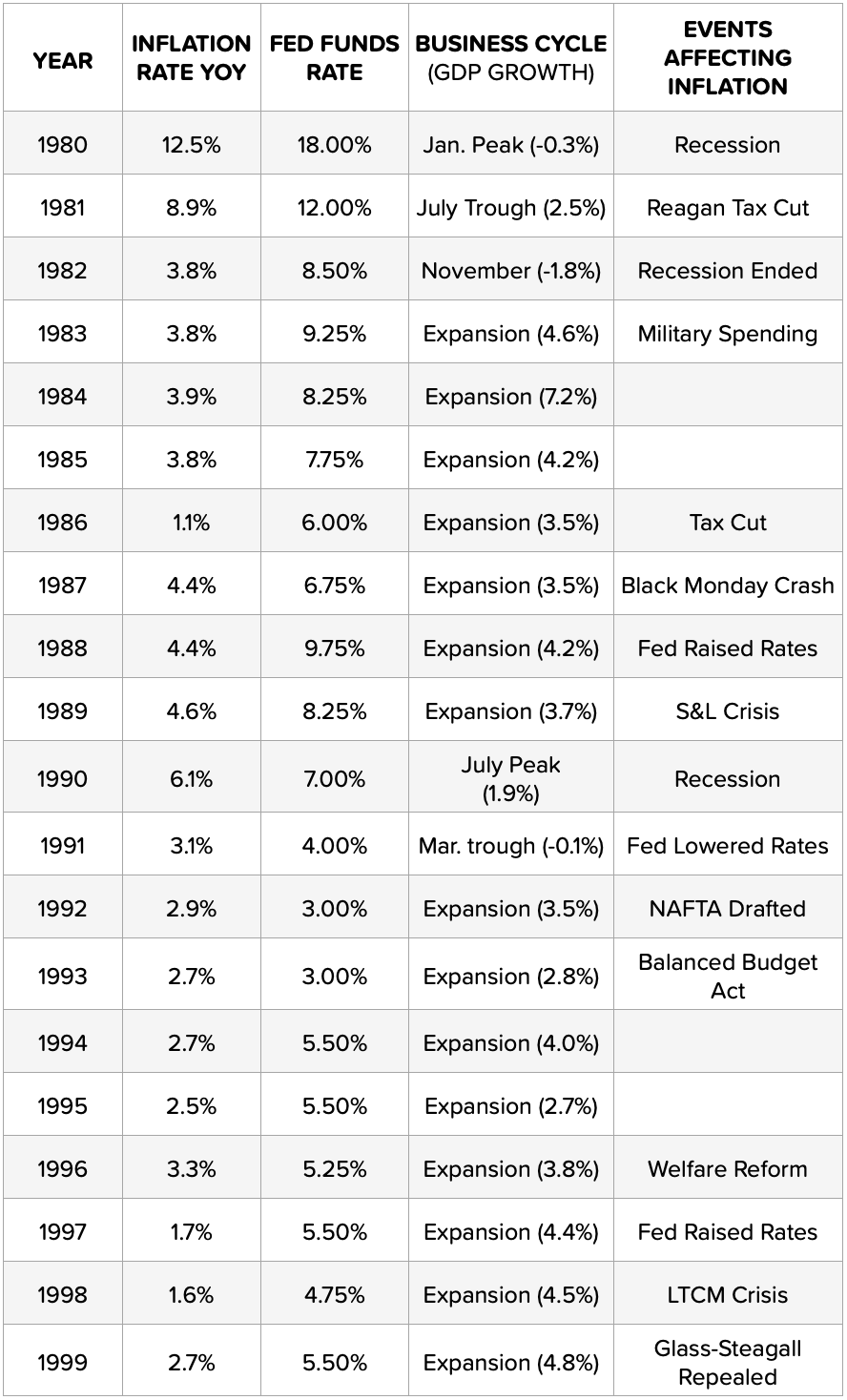
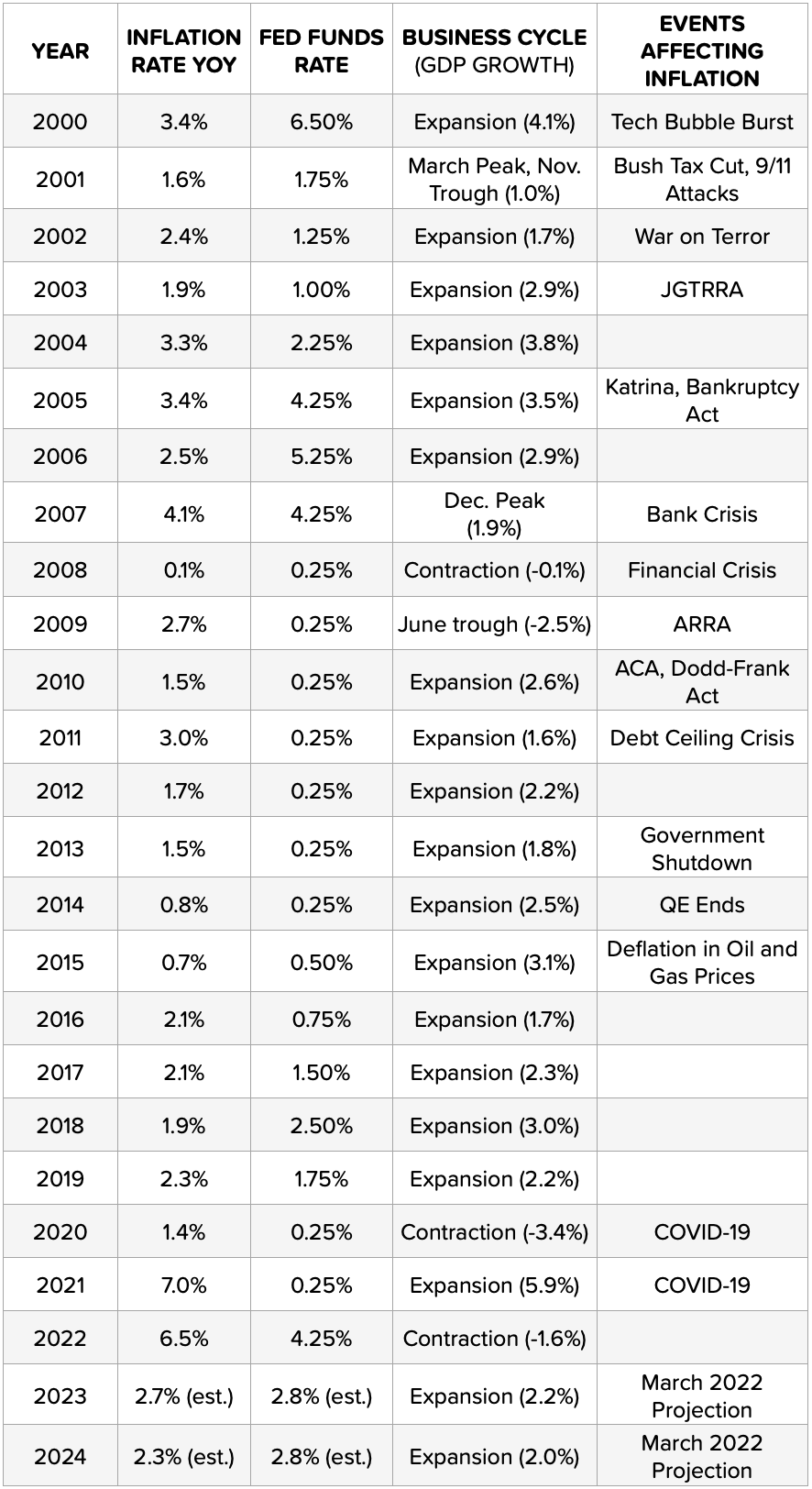
The best way to compare inflation rates is to use the end-of-year consumer price index (CPI), which creates an image of a specific point in time.
The table below compares the inflation rate (December end-of-year) with the fed funds rate, the phase of the business cycle, and the significant events influencing inflation.
Turning Inflation from Foe to Ally
Inflation is not just an economic concept, but a living, breathing aspect of our financial realities. It's an uninvited guest at every financial decision we make, but understanding and planning for it transforms this potential adversary into a powerful ally.
We cannot control the winds of economic change, but we can adjust our sails. It's time to embrace the challenge. Educate yourself about inflation and its effects. Review and adjust your savings and investment strategies to not just withstand, but also outpace inflation. Seek advice from financial experts, leverage tools and resources available to you, and stay informed about economic trends.
Your call to action is clear: Start today. Reevaluate your financial plans with an eye on inflation. Invest in knowledge, in assets that historically beat inflation, and in strategies that can secure your financial future. Remember, the best time to take control of your financial journey was yesterday; the next best time is now.
Together, we can turn the silent challenge of inflation into an opportunity for growth, security, and financial success. Let's take this journey not as passive observers, but as active, informed participants shaping everyone’s financial destinies.
Unlocking the Mysteries of the Rule of 72

Ever wished you had a magic wand to foresee the future? Well, guess what?
In the world of finance, we have something pretty close: The Rule of 72! It’s almost like a crystal ball that offers glimpses into your money's future, and it’s simple enough for anyone to use.
The Rule of 72: A Quick Overview
The Rule of 72 is a fascinating and incredibly handy tool. At its core, it gives us insight into how long it'll take for an investment to double in value. It's the magic number that, when divided by the annual interest rate, spills the beans on your money's future doubling time. For instance, at a 6% annual return, your money would double in roughly 12 years (72 ÷ 6 = 12).
Three Exciting Ways to Play with the Rule of 72
Doubling Down on Your Investments:
Let’s say you have $1,000, and you’re curious about how long it will take to turn it into $2,000 at a certain interest rate. With the Rule of 72, you can whip out your calculator and, in seconds, determine the magic number of years. Whether you're saving for a dream vacation or a cool gadget, this tool offers a quick peek into your investment's future.
Quadrupling Fun:
But why stop at doubling? Let's kick it up a notch! The Rule of 72 doesn’t just tell you when your investment will double. You can use it to estimate when your money will quadruple! If you discover your money doubles in 8 years, give it another 8 and bam! You're looking at a quadrupled amount!
Racing Against Time:
Here's a fun game to play: If you have a particular period in which you wish to double your money, the Rule of 72 can tell you the annual rate of return you’d need. Dreaming of doubling that cash in 6 years? You'd need an interest rate of about 12% (72 ÷ 6 = 12).
The Rule of 72 offers a blend of simplicity, excitement, and practicality, making financial forecasting not just accessible, but, dare we say, fun!
It demystifies the complex world of investments, turning it into a playground where you’re armed with a powerful tool to envision your monetary future. So, go on and explore this financial magic; the power of 72 awaits!
Charting a Tax-Smart Retirement Journey

Embarking on the golden years of retirement, it’s imperative to illuminate the often-shadowed realm of taxes, a crucial player that, without meticulous planning, can significantly erode the value of your hard-earned retirement funds.
Envision a robust $1 million portfolio nestled in a 401(k) plan or a traditional IRA; this seemingly formidable nest egg might dwindle to a mere $800,000 or even less post-taxes. Similarly, investments harbored in standard, taxable accounts are not immune to the tax bite on the income they yield.
However, fear not, for there are strategic maneuvers available to navigate this fiscal maze. One potent strategy is to amplify your savings and investment efforts during your employment years, thereby accruing additional funds designed specifically to offset your tax liabilities. Alternatively, adopting a tax-savvy approach to your investment and account selections can significantly minimize your tax burden, leaving more of your funds intact and available for your enjoyment and use during retirement.
Let’s delve into the treasure trove of retirement income sources that are mercifully exempt from taxes:
Roth Withdrawals
Roth accounts are your steadfast allies in the quest for tax-free retirement income. Both IRA and 401(k) plans can don the Roth mantle, offering no tax deductions on contributions but granting the boon of tax-free withdrawals post the age of 59 ½. With Roth, you graciously pay your taxes at the contribution stage, thereby freeing your future withdrawals from the tax chains. While income ceilings exist for Roth contributions, fear not, for the conversion of traditional plans to Roth is always an option, albeit with applicable taxes on the conversion amount.
Inheritances
While relying solely on inheritances for retirement is a precarious strategy, many fortunate individuals do receive these tax-free financial windfalls, which can seamlessly supplement existing retirement savings.
Municipal Bond Income
Investing in municipal bonds, those issued by states and localities to fund essential public projects, offers a dual benefit: contributing to the common good and enjoying tax relief at the federal level on the interest earned. Residents of high-tax states may find these bonds particularly appealing, as they often come with state tax exemptions as well.
HSA Withdrawals
Health Savings Accounts (HSAs) are the financial Swiss Army knives of retirement planning, blending the best features of traditional and Roth IRAs. With tax deductions on contributions and tax-free growth within the account, HSAs are a potent tool, especially when funds are used for qualifying healthcare expenses.
Some Social Security Payments
While not universally tax-free, many Social Security payments do enjoy this status. However, it’s crucial to be aware that income levels can influence the taxation of these benefits, with higher earners potentially facing taxes on a portion of their Social Security income.
Life Insurance Proceeds
Life insurance payouts, often substantial, can provide a significant boost to retirement funds. Like inheritances, these proceeds are typically tax-free to the recipient, especially when received as a lump sum.
Embarking on retirement is a monumental life transition, laden with both excitement and challenges. Taxes, while potentially daunting, can be effectively managed with strategic planning and savvy decision-making. By harnessing the power of tax-exempt income sources and adopting a proactive approach to tax planning, you can safeguard your retirement funds, ensuring a financially secure and enjoyable retirement. The golden years are yours to relish, unencumbered by undue financial stress. With wisdom and foresight, navigate towards a retirement where your funds work for you, not against you, in the grand tapestry of your life’s next exhilarating chapter.
As you stand on the brink of retirement, the horizon is painted with endless possibilities, each day offering a canvas for you to paint with the vibrant colors of life’s joys and pleasures. However, the specter of taxes can cast a shadow over this bright panorama, subtly eroding the financial foundation upon which your dreams are built. It is here, in the meticulous crafting of a tax-wise retirement strategy, that you can truly set the stage for a retirement that is as financially secure as it is delightful and fulfilling.
Harness the power of tax-exempt income sources, those silent warriors that work tirelessly behind the scenes to protect your wealth from the relentless grasp of taxes. With instruments like Roth accounts, inheritances, municipal bonds, HSAs, certain Social Security payments, and life insurance proceeds in your arsenal, you have at your disposal a suite of tools designed to maximize your income while minimizing your tax liability. Each of these vehicles offers unique benefits, and when strategically integrated into your broader financial plan, they collectively serve as a bulwark against unnecessary wealth erosion due to taxes.
But remember, the journey to a tax-efficient retirement doesn’t happen by accident. It is the result of deliberate planning, informed decision-making, and a deep understanding of the tax landscape and its implications for your retirement income. Engage with financial advisors, immerse yourself in financial education, and stay abreast of the ever-changing tax laws and regulations. Knowledge, after all, is your ally, illuminating the path to a retirement where financial stress is minimized, and the joy of living is maximized.
So, as you step forth into the golden tapestry of retirement, do so with confidence and the assurance that comes from being prepared. Let the knowledge of tax-free income sources be the wind beneath your wings, propelling you forward into a retirement that is not just endured, but truly lived. With foresight, planning, and a commitment to financial wisdom, your retirement can indeed be a golden era marked by financial stability, peace of mind, and the freedom to pursue your heart’s deepest desires and joys. The canvas of retirement is yours to paint; make it a masterpiece of financial prudence and joyful living.
Closing the Gaps in Financial Literacy

Closing the Gaps in Financial Literacy
Financial literacy is a crucial skill set in today's world. It enables individuals to manage their income, control debt, make wise spending decisions, and plan for the future. However, national surveys highlight a concerning disparity in financial literacy rates among different racial and ethnic groups in the United States. This gap not only poses challenges to individual financial well-being but also plays a significant role in perpetuating the broader racial wealth gap.
The Data Paints a Bleak Picture
A 2021 study by the Financial Industry Regulatory Authority (FINRA) revealed a disheartening trend: financial literacy among American adults is declining. When respondents were tested with five basic financial questions, the average score was only 2.6 out of five, down from 3 out of five in 2008. The decline was particularly pronounced among adults under the age of 40, indicating a growing generational gap in financial knowledge.
Furthermore, lower financial literacy was linked to increased financial stress during the COVID-19 pandemic, underlining the real-world consequences of this knowledge gap.
Disparities Across Racial and Ethnic Groups
When examining financial literacy through a racial lens, disparities become evident. Asian-American and White individuals tend to score higher on financial literacy tests compared to Hispanic and Black individuals. In a 2018 FINRA report, Asian and White Americans scored an average of 3.2 out of six questions assessing basic financial literacy, while Hispanic Americans scored 2.6, and Black Americans scored 2.3—both below the national average.
These disparities are not limited to adults; they manifest early in life. Data from the PISA Financial Literacy Results in 2018 showed that White and Asian 15-year-olds have significantly higher financial literacy rates compared to their Black and Hispanic peers of the same age.
Economic Well-Being and Financial Fragility
Racial disparities in financial literacy are intertwined with economic well-being. While the percentage of unbanked Americans has decreased, certain racial groups, such as American Indian and Alaska Native, Black, and Hispanic households, are more likely to rely on alternative financial services like bill payment services and check cashing. This reliance often stems from financial insecurity and limited access to basic banking services.
Native American communities face particular challenges, marked by higher levels of financial fragility and distress. Their financial literacy rates are similar to those of Black and Hispanic populations, which lag behind White and Asian Americans.
Root Causes of the Gap
The racial financial literacy gap is not solely attributable to insufficient parental guidance or individual decisions. Recent studies suggest that socioeconomic and political barriers are significant factors. Minority groups are often directed toward predatory financial services from an early age, depriving them of access to essential financial education.
The gender gap in financial skills, partly attributed to differences in financial experience and education between men and women, may parallel the racial gap. Structural barriers, such as limited access to wealth, higher unemployment rates, and lower-quality education, can restrict minority individuals' financial development.
Historical injustices, which have left some racial groups with high poverty and unemployment rates, further exacerbate the issue, creating a cycle of limited opportunities and knowledge.
The Impact of Financial Literacy
Financial literacy directly influences financial well-being. The U.S. Financial Literacy and Education Commission emphasizes that financial literacy is foundational for full participation in the market, unlocking economic opportunities at the individual and national levels. With the increasing complexity of financial services like credit cards, mortgages, and student loans, financial literacy is paramount to navigating these intricacies successfully. Individuals without financial knowledge risk falling behind and becoming vulnerable to fraud.
Moreover, high financial literacy scores are instrumental in retirement planning, a key component of household wealth. This gap in financial literacy also contributes to the racial wealth gap, which measures wealth disparities among different racial groups in the U.S.
Closing the Gap
Efforts to narrow the racial gap in financial literacy are essential. The U.S. Financial Literacy and Education Commission's 2021 proposal outlines key changes, including clear guidelines for financial educators, increased access to one-on-one financial counseling, and consistent measurement of results. Tailoring financial literacy education to the specific needs of communities is highlighted as a crucial approach.
One-on-one counseling programs have proven effective in addressing financial literacy gaps, according to federal reviews. Government-funded initiatives, such as digital literacy programs, are targeted at communities in need, like Native American communities, to promote financial education.
Financial Literacy: A Necessity for All
Financial literacy is indispensable for individuals of all backgrounds. In today's complex financial landscape, everyone is expected to understand and make informed decisions about credit cards, loans, investments, and retirement planning. Those lacking financial savvy are more susceptible to scams and fraudulent schemes.
Acquiring financial literacy begins with assessing one's knowledge and identifying areas for improvement. Resources like the National Financial Capability Study and FINRA's quiz can help individuals gauge their financial literacy levels. Followed by targeted education and accessible online resources, anyone can take steps toward making smarter financial decisions.
Addressing the racial gap in financial literacy is not only a matter of individual well-being but also a critical step toward reducing broader economic disparities. We can work toward a more financially literate and equitable society for all through targeted education, equitable access to financial resources, and concerted efforts.
Planting the Seeds for a Secure Retirement: Why Now is the Perfect Time

“The best time to plant a tree was 20 years ago. The second best time is now.”
This ancient proverb not only offers wisdom about the value of time but also resonates profoundly when it comes to saving for retirement. Like a tree that grows over years, providing shade and fruit, your retirement savings need time to mature to offer you a comfortable and secured life in your golden years. Let's delve into understanding the essence of this saying in the context of retirement planning.
The Power of Compound Interest
Imagine if you had planted a tree 20 years ago. Today, it would likely be robust, tall, and bearing fruit. Similarly, when you start saving early for retirement, your savings grow exponentially due to the magic of compound interest. The interest you earn on your savings gets reinvested, leading to interest on interest, causing your savings to grow at an accelerated rate. The longer your money has to compound, the more you'll have when you retire.
The Recommended Savings Rate
Financial professionals often suggest saving 10-15% of your current income for retirement. This benchmark is based on starting in your early to mid-20s and retiring around 65 with a comfortable nest egg. However, this percentage is not a one-size-fits-all solution. The ideal savings rate varies based on when you start.
The High Cost of Waiting
The proverbial tree planted 20 years ago would be much larger than one planted just a year ago. Similarly, the later you start saving for retirement, the more you'll need to set aside to achieve the same financial goals.
For instance, if you start saving in your 30s instead of your 20s, you might need to save 15-20% of your income instead of the recommended 10-15%. If you delay until your 40s or 50s, that percentage could rise even higher. The reason is simple: less time for compound interest to work its magic.
Let's put this into perspective with an example:
Anna starts saving for retirement at 25, contributing $300 every month (roughly 10% of her income). By the time she's 65, with an average annual return of 8%, she will have accumulated over $1 million.
On the other hand, John, who starts saving the same amount at 45, will have just over $175,000 by age 65, given the same annual return.
The difference is staggering, and it's all because Anna gave her savings 20 more years to grow.
Practical Steps to Start Now
If you haven't started yet, don't be disheartened. Remember, the second best time to plant a tree is now. Here are some actionable steps to kickstart your retirement savings:
1. Assess Your Current Financial Situation: Understand your income, expenses, and any debts. Create a budget that allocates a specific percentage for retirement.
2. Set Clear Retirement Goals: Determine how much you'll need for retirement. Consider factors like living expenses, inflation, medical costs, and any plans for travel or hobbies.
3. Utilize Retirement Accounts: Take advantage of employer-sponsored retirement plans like 401(k)s. If self-employed or if your employer doesn't offer a plan, look into IRAs.
4. Seek Professional Advice: Consider consulting a financial professional. They can provide personalized advice based on your unique situation and goals.
5. Regularly Review and Adjust: As you age, your financial situation and goals might change. Regularly review your retirement plan and make necessary adjustments.
While it's beneficial to start saving for retirement as early as possible, it's never too late to begin. The key is to start now and be consistent. By understanding the importance of time and the power of compound interest, you can plant the seeds today for a secure and comfortable retirement tomorrow.