 Request a copy of our book(s)
The Real Crisis Is Margin

Too Many Families Are Living Too Close to the Edge
The issue for many households is not just income. It’s the lack of breathing room between what comes in and what goes out.
One of the clearest signs of financial stress is not found in a headline.
It is found in a simple question:
What would happen if you had to come up with $2,000 unexpectedly?
That one question reveals a lot.
One Question Reveals the Pressure
A recent poll from the National Endowment for Financial Education found that when U.S. adults were asked about their confidence in handling an unexpected $2,000 expense, only 36% said they were certain they could. Another 19% said they probably could, while 13% said they probably could not and 26% said they were certain they could not.
That is not just a statistic about money.
It is a statistic about margin.
Margin Is the Financial Breathing Room So Many People Lack
Margin is financial breathing room. It is the space between what comes in and what goes out. It is the cushion that keeps a setback from becoming a crisis. It is the difference between solving a problem and being buried by it.
And right now, too many families do not have enough of it.
That helps explain why financial stress is so common. The NEFE report also found that only 20% of respondents said they had money left over at the end of the month every month. Others reported having surplus money only most months, only some months, rarely, or never.
When There’s No Margin, Every Problem Feels Bigger
Think about what that means in real life.
It means a large number of households are not building momentum. They are trying to keep up. They are trying to get through the month and hope the next one is easier. But without margin, almost every problem feels larger than it should.
A car issue becomes a major event.
A medical bill becomes a source of fear.
A timing problem becomes a debt problem.
A small expense becomes a credit card balance.
A rough month becomes a chain reaction.
Financial Literacy Matters Before Wealth-Building Ever Begins
This is one of the biggest reasons financial literacy matters.
People often assume financial literacy is mostly about how to grow wealth. But before people can think about growth, many of them need to understand how to create stability. They need to understand why margin matters, how cash flow works, how debt quietly steals flexibility, and why living too close to the edge creates constant pressure.
At TheMoneyBooks, we believe this is one of the most important financial concepts people can learn.
Because if there is no room in the system, stress becomes built in.
Borrowing Often Becomes the Default Response
The NEFE poll makes that plain in another way. When asked how they would handle an unexpected expense, respondents said they would most likely use credit cards (35%), followed by emergency savings (25%) and cash (24%). Others said they might borrow from family or friends (20%), sell something they own (18%), or use Buy Now, Pay Later to free up funds (17%).
There is a lot hidden in those numbers.
For many people, the first answer is not preparation. It is borrowing.
Credit Can Buy Time, but It Can Also Deepen the Problem
That matters because borrowing can be useful in a true emergency, but it can also become a trap when it becomes the default response to normal financial pressure. Credit can buy time, but it can also quietly deepen the problem. A setback that might have been temporary becomes ongoing because now interest, payments, and new obligations are layered on top of the original issue.
This is how margin disappears.
Not always in one dramatic collapse, but in small repeated decisions made under pressure.
Financial Literacy Helps People See the Pattern
That is why financial literacy is so valuable. It helps people see the pattern before it becomes permanent.
It teaches that cash flow matters.
That debt has a cost beyond the minimum payment.
That emergency savings are not optional for peace of mind.
That a month-end surplus is not merely nice to have. It is protection.
And perhaps most importantly, it teaches that living with no margin is not normal just because it is common.
That distinction matters.
Common Does Not Mean Healthy
A lot of families have become used to financial tension. They have normalized the idea that money is always tight, that bills are always stressful, that the next surprise is always one inconvenience away. But something being common does not make it healthy.
It just means the problem is widespread.
That is one reason Financial Literacy Month should not be treated lightly. If millions of households are operating with little or no margin, then financial education is not a luxury. It is essential.
People Need Clarity Before They Can Build Stability
People need help understanding where their money is going.
They need help identifying what is creating pressure.
They need help seeing how to rebuild breathing room.
They need help making decisions that create stability instead of just postponing pain.
And none of that begins with shame.
It begins with clarity.
A household does not need perfection to move forward. It needs awareness. It needs honest assessment. It needs a plan. And often, it needs guidance from someone who can help make the path clearer.
A Stronger Financial Life Starts with Understanding
That is why TheMoneyBooks focuses so much on understandable financial education. We want people to see what is happening beneath the surface. Because once someone understands the structure of their financial life, they can begin to change it.
Maybe the first step is identifying where debt is draining flexibility.
Maybe it is understanding why there is never money left at month-end.
Maybe it is building even a small emergency reserve.
Maybe it is simply facing the numbers honestly for the first time.
Those are not small things. Those are life-changing things.
The Goal Is to Stop Living One Surprise Away from Panic
The financial problem for many Americans is not just income. It is fragility. It is the absence of margin. It is the reality that one disruption can set off a chain reaction.
But fragility is not destiny.
With education, better decisions, and the right support, people can build a stronger financial life. They can create more room. More clarity. More stability. More confidence.
That is what financial literacy can do.
It helps people stop living one surprise away from panic.
Call to Action
This Financial Literacy Month, take an honest look at your financial margin. Take the Financial Literacy Quiz to see what you know and where you may need clarity. Then connect with a financial educator who can help you build a stronger, more stable financial foundation.
Most Financial Setbacks Aren’t Dramatic
They’re Ordinary. And That’s the Problem.
For many households, financial stress doesn’t begin with disaster. It begins with everyday expenses they weren’t prepared for.
When people imagine a financial setback, they often picture something dramatic.
A market crash.
A major medical emergency.
A sudden bankruptcy.
Some huge, once-in-a-lifetime event that turns everything upside down.
But that is not usually how financial stress enters a household.
More often, it shows up through ordinary life.
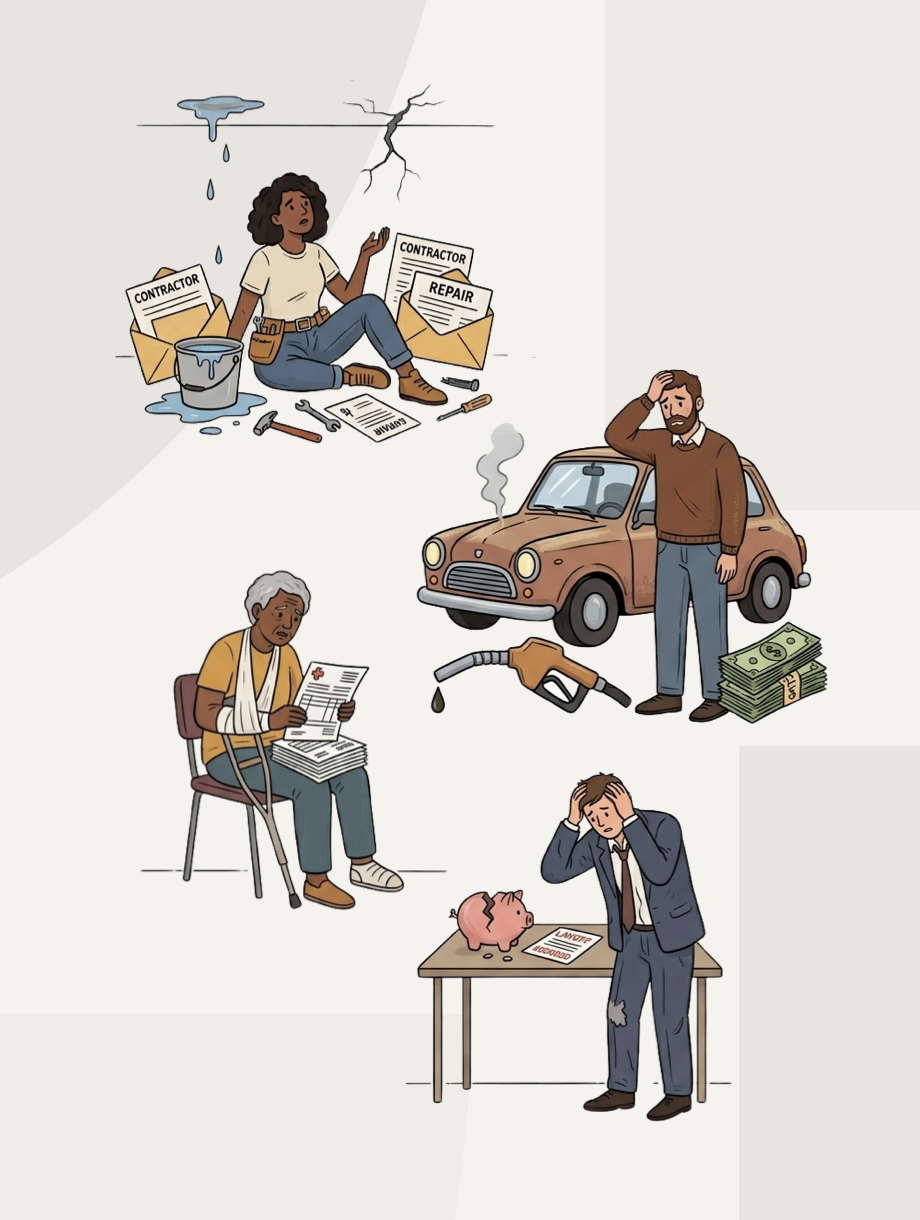
A car repair.
A home issue.
A missed payment.
A medical bill.
A reduction in income.
Not dramatic. Just disruptive.
Most Money Problems Begin in Everyday Life
And according to a recent National Endowment for Financial Education report, that is exactly what happened to many Americans in 2025. The major expenses or unexpected setbacks reported by households included unexpected transportation expenses (25%), unexpected home repairs or maintenance (24%), falling behind on bill payments or debt obligations (22%), medical expenses due to injury or illness (21%), and job loss or significant reduction in income (20%).
That list is revealing.
These are not exotic financial disasters. These are the kinds of things that happen in normal life. Which means the real issue is not just whether problems happen. It is whether people are financially prepared when they do.
Ordinary Disruptions Become Expensive Fast
And that is where financial literacy becomes so important.
At TheMoneyBooks, we believe one of the greatest misunderstandings about money is that people think financial literacy is only for investing, retirement, or advanced planning. But financial literacy matters much earlier than that.
It matters when you are deciding how much debt to carry.
It matters when you are choosing how to structure your monthly expenses.
It matters when you are trying to build margin into your life.
It matters when you are deciding whether to spend, save, borrow, or protect.
In other words, financial literacy matters most in everyday life.
Because everyday life is where most financial setbacks begin.
The Small Things That Throw People Off Track
Think about transportation costs. A blown transmission, unexpected repairs, new tires, a breakdown that interrupts work, or rising insurance and maintenance costs can quickly throw off a budget. Home-related expenses can do the same. A leak, appliance replacement, HVAC issue, plumbing repair, or maintenance problem can turn into a costly surprise.
Then there are the more painful disruptions. Falling behind on bills. Medical costs. Reduced income. These are not merely line items. These events create emotional pressure too. They can make people feel cornered, embarrassed, and overwhelmed.
Without a Financial Framework, Everything Hits Harder
That is the danger of living without a financial framework.
When money is unclear, every disruption hits harder.
Without a budget, it is hard to know what can flex and what cannot.
Without savings, every surprise feels like a threat.
Without an understanding of debt, people often solve today’s problem by creating a bigger one for tomorrow.
Without guidance, many people just patch things together and hope relief comes before the next setback.
That is not peace. That is survival mode.
And survival mode is exhausting.
Financial Literacy Should Never Be Framed as Judgment
What makes this even more important is that many people experiencing these setbacks are not irresponsible. They are simply underprepared, undereducated, or trying to manage too much pressure at once. That is why financial literacy must never be framed as judgment. It should be framed as empowerment.
Education gives people options.
It helps them think ahead instead of always reacting.
It helps them spot risk before risk becomes damage.
It helps them prepare for life’s ordinary disruptions, which are often the very things that become extraordinary burdens.
This Is Why Financial Literacy Month Matters
That is one reason Financial Literacy Month matters so much. It reminds us that education is not just about the future. It is about resilience in the present.
When someone understands the basics of cash flow, debt management, budgeting, emergency savings, and financial protection, they are better positioned for real life. Not perfect life. Real life.
And real life is exactly where so many households are struggling.
People Want More Than Relief. They Want Control
The NEFE report also found that the most common financial resolutions for 2026 are paying down debt (42%), setting and following a budget (39%), and checking and improving credit score (36%). That tells us something powerful. People do not just want relief. They want control. They want to fix the fundamentals.
That is encouraging.
It means many people already know the answer is not another shortcut. It is a stronger foundation.
They want to understand where their money is going.
They want to stop losing ground.
They want to rebuild confidence.
They want to make better decisions.
And that is exactly where financial literacy can make a lifelong difference.
Understanding Money Should Not Feel Out of Reach
At TheMoneyBooks, we believe understanding money should not feel out of reach. It should not feel like insider knowledge. It should not require a finance degree just to make wise decisions about debt, spending, saving, and planning.
People deserve clear, practical, usable financial education.
Because the consequences of not understanding money are often hidden at first. A little debt here. A missed payment there. A delayed repair. A decision that seems manageable in the moment. But over time, those ordinary decisions begin to stack. That is how people wake up one day and realize stress has become their normal.
The Goal Is to Be Ready for Real Life
Financial literacy interrupts that pattern.
It helps people recognize the cost of delay.
It helps them prioritize what matters most.
It helps them build the habits that create long-term stability.
That is not flashy, but it is powerful.
This Financial Literacy Month, the goal should not be to overwhelm people with financial information. The goal should be to help them understand the issues that touch daily life. Because that is where the real battle is being fought.
Not in theory.
In the kitchen.
In the car.
In the monthly budget.
In the emergency.
In the bill that came too soon.
In the decision someone did not feel prepared to make.
That is why ordinary setbacks matter so much. They reveal whether a person has a system, or just stress.
And for millions of Americans, the answer right now is stress.
But that can change.
Understanding money changes how people respond to life. It does not eliminate every problem, but it helps prevent ordinary setbacks from turning into long-term financial pain.
Call to action:
This Financial Literacy Month, do not wait until the next surprise expense forces your attention. Take the Financial Literacy Quiz and find out where your understanding stands. Then connect with a financial educator who can help you build a stronger foundation for real life.
Financial Stress Is Everywhere

Why Financial Literacy Matters More Than Ever
April is Financial Literacy Month.
For some people, that may sound like just another awareness campaign. Another label on the calendar. Another topic people talk about for a few weeks before moving on.
But this year feels different.
This year, Financial Literacy Month feels urgent.
This Is Bigger Than Individual Stress
A recent report from the National Endowment for Financial Education found that 88% of U.S. adults are feeling some form of financial stress as 2026 begins. On top of that, 77% said they experienced a financial setback in 2025. NEFE said those numbers are among the highest levels they’ve seen in years of tracking Americans’ financial well-being.
That should tell us something important.
Financial stress is not a side issue. It is not affecting only a small group of people. It is not limited to those who made extreme mistakes or ignored obvious warning signs. It is widespread. It is common. It is woven into everyday life for millions of people who are trying to do their best while navigating a financial system they were never truly taught to understand.
The Real Issue Is What People Were Never Taught
That is exactly why financial literacy matters.
Too often, money problems are framed as personal failure. People feel embarrassed that they do not know more. They feel ashamed that they are stressed. They feel like everyone else must have it figured out.
But the truth is far more revealing.
If nearly 9 out of 10 adults are feeling financial pressure, the problem is not just personal. It is cultural. It is educational. It is systemic. It means too many people have been sent into adulthood without a clear understanding of how money actually works.
When Life Gets Expensive, Confusion Gets Exposed
That is why TheMoneyBooks exists. We believe financial literacy is not about sounding smart. It is not about jargon. It is not about impressing people with technical language. It is about helping everyday people understand the real-world money decisions that shape their lives.
How debt works.
How budgeting works.
How saving works.
How protection works.
How planning works.
How one decision affects another.
Because when people do not understand money, they often end up living by reaction instead of intention.
They react to bills.
They react to emergencies.
They react to rising costs.
They react to debt.
They react to stress.
And over time, reaction becomes a way of life.
Financial Literacy Is About More Than Numbers
That is what makes the data so important. It is not just telling us that people feel stressed. It is showing us that Americans are trying to manage life without enough clarity, enough margin, or enough confidence.
That kind of stress affects far more than a bank account.
It affects sleep.
It affects relationships.
It affects decision-making.
It affects confidence.
It affects the ability to think long term.
When people are under constant financial pressure, they stop asking, “What is the best move?” and start asking, “How do I get through this month?” That is a very different way to live.
Why This Month Matters So Much
And it is one reason Financial Literacy Month should matter to everyone, not just students or people in crisis.
Financial literacy is life literacy.
It helps a young adult understand credit before making expensive mistakes.
It helps a family create a plan instead of hoping things somehow work out.
It helps a worker recognize when debt is silently taking over.
It helps a parent prepare for the unexpected.
It helps a household move from confusion to confidence.
That does not mean financial literacy solves everything overnight.
Life still happens. Expenses still rise. Jobs still change. Emergencies still come. But education changes how people respond. It gives them a framework. It gives them better questions. It gives them more control.
People Do Not Just Need Motivation. They Need Understanding
Control matters deeply in a time like this.
One of the most damaging myths in personal finance is that people just need more motivation. In many cases, what they really need is more understanding.
They do not need another lecture.
They need a better foundation.
They need someone to explain why carrying debt is so costly.
Why a budget is not restrictive but freeing.
Why emergency savings matter.
Why credit matters.
Why financial decisions should be made on purpose.
That is why financial literacy is not optional anymore.
It never really was, but now the consequences of ignoring it are impossible to miss.
When 88% of adults say they are financially stressed, we are not looking at a niche problem. We are looking at a national warning sign.
The Answer Is Not Shame. It’s Clarity
Financial Literacy Month gives us an opportunity to respond.
Not with noise.
Not with shame.
Not with hype.
With education.
With clarity.
With real conversations that help people understand where they are, what needs to change, and what steps they can take next.
At TheMoneyBooks, we believe the goal is not to make people feel bad about what they do not know. The goal is to help them learn what they were never taught.
That is the difference.
Because once someone begins to understand money, things start to change. Maybe not all at once. Maybe not instantly. But steadily. The confusion starts to lift. The fear starts to loosen. The person begins to see patterns they never noticed before. They begin to realize that financial pressure is not always random. Often, it is tied to a lack of education, strategy, and structure.
And the good news is that all of those things can be improved.
Financial Literacy Month Should Be a Turning Point
That is why this month matters.
Financial Literacy Month is not just about awareness. It is about action. It is about helping people replace guesswork with understanding. It is about helping families make stronger decisions. It is about giving people tools they can use for the rest of their lives.
If this year has already felt financially heavy, you are not alone. The data makes that clear. But being stressed does not mean you have to stay stuck.
A different future begins with understanding.
Your Call To Action
This Financial Literacy Month, take a step toward greater clarity. Take the Financial Literacy Quiz and see where you stand. Then connect with a financial educator who can help you better understand your financial life and move forward with more confidence.
A Million New Investors and the Massive Education Gap

Why Financial Literacy Matters Now More Than Ever
For years, financial literacy has been treated as a “nice-to-have” skill. Something people might learn later in life, after they finish school, build a career, or start a family.
But the world has changed.
Today, financial knowledge isn’t optional. It’s essential.
Recent research highlighted by CNBC shows that more low- and middle-income Americans are investing than ever before. In fact, the number of investors in these income groups has surged 167% since 2020, according to research from the BlackRock Foundation and Commonwealth using JPMorganChase Institute data.
At first glance, that sounds like good news. And in many ways, it is.
More people are participating in the financial system and trying to build wealth.
But there’s another side to the story.
When millions of new investors enter the market without a strong foundation in financial education, the stakes become much higher. Without the right knowledge, people can make costly mistakes, fall for bad advice, or misunderstand the risks involved.
That’s why financial literacy is more important now than at any other time in modern history.
The Rise of the Everyday Investor
Historically, investing was mostly limited to wealthier households.
The barriers were high. Brokerage accounts were expensive. Information was harder to access. And the financial industry often catered primarily to high-net-worth clients.
That world is disappearing.
Technology has opened the door to millions of new investors. Mobile apps allow people to buy stocks with just a few taps. Online brokerage platforms offer commission-free trades. Financial information spreads instantly across social media.
These changes have dramatically expanded access to investing.
In fact, more than half of low- and moderate-income Americans now participate in the retail investment market, and many began investing only in the past five years.
For many families, investing represents hope. Hope for a better future. Hope for retirement security. Hope for financial independence.
But access alone doesn’t guarantee success.
Knowledge is what turns access into opportunity.
More Participation, More Risk
Investing without education is like flying an airplane without training.
You may get off the ground.
But eventually, something will go wrong.
New investors often encounter challenges such as:
• misunderstanding risk
• chasing short-term trends
• reacting emotionally to market volatility
• investing money they cannot afford to lose
Even seasoned investors struggle with these issues. For people just beginning their financial journey, the risks are even greater.
This is especially true during times of economic uncertainty.
Inflation, interest rate changes, global conflict, and technological disruption can all affect markets. Headlines can cause fear and panic. Prices move rapidly. Social media amplifies speculation.
Without a framework for understanding how money works, people may make decisions based on emotion rather than strategy.
Financial literacy provides that framework.
It helps people understand the difference between investing and gambling.
The Information Gap
One of the biggest problems in personal finance is not a lack of information.
It’s a lack of understanding.
People today have access to more financial content than ever before. Podcasts, videos, blogs, influencers, and social media posts offer a constant stream of advice.
But information without context can create confusion.
For example:
Someone might hear that “stocks outperform everything long term.”
Another person might hear that “real estate is the safest investment.”
Someone else may be told that “crypto is the future.”
Each statement contains elements of truth. But none of them tell the full story.
Financial literacy helps people ask better questions:
What are the risks?
How does diversification work?
What role does time play in investing?
How do taxes affect returns?
Without these insights, even good information can lead to poor decisions.
Why Education Must Come First
The most important principle in personal finance is simple:
Education must come before action.
When people understand how money works, they begin to see the bigger picture.
They recognize that wealth isn’t built overnight.
They understand the power of time, compounding, and disciplined saving.
They learn that small decisions today can have enormous consequences decades later.
Financial literacy also changes behavior.
Research consistently shows that people who understand financial concepts are more likely to:
• save regularly
• plan for retirement
• avoid excessive debt
• build emergency funds
• invest for the long term
These habits are the building blocks of financial stability.
Without them, even high income does not guarantee financial security.
The Cost of Financial Illiteracy
The absence of financial education has a real cost.
Every year, millions of Americans pay unnecessary interest on debt, miss opportunities to invest, or fall victim to poor financial decisions.
Many people learn these lessons only after experiencing hardship.
They realize too late that they were never taught the fundamentals.
How compound interest works.
How inflation erodes purchasing power.
Why diversification matters.
How long-term investing differs from speculation.
These are not advanced financial concepts. They are basic life skills.
Yet they are rarely taught in schools.
That gap in education is one of the biggest economic challenges of our time.
A Generational Shift
The surge in new investors represents something bigger than a market trend.
It signals a generational shift.
Millions of people are realizing that relying solely on a paycheck may not be enough to build financial security. They want to participate in the growth of the economy, not just earn income from it.
But participation without preparation creates vulnerability.
The goal should not simply be to create more investors.
The goal should be to create more informed investors.
That begins with education.
Financial Literacy as Empowerment
Financial literacy is not about memorizing formulas or mastering Wall Street jargon.
It is about empowerment.
When people understand how money works, they gain control over their financial lives.
They become less dependent on institutions and more confident in their own decisions.
They recognize opportunities that others miss.
They avoid traps that derail so many households.
And perhaps most importantly, they begin thinking long term.
That shift in perspective changes everything.
Instead of reacting to financial stress, people start building financial strategies.
Instead of worrying about the future, they begin preparing for it.
Building a Financially Literate Society
If the number of investors continues to grow, financial education must grow with it.
Families, schools, communities, and businesses all have a role to play.
Parents can teach children the basics of saving and budgeting.
Schools can incorporate personal finance into everyday learning.
Employers can provide financial education alongside retirement benefits.
And financial educators can help people translate complex concepts into practical decisions.
The goal is not to turn everyone into professional investors.
The goal is to ensure that every person understands the principles that shape their financial future.
The Opportunity Ahead
The growth in new investors shows something encouraging.
People want to learn.
They want to improve their financial situation.
They want to participate in building wealth.
That curiosity is a powerful starting point.
But curiosity must be matched with education.
The more people understand how money works, the more confident and capable they become.
And when millions of individuals make smarter financial decisions, the impact extends far beyond individual households.
It strengthens communities.
It reduces financial stress.
It expands economic opportunity.
Financial literacy is not just a personal advantage.
It is a societal asset.
The Bottom Line
The financial world is becoming more accessible every day.
More people are investing.
More people are taking control of their financial futures.
More people are realizing that relying on a paycheck alone may not be enough.
But access without education creates risk.
Understanding how money works is no longer optional. It is essential for navigating the modern economy.
Financial literacy is the difference between reacting to financial events and preparing for them. It helps people understand risk, think long term, and make informed decisions instead of emotional ones.
In a world where anyone can open an investment account in minutes, knowledge has become the most valuable financial asset of all.
How Financially Literate Are You?
One of the challenges with financial literacy is that most people assume they know more than they actually do.
Until they test it.
That’s why the Financial Literacy Quiz was created—to give people a clear snapshot of their understanding of the fundamentals that shape their financial future.
The quiz covers essential topics such as:
• compound interest
• inflation
• debt management
• investing basics
• risk and diversification
• retirement planning
These are the concepts that influence nearly every financial decision we make.
Taking the quiz only takes a few minutes, but the insights can last a lifetime.
It may confirm what you already know—or reveal gaps that could make a meaningful difference in your financial future.
If financial literacy truly is one of the most important life skills of our time, the first step is simple:
Find out where you stand.
Click here to take the Financial Literacy Quiz and see how your knowledge stacks up.
Because when people understand how money works, they don’t just make better decisions.
They build better futures.
The Joys (and Traps) of Buying a New Vehicle

What every driver should know before signing on the dotted line
Few purchases feel as exciting as driving away in a new vehicle.
The smell of the interior.
The smooth ride.
The feeling that everything works perfectly.
For many people, buying a car represents independence, success, or the reward for years of hard work. In America especially, cars are woven into the fabric of everyday life. They take us to work, bring our kids to school, and carry us on family vacations.
But while the experience of buying a vehicle can be joyful, the financial side often hides some expensive traps.
Understanding how cars work financially can save you thousands of dollars over your lifetime.
Let’s take a closer look.
The Hidden Cost of “New”
The moment you drive a new car off the lot, something surprising happens.
Its value drops.
On average, a brand-new vehicle loses 10–20% of its value in the first year, and roughly 40–60% within five years. That means the car you paid $40,000 for may be worth only $24,000 a few years later.
Think about that.
The car didn’t stop working.
It didn’t lose its ability to drive.
But financially, a large portion of the money you paid has disappeared.
This process is called depreciation, and it is the single biggest cost of owning a vehicle.
Many people assume the main cost of a car is the monthly payment. In reality, depreciation quietly eats up far more wealth than most drivers realize.
That does not mean buying new is always wrong. But it does mean you should understand what you are paying for.
The Monthly Payment Illusion
Car dealers are experts at asking one question:
“What monthly payment are you comfortable with?”
It sounds helpful. It feels reasonable.
But focusing on the payment instead of the total cost is one of the easiest ways to overspend.
Here’s why.
A dealer can lower your monthly payment simply by stretching the loan longer.
For example:
Loan TermPaymentTotal Paid48 months$700$33,60072 months$520$37,440
The payment looks better. But the total cost rises dramatically.
Many loans today stretch 6, 7, or even 8 years, which often means drivers are still paying for the car long after its value has dropped significantly.
In some cases, people even end up owing more than the car is worth. This is called being “upside down” on a loan.
And it can create serious financial stress if the car is sold or totaled.
Financing: The Most Common Path
Most people finance their vehicles through a loan.
This means you borrow money to buy the car and pay it back over time with interest.
Financing has some advantages:
• You eventually own the vehicle
• You can keep driving it after the loan is paid off
• There are no mileage limits
But financing also comes with risks.
If the loan term is too long or the interest rate too high, you can end up paying far more than the car is worth.
Before financing a car, ask three important questions:
- How much interest will I pay over the life of the loan?
- How quickly will the car depreciate compared to the loan balance?
- Can I comfortably afford this payment if my income changes?
Cars should serve your life, not trap your budget.
Leasing: Renting a Car in Disguise
Leasing has become increasingly popular because it offers lower monthly payments and the chance to drive newer vehicles more often.
But financially, leasing works very differently.
When you lease a car, you are not paying for the whole vehicle. You are paying for the portion of the car’s value that depreciates during the lease period.
In simple terms:
You are renting the car.
At the end of the lease, you typically must return the vehicle or buy it for a predetermined price.
Leasing can make sense in certain situations:
• If you prefer driving a new vehicle every few years
• If you drive limited miles annually
• If the lease terms are very favorable
But many people underestimate the long-term cost.
If someone leases cars repeatedly for decades, they may always have a payment and never own an asset.
Imagine renting your house forever instead of eventually owning it. The financial difference can be enormous.
The Lifestyle Trap
Cars are emotional purchases.
They represent status, success, and identity. Advertising reinforces this every day.
Luxury vehicles, premium trims, and high-tech upgrades can be tempting. And there is nothing wrong with enjoying a great car if it fits comfortably within your finances.
But the danger comes when lifestyle begins to outrun financial reality.
Many people buy vehicles that stretch their budget because:
• The monthly payment seems manageable
• Everyone around them drives similar cars
• It feels like a reward for working hard
Over time, these decisions quietly drain wealth.
A car that costs $15,000 more than necessary might not feel like a big deal today. But if that money had been invested instead, it could grow dramatically over decades.
Small choices compound.
A Smarter Way to Think About Cars
Financial literacy changes how we see purchases like vehicles.
Instead of asking:
“Can I afford this payment?”
We begin asking better questions.
How will this purchase affect my long-term wealth?
Is there a smarter way to achieve the same goal?
For many people, the most financially efficient approach is:
• Buying reliable vehicles
• Avoiding excessively long loans
• Keeping cars longer after they are paid off
Driving a paid-off car is one of the quietest financial victories in life.
No payment.
No stress.
Just transportation that serves your goals.
The Joy Is Still Real
None of this means you cannot enjoy a new car.
Vehicles can bring real happiness. They create experiences, road trips, and memories with family and friends.
But the joy should come from using the car, not from financial pressure attached to it.
When you understand how money works, you gain the freedom to make choices intentionally.
You are no longer reacting to marketing or monthly payments.
You are making decisions based on knowledge.
And that changes everything.
Because the goal isn’t just to drive a nice car.
The goal is to build a life where your money works for you.
What 10 Questions Reveal About Women and Money

The Year Women Stop Guessing and Start Knowing
Money shapes everything.
It affects your choices.
Your relationships.
Your freedom.
Your future.
And yet for far too many women, money still feels like something we were expected to “figure out” quietly… or let someone else handle.
That ends now.
We have launched the WealthWave Women’s Survey 2026, and it may be one of the most important invitations you receive this year.
It’s simple:
- 10 multiple-choice questions
- Anonymous and confidential
- Takes just a few minutes
But the impact? It could shape an entire year of research, media coverage, and public conversation about women and money.
Why This Survey Matters More Than You Think
Most surveys collect data.
This one collects truth.
When thousands of women share what they worry about, regret, hope for, and want to understand better, something powerful happens:
We stop guessing what women need.
We start listening.
Throughout 2026, these responses will fuel:
- White papers
- Published articles
- Media interviews
- National conversations
The goal is clear: shine a bright light on the real financial experiences of women and use that clarity to drive better education, better conversations, and better outcomes.
Women don’t need more noise.
We need a clearer path.
The Great Wealth Transfer Is Already Underway
By 2048, an estimated $124 trillion will transfer to heirs in what economists call “The Great Wealth Transfer.”
Of that:
- $54 trillion will go to surviving spouses — 95% of whom are women
- $47 trillion will go to daughters and granddaughters
Millions of women will soon be responsible for major financial decisions.
The question is not whether the responsibility is coming.
The question is: will we be ready?
The Reality Women Face
Let’s speak plainly.
Women still earn less than men.
Women of color face even larger pay gaps.
Women retire with lower Social Security benefits on average.
Less income over a lifetime means:
- Less invested
- Less compounded
- Less security in retirement
That isn’t a confidence problem.
It’s an education gap.
And education is the one advantage no one can take from you.
What Women Are Actually Being Asked
The survey isn’t abstract. It’s deeply personal.
Women are asked about:
- Their biggest money worry
- Their biggest financial regret
- Who makes the big financial decisions
- How confident they feel right now
- What topic they most wish they understood better
- Which Money Milestone would make the biggest difference in their life
These aren’t surface questions.
They reveal patterns — and patterns create solutions.
When aggregated, this data will show not just what women know… but how women feel.
And feelings shape financial behavior more than spreadsheets ever will.
A Defining Moment for Women
Here’s something else worth noting:
94% of women say they prefer to work with a woman financial professional.
That’s not about exclusion.
It’s about trust, communication, and feeling heard.
This moment matters.
Women are inheriting wealth.
Women are leading businesses.
Women are making more financial decisions than ever before.
The only thing missing for many is structured financial education.
That’s what this survey begins.
This Is Your Invitation
If you have ever felt:
- Behind
- Overwhelmed
- Embarrassed
- Unsure
- Late to the game
Hear this clearly:
You are not the problem.
You were undereducated in a system that never made financial literacy a priority.
This survey is the first move in changing that.
Take It. Then Share It.
Start with yourself.
Take the survey honestly.
Then send it to:
- Your friends
- Your sisters
- Your daughters
- Your coworkers
- Your clients
- The women you sit next to at church, school, work, or the gym
If you want a simple message to use:
“I just took a quick 10-question anonymous survey about women and money. The results will help shape national conversations all through 2026. Will you take it too? I’d love your voice included.”
No lecture.
No pressure.
Just an invitation.
Because when a woman takes that survey, she isn’t just answering questions.
She’s opening a door.
When Women Become Financially Confident
Families change.
When families change, communities change.
And when communities change, the future looks very different.
This isn’t about statistics.
It’s about readiness.
Responsibility.
Confidence.
Leadership.
2026 can be the year women stop navigating money quietly and start leading boldly.
It begins with ten questions.
Take the WealthWave Women’s Survey 2026 here:
👉 https://form.jotform.com/253574555469067
Add your voice.
Because this time, the conversation includes you.
Kim Scouller
Co-author of How Money Works for Women
You Took the First Step by Asking “Why?”

Now Here’s What Comes Next
If you read “You Can’t Afford to Not Know Anymore,” you already understand something most people don’t.
Not knowing how money works isn’t just inconvenient. It costs you time, confidence, and opportunity.
That realization matters. It’s the moment when the fog starts to lift and the path forward becomes visible. It’s also a moment that tens of millions of people never reach, not because they don’t want to, but because they’ve never been shown how to begin.
So now let us go beyond the why and toward the how.
You Recognized the Problem. Now Let’s Solve It Together.
In the other blog, the core message was simple: financial ignorance is costly.
In this one, the message is just as clear:
You don’t have to figure this out alone.
Understanding money isn’t about luck. It’s about learning it in a way that actually makes sense for you, your goals, your family, and your stage of life.
Education First. Life Second.
Here’s a fact that changes how most people should approach money:
Most financial stress is not caused by bad choices. It’s caused by missing information.
When you finally understand how money works, not in theory but in everyday life, your confidence grows. Your decisions become clearer. Your options expand.
This is the foundation of what we teach at TheMoneyBooks.
The Tools Are Here. People Make Them Work.
You don’t need a Ph.D. in finance. You need clarity, context, and someone who can help you apply it.
That’s where two things come together.
1. TheMoneyBooks: A Foundation Everyone Can Understand
TheMoneyBooks were written for people who want practical clarity without jargon. They:
- Break down money fundamentals into simple language
- Help you see the big picture before focusing on the details
- Give you a framework you can use again and again
These books aren’t about complicated tricks. They’re about understanding the rules so you can stop feeling overwhelmed and start making intentional choices.
But books are only one part of the journey.
2. Financial Educators: Guides, Not Salesmen
Reading about how money works is powerful. Real understanding happens when someone helps you connect that learning to your life.
That’s the role of our financial educators.
They help you apply concepts from TheMoneyBooks to your real situation.
They answer your questions with clarity, not pressure.
They meet you where you are, not where you “should” be.
They teach first and serve only when you ask.
Think of them like trail guides. The books give you the map. The educators help you read it, adjust your course, and take confident next steps.
Why This Matters More Now Than Ever
In “You Can’t Afford to Not Know Anymore,” we talked about urgency. Why financial clarity is no longer optional.
That urgency still matters. But urgency without direction leads to stress.
Education plus guidance creates direction.
When you understand how money works and how it applies to your life, big decisions stop feeling paralyzing. You don’t just react. You choose.
That shift, from guessing to choosing, is where confidence begins.
You’re Not Alone on This Path
No adult should be expected to navigate retirement planning, risk, insurance, taxes, investing, legacy, and financial opportunity without understanding how these pieces fit together.
Yet that’s exactly what most people have been asked to do.
That’s changing.
TheMoneyBooks and our financial educators exist to make that change real, accessible, and personal. Not abstract.
So What’s Your Next Step?
There isn’t one “right” next step for everyone. But here’s how most people move forward with clarity:
- Start with clarity. Take the Financial Literacy Quiz to see where you stand right now: https://www.taketheflq.com/{{agent_slug}}
- Read TheMoneyBooks to build a foundation.
- Ask your questions. Your situation is unique.
- Connect with a financial educator. Someone who will teach before selling.
You took the first step by recognizing why understanding money matters.
Now take the next step by learning how it works and who can help you apply it.
You don’t have to figure everything out at once.
You don’t have to do it alone.
And the path forward starts with understanding, one insight at a time.
Because you still can’t afford to not know.
But now, you also don’t have to try to know it all on your own.
You Can't Afford to Not Know Anymore

2026 Is the Most Financially Dangerous Year to Be Uneducated
There was a time when you could make financial mistakes and recover.
You could choose the wrong savings account, misunderstand your 401(k), buy a house at the wrong time, or carry a little too much credit-card debt and still find your way back. The system moved slowly. Wages rose. Pensions existed. Mistakes were survivable.
That world is gone.
In 2026, financial ignorance is no longer just inconvenient. It is dangerous. It quietly drains years of your life, locks families into stress, and transfers wealth away from those who do not understand the rules to those who do.
The reason is not one single event. It is the collision of several forces that have been building for decades and are now arriving at the same moment.
Longevity. Inflation. Artificial intelligence. The Great Wealth Transfer. Debt. Taxes. Market volatility. A retirement system that was never designed for 30-year retirements.
All of it is converging. And most people have never been taught how money actually works.
That gap between what the world now demands and what people understand has become the most dangerous place to stand.
A world that punishes guessing
For most of the 20th century, financial success depended more on participation than knowledge. If you showed up to work, saved a little, and avoided catastrophe, you usually did fine.
Today, the system is built very differently.
Money now moves faster than human intuition. Investment markets react in milliseconds. Algorithms make lending decisions. AI determines credit offers, insurance pricing, and even hiring. Meanwhile, people are still making financial decisions based on rules they learned from their parents or advice they picked up 20 years ago.
That is like driving a modern sports car using a 1950s road map.
Guessing no longer works.
Every major financial decision you make now compounds forward for decades. The mortgage you choose. The way you fund college. The insurance you buy or do not buy. The retirement accounts you roll over incorrectly. The tax decisions you do not realize you are making.
Small misunderstandings turn into six- and seven-figure consequences over time.
The tragedy is not that people make bad choices. It is that they make uninformed ones.
The 30-year retirement problem
One of the most overlooked changes in modern life is how long people now live.
A century ago, most people worked until they died or came close. Retirement, as we think of it today, barely existed. Now, it is common for people to live 20 to 30 years after they stop working.
That changes everything.
It means your savings do not just need to last. They need to grow while you are spending them. It means inflation becomes a silent enemy. It means taxes and health care costs matter far more than people realize.
Yet most financial advice still treats retirement like a short victory lap instead of a second full lifetime.
Without education, people default to what sounds safe. Cash. CDs. Bonds. Conservative funds. Those choices feel responsible. In reality, they often guarantee that inflation and taxes slowly destroy purchasing power.
In 2026, longevity without literacy is a financial trap.
The Great Wealth Transfer is already here
Over the next two decades, more than $100 trillion will move from one generation to the next. It is the largest wealth transfer in human history.
But here is the part most people miss.
Money does not transfer wisdom.
In fact, inherited wealth without financial understanding is more likely to disappear than grow. Heirs often face sudden tax decisions, investment choices, and estate structures they have never encountered before.
Without education, they guess. Or they defer to whoever happens to be closest. Or they do nothing.
Each of those paths is expensive.
2026 marks the beginning of the steepest part of this transfer. Baby Boomers are aging. Properties are being sold. Retirement accounts are being inherited. Life insurance is paying out. Decisions that used to be hypothetical are now happening in real time.
This is not theoretical. It is operational.
Families who are educated will preserve and multiply what they receive. Families who are not will lose it.
Inflation is no longer an abstract concept
For decades, inflation was something economists talked about. People noticed prices creeping up, but it did not feel urgent.
Now everyone feels it.
Groceries. Rent. Insurance. Travel. Health care. Everything costs more. And inflation is not a temporary visitor. It is built into the modern monetary system.
When you hold money in places that do not grow faster than inflation, you are quietly losing purchasing power every day. It does not feel dramatic. It feels normal. But over time it is devastating.
Most people do not understand this. They think not losing money is the same as not going backward.
It is not.
In 2026, staying still financially is falling behind.
Debt has become a permanent companion
Student loans. Credit cards. Auto loans. Buy-now-pay-later plans. Home equity lines.
Debt is no longer a bridge. It is a lifestyle.
For families without financial education, debt becomes a slow leak that never stops. Interest compounds against them. Payments crowd out savings. Stress builds. Options disappear.
Without understanding how interest works, how to prioritize payoff, or how to structure borrowing, people stay trapped even when they earn more.
This is why higher income no longer guarantees higher net worth.
Education is the difference between using debt as a tool and becoming owned by it.
AI is rewriting the financial landscape
Artificial intelligence is not just changing jobs. It is changing money.
AI already sets insurance premiums. It approves or denies loans. It prices risk. It predicts behavior. It flags fraud. It decides who gets better offers and who does not.
People who do not understand how financial systems work will be the ones most easily mispriced, mistargeted, and misunderstood by machines.
The irony is painful.
At the exact moment when money systems are becoming more complex, fewer people than ever have been taught how they work.
This is why financial literacy is no longer optional
In 2026, financial literacy is not about being rich. It is about being safe.
It is about understanding how money grows. How taxes work. How risk is managed. How inflation erodes. How to protect your family. How to make decisions with confidence instead of fear.
It is about not being the person whose future depends on luck.
That is why movements like TheMoneyBooks and HowMoneyWorks exist. Not to sell products. Not to overwhelm people with jargon. But to give families the missing education they were never given in school.
Because in a world this fast, this complex, and this unforgiving, ignorance is the most expensive mistake you can make.
And 2026 is the year that mistake starts to show.
Your next step
If you want to know where you really stand, start with education. Read. Learn. Take the Financial Literacy Quiz. Share it with your family. Start conversations that matter.
Money touches every dream you have.
Understanding it is no longer optional.
The Gift of Clarity

Understanding Money Is One of the Greatest Presents You Can Give Your Family
Christmas has a way of sharpening our focus.
We notice what matters most. Family gatherings. Conversations around the table. Traditions we want to pass on. Hopes we carry into the next year. It is also the season when many people quietly feel the weight of financial stress, even while the lights are on and the music is playing.
Bills still arrive in December. Debt does not take a holiday. Financial questions linger, often unspoken, just beneath the surface.
That tension points to something important. While we spend time and money finding the right gifts, there is one present that rarely makes it under the tree, yet shapes families for generations.
Clarity.
Not more money. Not a bigger bonus. Not a perfect budget spreadsheet.
Clarity about how money actually works.
Why Money Confusion Is So Common
Most people are not bad with money. They are uninformed. And that is not their fault.
Very few of us were taught how money works in school. We learned math, history, science, and literature, but not how debt compounds, how interest quietly works for or against us, how risk is managed, or how long-term decisions shape financial outcomes decades later.
As a result, many families operate with partial information. They make decisions based on habits, emotions, or advice passed down without context. Sometimes those habits work. Often they do not.
The problem is not effort. The problem is clarity.
When people lack clarity, they hesitate. They delay. They avoid conversations. They hope things will work out.
And hope is not a strategy.
What Financial Clarity Actually Means
Financial clarity does not mean knowing everything. It means understanding enough to make confident decisions.
It looks like knowing the difference between good debt and bad debt. It means understanding why compound interest can be a powerful ally or a silent enemy. It means recognizing how inflation erodes purchasing power over time, and why simply saving cash is not always enough.
Clarity also means knowing what questions to ask.
Should we pay off this debt first or invest?
How much risk is appropriate at this stage of life?
Are we protected if something unexpected happens?
What does retirement really require, not just in theory but in reality?
When families have clarity, money becomes a tool instead of a source of fear.
The Hidden Cost of Financial Confusion
Financial confusion rarely shows up as a single dramatic mistake. More often, it shows up quietly over time.
It appears as carrying high-interest debt longer than necessary. As under-saving because the future feels too abstract. As missed opportunities because no one explained the options clearly.
It also shows up emotionally.
Money stress affects relationships. It influences career decisions. It shapes how people feel about generosity, security, and freedom.
Children absorb these signals early. They notice whether money conversations are calm or tense, open or avoided. Long before they manage money themselves, they learn how to feel about it.
In that sense, every family passes down a financial inheritance, whether they intend to or not.
Why Christmas Is the Right Moment
Christmas creates a natural pause.
The year is ending. The calendar is resetting. Families are together in ways they are not the rest of the year. Reflection comes more easily.
That makes this season uniquely suited for something deeper than resolutions. It is a chance to ask better questions.
What do we want our family to understand about money?
What habits are we modeling, intentionally or not?
What knowledge do we wish we had learned earlier?
Financial clarity does not diminish the joy of the season. It supports it. When money decisions feel intentional instead of reactive, generosity becomes easier. Peace feels more attainable.
The Greatest Gift Is Not Money Itself
Many parents work tirelessly to provide opportunities for their children. Education. Experiences. Stability. Yet one of the most valuable gifts often goes overlooked.
Teaching children how money works.
Not in the form of lectures or spreadsheets, but through understanding. Through conversation. Through modeling clarity instead of confusion.
A child who grows up understanding basic financial principles starts adulthood with a powerful advantage. They recognize trade-offs. They understand long-term consequences. They are less likely to repeat costly mistakes simply because no one explained the rules.
That knowledge compounds over a lifetime.
Why Knowledge Changes Outcomes
When people understand how money works, behavior changes naturally.
They save with purpose instead of guilt.
They invest with patience instead of panic.
They plan with confidence instead of avoidance.
Clarity does not eliminate uncertainty, but it replaces fear with understanding. It allows families to make decisions based on principles rather than pressure.
This is especially important today. The financial world is more complex than ever. Choices are abundant. Misinformation is everywhere. Without a framework, people are easily overwhelmed.
Clarity provides that framework.
Measuring What We Don’t Know
One of the hardest parts of financial literacy is recognizing what we do not know.
Most people assume they understand money better than they actually do, until they are tested. That gap between confidence and comprehension is where mistakes live.
This is why assessment matters.
Before learning can begin, awareness must come first.
A clear starting point helps people focus on what actually matters, rather than chasing random tips or reacting to headlines.
A Simple Place to Start
For families who want to give the gift of clarity, the first step does not require major life changes. It requires curiosity.
Understanding where you stand today.
The Financial Literacy Quiz was designed to do exactly that. It is not about grades or judgment. It is about insight.
The quiz covers core money concepts that shape real-world outcomes. It highlights strengths, exposes blind spots, and provides a clearer picture of how money decisions connect over time.
For many people, it is the first moment when scattered financial information starts to form a coherent picture.
Turning Awareness Into Action
Awareness alone is not the end goal. It is the beginning.
Once families understand where gaps exist, learning becomes intentional. Conversations become more productive. Decisions feel grounded instead of rushed.
This is how clarity spreads.
One person learns. A spouse joins the conversation. Children start asking questions. What began as personal insight becomes a shared language around money.
That is how financial literacy becomes generational.
A Different Kind of Christmas Gift
There is nothing wrong with giving gifts that bring joy. Those moments matter. But the gifts that shape the future often look quieter.
A conversation that changes perspective.
A realization that replaces fear with understanding.
A decision made with clarity instead of confusion.
Understanding money is not about chasing wealth for its own sake. It is about aligning resources with values, protecting what matters, and creating options instead of limitations.
That kind of clarity lasts far longer than any gift under the tree.
Your Next Step
If you want to start the new year with greater confidence around money, begin with clarity.
Take the Financial Literacy Quiz. See what you know. Discover what you may have missed. Use it as a starting point for learning how money really works.
It is simple. It is practical. And it might be one of the most meaningful gifts you give your family this season.
Because when clarity replaces confusion, everything changes.
Have a Merry Christmas!
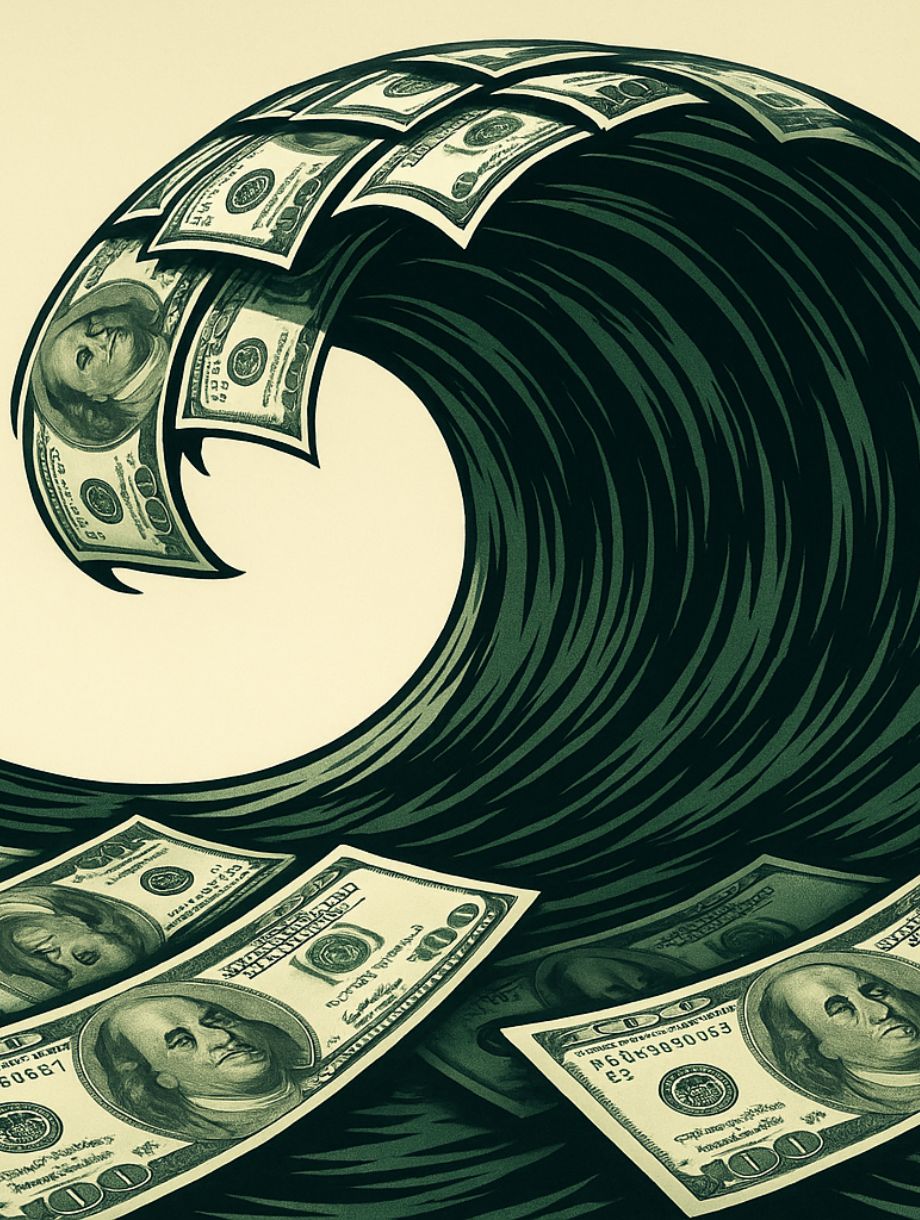
A Tidal Wave of Wealth Is Coming
How Each Generation Will Be Changed by the Great Wealth Transfer
We are standing at the edge of one of the most significant financial shifts in history. Analysts project that approximately 124 trillion dollars in assets will pass from older generations to heirs and charitable causes by 2048. The majority of these assets are held by Baby Boomers and the remaining members of the Silent Generation. These are individuals who accumulated wealth through home ownership, decades of investing, business building, or simply diligent financial habits.
This massive transfer of financial resources will reshape the financial identity of entire generations. It will influence markets, philanthropy, investment strategies, spending patterns, and cultural attitudes toward money. Yet receiving wealth is not the same as being prepared to manage it. That is why financial literacy and education matter more now than ever.
Below is a look at what the numbers suggest, how each generation will be affected, and why knowledge is the most important inheritance of all.
How Much Will Each Generation Receive
The projected inheritance breakdown shows that most of the assets being transferred will land primarily with Generation X and Millennials, followed by Generation Z. Baby Boomers appear lower on inheritance charts not because they are losing wealth, but because they are the ones distributing it.
Here are the current estimates for inheritance by heirs through 2048:
- Baby Boomers: approximately 6 trillion dollars
- Generation X: approximately 39 trillion dollars
- Millennials: approximately 46 trillion dollars
- Generation Z: approximately 15 trillion dollars
Older generations are also expected to direct trillions toward charitable causes, while the bulk will be passed on to heirs through wills, family gifting, investments, property, or trusts. Many who are transferring assets are also exploring what experts call giving while living. In other words, they are passing wealth forward now rather than waiting until their estate is settled.
Regardless of timing, the numbers tell one story very clearly: a tidal wave of wealth is about to arrive in the hands of younger generations. The decisions they make with it will shape not only their own lives, but their families and communities for decades.
Baby Boomers and the Silent Generation
The Givers, the Legacy Builders, and the Architects of Generational Impact
The oldest generations hold the greatest concentration of wealth in history. For them, this moment is not just about finances. It is about legacy.
They spent decades building their portfolios and managing their resources. Many bought homes while prices were still accessible. They lived through interest rate cycles, recessions, bull runs, and major shifts in the market. Some built businesses. Others invested consistently for decades. And through this steady effort, they accumulated assets that will soon move to heirs.
Now they face the question of what will remain and how much of it will serve future generations well. This includes not only completing the paperwork, such as wills and trusts, but passing down values that have guided their financial lives. Open conversations about intentions, inheritances, taxes, investments, and charitable causes are essential parts of protecting family harmony and pointing heirs toward wise stewardship.
Managed well, this is not simply a transfer of wealth. It is a transfer of wisdom.
Generation X
The First Wave of Heirs and the Most Immediate Beneficiaries
Generation X will be the first to receive large-scale inheritances in the near term. Analysts note that they are positioned to inherit more than any other generation over the next two decades. Gen Xers are typically mid career, raising children, planning retirement, and balancing aging parents. They often carry both responsibility upward and downward within the family structure.
This makes the wealth transfer a moment of both opportunity and obligation.
With significant resources arriving, Gen X could:
- Play catch up on retirement savings
- Help children with higher education
- Pay off long term debt
- Invest in businesses
- Acquire real estate
- Support causes that matter to them
However, the influx of wealth can also bring pressure. Should they invest aggressively, reduce risk, or focus first on financial security. Should they hold assets or restructure them. Should they continue the strategies of their parents or pivot toward different financial tools.
The correct approach will vary by household. What matters most is that Gen X engages these decisions equipped with financial literacy. Without a basic foundation in investing principles, tax strategy, diversification, or long term financial planning, the gift they inherit could be mishandled or even lost.
This generation has the opportunity to use inherited wealth to build stability and confidence for themselves and for those who follow. But this can only happen with education, planning, and wise counsel.
Millennials
The Generation Most Likely to Redefine Wealth
Millennials are projected to receive the largest inheritance pool overall, with estimates reaching into the mid 40 trillion dollar range. This comes after a generation that has often faced steeper financial headwinds than their parents. Rising housing costs, educational expenses, wage compression, and high inflation have affected their progress and delayed milestones such as home ownership or retirement planning.
For that reason, the transfer of wealth could represent a historic turning point.
Analysts show that younger investors are more likely than Boomers to explore non traditional investment categories. These include private market investments, impact driven portfolios, and digital assets. They are also more likely to want their financial decisions to reflect personal values such as sustainability, social responsibility, or long term community impact.
For Millennials, inherited wealth may be used to:
- Pay down student or consumer debt
- Purchase homes that have been out of reach
- Launch or scale entrepreneurial ideas
- Invest for long term growth
- Support nonprofit efforts
- Build portfolios that align with personal convictions
It is an opportunity to rewrite future paths. But it also brings a temptation to overspend, upgrade lifestyle too quickly, or underestimate the long term responsibilities that come with managing significant wealth.
Financial literacy empowers Millennials to build solid foundations, invest intentionally, and convert inheritance into security rather than stress.
Generation Z
The Youngest Beneficiaries and the Long Term Stewards
Generation Z may be youngest in the lineup, but they are not absent from the conversation. Projections suggest they will inherit trillions over time. For many of them, wealth will arrive when they are still early in life, perhaps before full careers are established or before they have built financial habits strong enough to handle a windfall.
Inheritance without education is rarely a blessing. At its worst, it can be destabilizing.
That is why financial literacy for this generation is not optional. It is the foundation that enables them to become responsible stewards of resources that arrive earlier than expected. Learning concepts like compound growth, diversification, inflation, tax treatment, long term strategy, retirement planning, and financial risk becomes essential.
If Gen Z prepares wisely, the resources they steward could compound for decades, multiply opportunity, and expand legacy far into the future.
Why Financial Literacy Matters for Every Generation
Many families believe that inherited wealth automatically creates stability. History shows the opposite. Without education and grounded decision making, inherited wealth evaporates quickly. Family conflict often follows when expectations and intentions are not discussed openly.
Financial literacy protects inheritance in several ways:
It prevents waste. Windfalls are often mishandled without planning. Education provides discipline, clarity, and long term vision.
It reduces conflict. When families have transparent conversations, there is less confusion, less resentment, and more unity.
It multiplies resources. Knowledge allows each generation to grow what they have rather than simply receive it.
It strengthens the economy. Where financial knowledge rises, smart investing tends to follow. New businesses are started, charitable giving increases, and capital flows into ideas that solve problems.
It ensures values stay intact. Money is a tool. The way it is used reflects beliefs and priorities. Financial education helps future generations shape a story that is bigger than a bank account.
What Each Generation Should Begin Doing Now
Older Generations
- Clarify inheritance goals
- Build estate plans
- Communicate openly with heirs
- Consider early gifting where beneficial
- Pass down education and values, not only resources
Generation X
- Revisit financial plans
- Prepare for responsibility, not entitlement
- Learn tax strategy for inherited assets
- Diversify and guard against emotional investing
Millennials
- Use wealth as a launchpad for long term growth
- Shore up financial foundations before upgrading lifestyle
- Align investing with values without abandoning discipline
- Seek trustworthy guidance
Generation Z
- Begin learning now
- Build habits before wealth arrives
- View inheritance as stewardship
- Think long term rather than short term
A Final Thought
This wealth transfer is not just about economics. It is about identity, values, character, and legacy. Generations will shape the future with the decisions they make once the assets arrive.
Some will multiply what they receive. Some will consume it. Some will invest it in innovation, education, and impact. Others may struggle or squander opportunity.
The difference is not income level, inheritance size, or market timing. The difference is literacy. The difference is education. The difference is understanding how money works.
In a moment that has the potential to reshape thousands of futures, generations can respond with wisdom, clarity, and vision. They can use wealth as a tool, not a crutch. They can build stronger families, stronger communities, and stronger foundations for those who will come after.
The transfer is coming. And it will be transformative. Now is the time to prepare minds as well as portfolios.
Financial literacy is the key that unlocks the true value of this historic moment.
Black Friday vs. Best Friday

How to Turn a Shopping Day Into a Wealth-Building Mindset
Every November, millions of people wake up early, coffee in hand, ready to chase “once-in-a-lifetime” deals. It’s called Black Friday, the day retailers celebrate, banks quietly profit from, and consumers convince themselves they’re “saving money.”
But what if the best deal of the year isn’t a discount at all?
What if it’s a decision?
Welcome to Best Friday, the day you stop letting sales run your wallet and start letting knowledge run your life.
The Illusion of the “Deal”
Let’s start with what makes Black Friday powerful.
It’s not just the markdowns; it’s the marketing psychology.
Every flashing countdown, every “only 3 left,” every ad using words like exclusive and today only is designed to trigger scarcity. When our brains sense scarcity, logic goes quiet and emotion takes over.
Suddenly, spending feels like saving.
And that’s exactly the trap.
Last year, the average American planned to spend around $1,000 during the holiday season. The problem isn’t generosity; it’s unconsciousness. When spending replaces strategy, “limited-time offer” becomes another word for “long-term regret.”
What Really Happens on Black Friday
Here’s what’s often happening behind those glossy graphics:
- Retailers raise prices in October only to “slash” them later.
- Credit card companies profit twice — once from the swipe, again from the interest.
- Consumers mistake emotion for math. A 20% discount isn’t a bargain if you pay 22% interest over the next year.
It’s not evil; it’s engineered.
Black Friday isn’t about your needs; it’s about someone else’s bottom line.
Our approach doesn’t say “never spend.”
It is to spend with intention, and that’s how we turn Black Friday into your Best Friday.
What Makes It “Best”
Best Friday isn’t about skipping the season or feeling guilty for shopping.
It’s about directing the same excitement and energy toward choices that actually compound over time.
Think about it:
- What if you invested the amount you usually spend on “deals”?
- What if you used the day to review your finances, set new goals, or automate savings?
- What if, for once, you bought something that appreciates instead of depreciates?
Best Friday is the mindset shift that says:
“I don’t need to spend to feel empowered. I can build instead.”
Example: The $800 Flip
Let’s say your holiday shopping list adds up to $800.
If you invested that money instead, say in a diversified index fund averaging 8% annual growth, and left it there for ten years, it would grow to $1,727.
Not bad for skipping a few impulse buys.
Now imagine you made that your Best Friday tradition. Every year, you invest the money you would have spent. After ten years, you’d have nearly $12,000 (and that’s without adding a penny from any other month).
Meanwhile, most of what’s bought on Black Friday loses value the moment it leaves the store.
The Emotional Side of Spending
It’s not just numbers; it’s neuroscience.
Shopping releases dopamine, the same “feel-good” chemical triggered by rewards and anticipation. That’s why it feels good to “add to cart.”
But dopamine spikes are short-term. What follows is often guilt, stress, or financial fatigue.
Best Friday teaches you to replace that temporary high with something sustainable:
- The confidence of seeing savings grow
- The relief of paying off debt
- The security of having a plan
Financial freedom has its own dopamine. It’s just quieter and lasts longer.
How to Turn This Year Into Your First Best Friday
You don’t need a perfect plan. You need a clear direction.
Here’s how to get started:
1. Redefine “reward.”
Instead of chasing discounts, reward yourself with progress.
Every dollar saved, invested, or redirected is a reward that multiplies.
2. Audit before you buy.
List what you actually need.
Ask, “Would I still buy this at full price?”
If not, it’s probably a want dressed as a need.
3. Build a “Best Friday” fund.
Move a small portion of your paycheck into savings or investment automatically each month. When November comes, your reward is waiting and growing.
4. Give intentionally.
Generosity is powerful, but planned giving is sustainable.
Budget for it. Make it part of your mission, not your reaction.
5. Take one financial literacy action.
Read one of our TheMoneyBooks
Take the Financial Literacy Quiz.
Meet with a financial educator.
Progress, not purchases, should define your Friday.
The Math of Meaning
When you understand compounding, you realize the smallest moves are the most powerful.
$100 saved and invested monthly for 10 years at 8% returns equals almost $19,000.
That’s not luck; it’s literacy.
And that’s what TheMoneyBooks philosophy is all about:
transforming the emotional energy of money into the logical confidence of strategy.
The Ripple Effect of Best Friday
Imagine if every family used one day in November not to buy but to build.
- Teens open their first savings accounts.
- Parents review insurance and emergency funds.
- Grandparents share how they’ve seen wealth grow or disappear.
- Friends challenge each other to invest, not impulse-shop.
It becomes a national reset button for financial habits, a moment of reflection that could transform not just one weekend but a lifetime.
Turning Awareness Into Action
Here’s the simple truth:
You can’t out-shop financial stress. You can only out-learn it.
Black Friday rewards spending.
Best Friday rewards understanding.
And the best part? You don’t need a sale to start. You just need a decision.
When you know how money really works, you stop chasing deals and start designing them. Your goals, your investments, and your future become the best bargains you’ll ever find.
A Challenge for This Year
Before you hit “checkout,” try this:
- Look at your total.
- Take half that amount and transfer it into your savings or investment account.
- Label it “Best Friday Fund.”
- Leave it there for one year.
Next November, open it again.
That quiet number growing on your screen?
That’s peace of mind, compounded.
The Bigger Picture
Black Friday was designed to measure consumer spending.
Best Friday could become the day we measure consumer understanding.
When families learn how money really works, they don’t just save dollars; they save decades of stress. They buy back their time, their options, and their confidence.
That’s the heart of TheMoneyBooks mission:
to turn every financial season into a learning season.
Because no discount compares to the return on knowledge.
Closing Thought
Black Friday may come once a year, but Best Friday can happen any time you decide it will.
Every time you choose purpose over pressure, planning over panic, and literacy over hype, you make it your Best Friday.
So this year, skip the rush.
Open your budget instead of your browser.
Learn something new about your money.
And give your future self the best gift of all: control.
Call to Action
Take your first Best Friday step today:
📘 Read one of our TheMoneyBooks
🧠 Take the Financial Literacy Quiz, and
💡 Contact a financial educator to learn how to make every dollar work for your goals, not against them.
Because when you understand money, every day has the potential to be your Best Friday.
Caught in the Middle

The Long-Term Care Squeeze No One Is Ready For
There’s a moment many adults never see coming. One day you’re raising kids, pushing toward career goals, maybe planning for your own retirement. And then suddenly you’re coordinating doctor visits for a parent, helping them with daily tasks, managing medications, or having conversations you never imagined having.
Welcome to the reality of the sandwich generation, a growing group squeezed on both sides, supporting children while caring for aging parents.
It’s emotional. It’s overwhelming. And it’s expensive.
But at the heart of this growing crisis is something most families don’t talk about early enough: long-term care.
The Love Is Real. The Cost Is Too.
The stories behind the statistics are deeply human. A daughter quits her job to bring her father home after a fall. A son burns through savings to cover in-home help for a mother with dementia. A family declines services because they simply “can’t afford the care Dad needs.”
This is playing out across the country.
According to recent caregiving surveys, more than half of family caregivers go into debt supporting aging loved ones. Many try to provide care themselves because professional options feel financially impossible. And yet the need for care doesn't disappear, it only grows.
These aren’t isolated stories. They’re the new normal.
Long-Term Care Isn’t Just a Medical Issue - It’s a Financial One
Long-term care isn’t about fixing a medical problem. It’s about helping a person live their daily life safely and with dignity. That includes:
- Home health aides
- Adult day programs
- Assisted living
- Memory care
- Nursing homes
- Respite care for family caregivers
And here’s the wake-up call: none of this is cheap.
A private room in a nursing home can exceed $100,000 a year. Assisted living often costs $50,000 or more. Even part-time in-home care can run thousands of dollars each month.
Most families simply aren’t prepared, emotionally or financially.
That's why so many adult children are forced to step in. Not necessarily because they planned to, but because long-term care was never discussed, never funded, and never put into the family financial plan.
“We Love Our Dad… But” The Stress No One Wants to Admit
Recent statistics highlights a painful truth caregivers often whisper but rarely say out loud:
“We love our dad. But we need to support our own families.”
Love doesn’t remove the financial pressure. And when families have no long-term-care plan in place, the burden falls on the next generation.
The result?
- Lost income
- Increased debt
- Delayed retirement
- Emotional exhaustion
- Family conflict
- Resentment no one wants to acknowledge
Caregivers often feel like they’re failing their parents and failing their kids, all at once. That’s the emotional math of long-term care when no plan exists.
Why Planning Early Changes Everything
Only 17% of adults have had meaningful conversations with parents about long-term care. That means 83% are waiting until a health crisis forces decisions that are rushed, expensive, and limited.
The lack of planning forces adult children to become the default long-term care strategy. But it doesn’t have to be that way.
A long-term care plan:
- Protects your parents’ dignity
- Protects your finances
- Protects your marriage
- Protects your children
- Protects your retirement
And most importantly, it protects the relationships that matter most.
The Shock Most Families Discover Too Late
People assume Medicare pays for long-term care.
It doesn’t.
Medicare covers medical recovery, not custodial care like bathing, eating, supervision, or dementia-related needs. And Medicaid? It only kicks in after you spend down assets to poverty levels, which forces families to sacrifice decades of savings.
Without a plan, long-term care becomes a crisis the family absorbs financially, logistically, and emotionally.
Sandwich Generation Math No One Talks About
Imagine this scenario:
- You’re putting two kids through school
- You’re saving for retirement
- You’re managing your own household
- You’re helping support aging parents
- And you’re paying out-of-pocket for care
Now add rising inflation, rising health-care costs, and the fact that people are living longer than previous generations.
That’s the squeeze.
And it’s why long-term care planning is no longer optional, it’s a necessity.
This Isn’t About Fear. It’s About Options.
Families without a long-term care strategy have:
- Fewer choices
- Less control
- Higher expenses
- More stress
- More guilt
- Greater financial risk
Families with a long-term care strategy have:
- A roadmap
- Predictable costs
- Protection for their savings
- Support systems in place
- Less stress and conflict
- Time to focus on being a family, not being caregivers
Planning doesn’t eliminate the challenges. But it changes the experience entirely.
So What Does a Long-Term Care Plan Actually Look Like?
It depends on the family, but generally includes:
1. Conversations about preferences
Where does your parent want care?
Home? Assisted living? Nursing support? Something hybrid?
2. An understanding of realistic costs
Many adults underestimate long-term care costs by over 50%.
Financial educators can help families map out real numbers, not guesses.
3. Insurance or asset-based long-term care strategies
Today’s long-term care planning tools can provide:
- Tax-advantaged benefits
- Flexible payout options
- Protection if care is never needed
- Coverage for home care or facility care
- Hybrid life-insurance-based solutions
4. A step-by-step affordability plan
For many families, creating a strategy is not about wealth, it’s about timing.
Smaller monthly premiums today prevent enormous costs later.
5. A financial professional guiding every step
Trying to navigate long-term care on your own is overwhelming.
Working with someone who understands the options gives families clarity and confidence.
Why a Financial Professional Matters More Than Ever
Families don’t fail at long-term care because they don’t care.
They fail because no one taught them what long-term care really means.
This is where a financial professional becomes invaluable.
They help you:
- Run the numbers
- Prepare for costs realistically
- Understand what insurance covers
- Compare policies
- Integrate long-term care with retirement planning
- Protect your children from inheriting the burden
- Create a strategy that makes sense for your situation
Financial literacy turns fear into preparedness and stress into strategy.
You Can Protect Yourself. You Can Protect Your Parents. You Can Protect Your Kids.
The sandwich generation often feels like they’re being crushed between two responsibilities. But with a long-term care plan in place, that pressure eases. Instead of reacting to emergencies, families move forward with clarity and calm.
Imagine:
- Not having to quit your job
- Not burning through savings
- Not arguing about who pays for what
- Not panicking during health decisions
- Not sacrificing your retirement to pay for care
That’s what planning makes possible.
The Future Belongs to Families Who Prepare
No one wants to burden their kids. No child wants to feel trapped by circumstances they never planned for. Long-term care is more predictable than people realize, but only if you plan for it early.
You can’t control aging. You can’t control health events. But you can control whether you face them unprepared or empowered.
This is the moment to start.
A WealthWave financial professional can walk you through the options, show you how long-term care integrates with your 7 Money Milestones, and help you create a strategy that protects everyone involved, including you.
Because long-term care isn’t just something older people need to think about one day.
It’s something families need to plan for today.
If you’re ready to protect your future and your family, it’s time to start the conversation.